
|
|
|
Friends, I'm always looking for publications pertaining to
"pre-war" Okinawa. They're apparently few and far between - in English language. If you know of
some - even one - please let me know! Thanks! To view a larger image of any of the covers, "Right-Click" on the image then select "View Image" - when through with it click your BACK button to return to this page.
|
| Search by title: [A] [B] [C] [D] [E] [F] [G] [H] [I] [J] [K] [L] [M] [N] [O] [P] [Q] [R] [S] [T] [U] [V] [W] [X] [Y] [Z] |
| Search by Author |
|
A |
A
| |||||
| Air Force legacy books |
| |||||
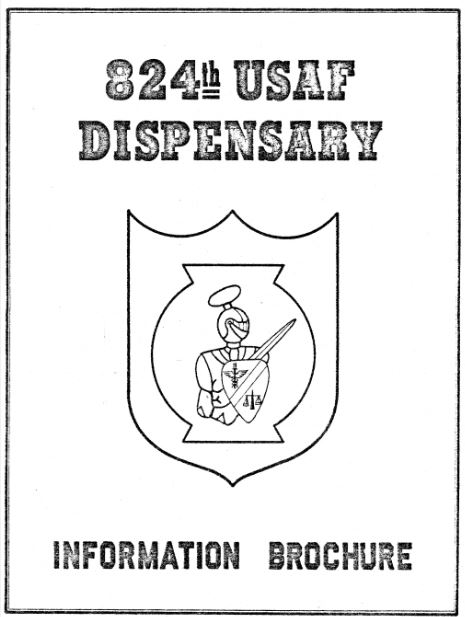 |
824th USAF Dispensary Information Brochure (Kadena AB, Okinawa) Early-to-mid 1960s vintage Old-school typewriter produced information bulletin for personnel assigned to Kadena Air Base. There is some discussion about a new dental facility projected to be completed by 1966 so this is probably '63-'65 (?) era. I was stationed with the 824th in 1972-1975. Some time during my assignment the official clinic designation was changed from "USAF Dispensary" to "USAF Clinic". | |||||
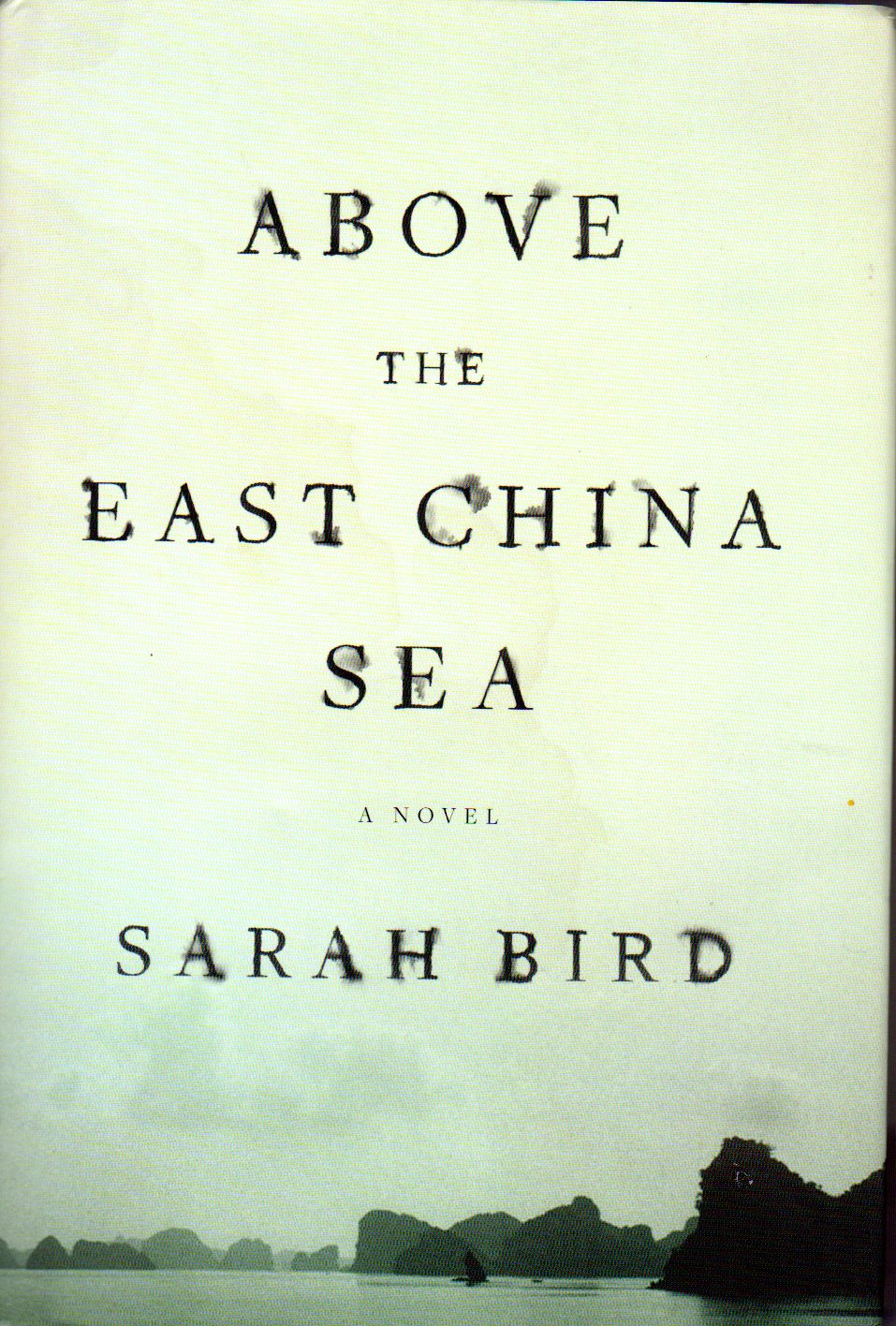 |
Above the East China Sea Sarah Bird Copyright 2014 ISBN 978-0-385-35011-2 Publisher - Knopf Just received this book 6-28-14. Will comment after reading it. | |||||
 |
Agreement regarding the Status of the United Nations Forces in Japan Tokyo, February 19, 1954 Presented by the Secretary of State for Foreign Affairs to Parliament by Command of Her Majesty, March 1957 [Download Here] (2.71MB .pdf file) | |||||
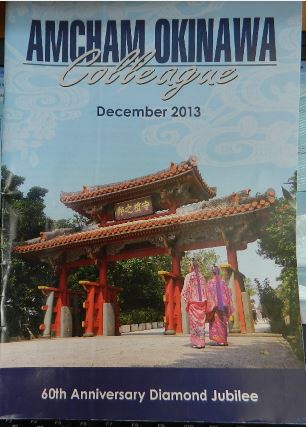 |
AMCHAM Okinawa Colleague December 2013 60th Anniversary Diamond Jubilee Walt Christianson, Publisher and President of the Okinawa CoC Dr. Scott Goldberg, Editor Copyright not indicated Publisher - American Chamber of Commerce, Okinawa Draft copy of the December 2013 issue with numerous editorial comments. This was given to me by Walt Christianson who made the corrections and sent it back for fine tunng before going into print. I visited with Walt during my 2014 visit to Okinawa. | |||||
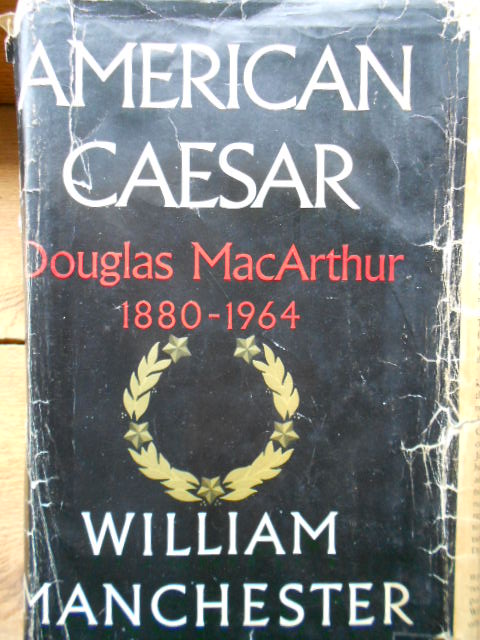 |
American Caesar - Douglas MacArthur - 1880-1964 Willaim Manchester Copyright 1978. ISBN 0-316-54498-1 Little, Brown and Company - Boston & Toronto Manchester has produced a book that covers the entire life of the controversial five star general, from his infancy to his death, in the finest of detail and in a lively literary style. - If you want to know about MacArthur, this is the book for you. The author very carefully presents facts about the general and lets you the reader make up your mind on where the truth lies. Manchester does not appear to "take sides" in this book; he does not take the general and make him a god, nor does he denigrate what the general has done. He presents the many sides of this mysterious general and lets you, the reader, put it all together which is not difficult, since Manchester provides you the tools to do it: plenty of rich detail, plenty of quotes, excerpts of memos and messages, much detail on his private family life. Again, Manchester does not tell the reader what to think. For example, with the fall of the Philippnes, it seems that the general has made up his mind to stay and, along with his family, expects in a matter-of-fact way to commit suicide rather than be taken prisoner by the Japanese. You wonder about his wife and child, but Manchester doesn't tell you what they want to do: he lets them speak. - An excellent biography and significant historical account. Probably the best ever on MacArthur whether you like the general or not. (review on amazon.com)
For more on Douglas MacArthur, see: | |||||
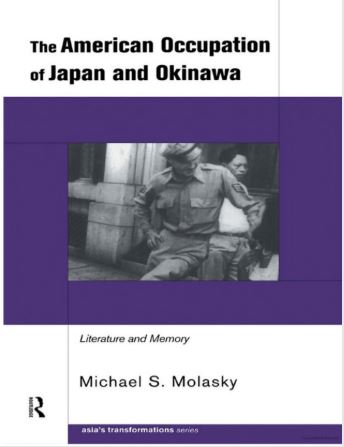 |
The American Occupation of Japan and Okinawa, literature and memory Michael S. Molasky Copyright 1999 Routledge Studies in Asia's Transformations series How do the Japanese and Okinawans remember Occupation? How is memory constructed and transmitted? Michael Molasky explores these questions through careful, sensitive readings of literature from mainland Japan and Okinawa. This book sheds light on difficult issues of war, violence, prostitution, colonialism and post-colonialism in the context of the Occupations of Japan and Okinawa. | |||||
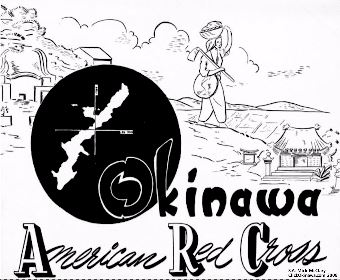 |
American Red Cross booklet - 1948 (Okinawa)Nice 24-page booklet touting the many services that are provided by the American Red Cross on Okinawa. Mostly photos with captions and free-hand artwork. Read it [HERE] (4.06MB .pdf) | |||||
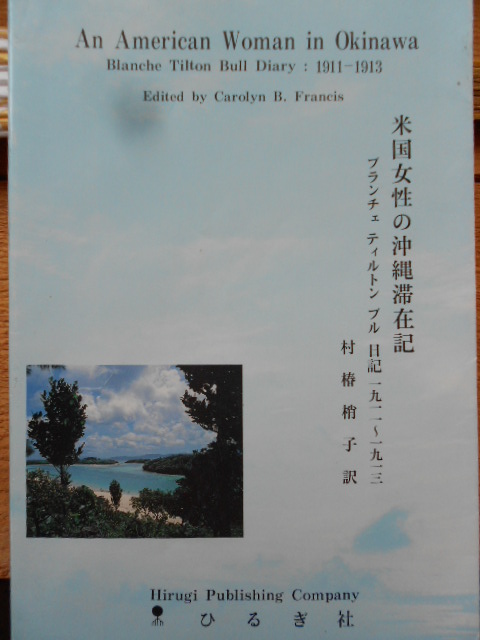 |
An American Woman in Okinawa - Blanche Tilton Bull Diary: 1911-1913 Edited by Carolyn B. Francis Copyright 1994 Hirugi Publishing Company Interesting book whose first half is in English language, and the second half is a Japanese translation. | |||||
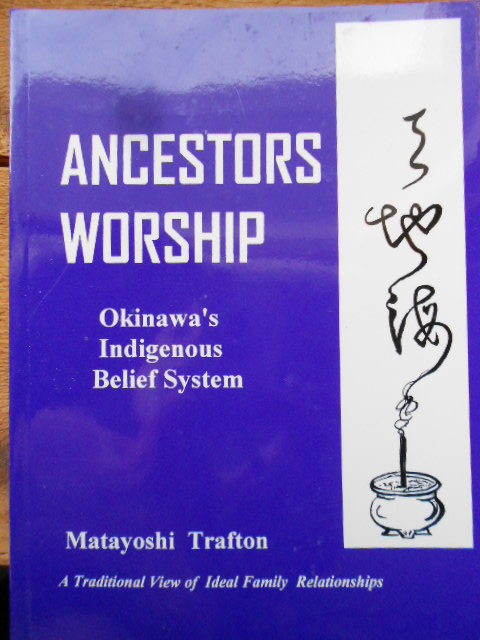 |
Ancestors Worship - Okinawa's Indigenous Belief System (A Traditional View of Ideal Family Relationships) Matayoshi Trafton Copyright 2000. ISBN 0-9701798-0-4 University of Toronto Press, Inc. Canada | |||||
 |
Ancient Ryukyu - an Archaeological Study of Island Communities Richard Pearson, professor emeritus at the University of British Columbia Copyright 2013. ISBN 978-0-8248-3712-9 University of Hawai'i Press This extremely important study in Pacific and island archaeology makes use of the huge database generated by Okinawan archaeology in the post-war era and places the Okinawan islands in the context of current theoretical debates within island archaeology in the Pacific and beyond. It is also a major study of premodern Okinawa. With its many valuable overviews and discussions, as well as its original analyses and interpretations, it will undoubtedly become the definitive text in English." Mark Hudson, Nishikyushu University | |||||
 |
Art Treasures from Japan Book to Accompany a 1965 Art Exhibition 196 pages of color and B&W photos of Japanese art. | |||||
|
B |
B
| |||||
 |
Battle for Okinawa, The Col. Hiromichi Yahara Introduction and Commentary by Frank B. Gibney Copyright 1955. ISBN 0-471-12041-3 John Wiley & Sons, Inc. Having never had access to anything but the "western" accounts of the Battle for Okinawa, I found that Yahara presented a splendid account from the other side's point of view. | |||||
 |
The Battle of Okinawa - Operation Iceberg S/Sgt Howard R. Goodhew Edited by Tec-4 Paul J. Deutschmann Prepared and Produced by Information-Education Section, Hq. 62d General Depot 12 February 1946
Reproduced by Information-Education Section, Hq. 25th Replacement Depot Nicely done type-written and mimeographed account of the Battle for Okinawa.
Read it [HERE]
If you would care to make a small donation to off-set expenses relating to creating and maintaining this Library for your use
| |||||
 |
The Battle of Okinawa - The Typhoon of Steel and Bombs Masahide Ota Copyright 1984 Printed and bound by Takeda Printing Co., Ltd., Nagoya, JA At the time of publication, Mr. Ota was the governor of Okinawa Prefecture. | |||||
 |
Battles Lost and Won - Great Campaigns of World War II Hanson W. Baldwin Copyright 1966. ISBN 1-56852-010-7 Konecky & Konecky, NY Hanson Baldwin wrote a well-researched history of eleven major battles which can serve as touchstones to trace the chronology of the Second World War. Endnoted with references and in-depth background analysis, this book penetrates deeply into facts and judgements about the war and those in charge. The endnotes cover over one-third of the book. | |||||
 |
BC Street E. A. Cooper Copyright 2007. (Pbk)ISBN 978-0-595-45058-9 iUniverse, Lincoln, Nebraska Though I didn't get to Okinawa until the early 1970s I could relate to just about everything that Cooper described during his time there in the 1960s. Reading this novel brought me back a few decades and my memories sprang to life as he so clearly detailed his comings and goings throughout his time on island. A dandy read. If you enjoyed E. A. Cooper's book, B. C. Street, nearly as much as I did, then you might be happy to know that he contacted me today (2-2-10) and reports that he's working on another, Kimiko and the Young GI: Okinawan Affair. He said, "I am re-editing and re-writing the novel with new chapters. I am reshaping the story into a romance novel." | |||||
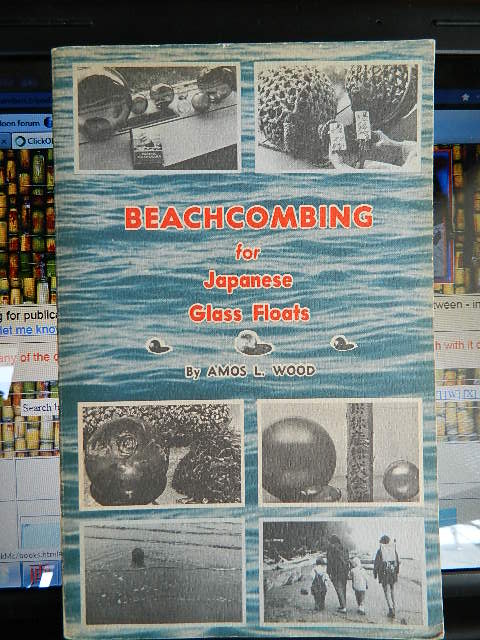 |
Beachcombing for Japanese Glass Floats - 1975, 3rd edition Amos L. Wood Copyright 1967 Publisher Binford & Mort Handy reference guide for... you guessed it! Glass floats. | |||||
 |
Beautiful Okinawa - Memory of Journey Souvenir photo booklet Nice little heavy paper paperback booklet with a map of Okinawa and a good number of hig quality photos with bi-lingual captions. Highlights of the main tourist attractions comprise the majority of this booklet, but it also has several showing the natural beauty of the Islands' flora. And, of course, no memory book would be complete without a photo of Iriomote's wild cat. So, that makes this booklet complete! | |||||
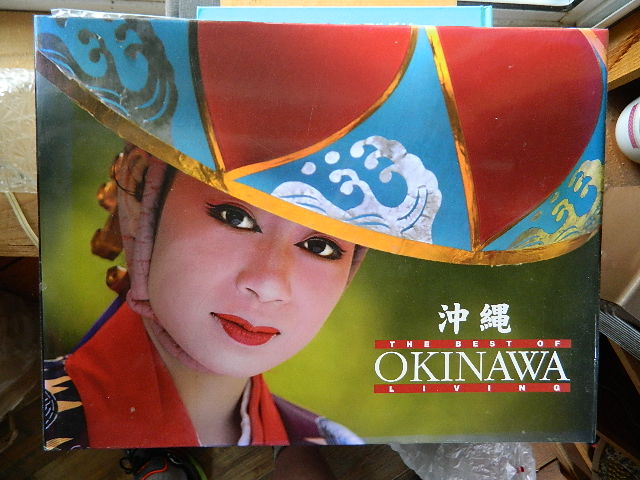 |
The Best of Okinawa Living Publisher: Marine Corps Community Services Printed by Marumasa Printing, Nishihara Cho, Okinawa During my 2014 visit to Okinawa a dear friend who I had met in 2013 gifted me with this absolutely beautiful book. It's a large, hard-bound coffee-table style book of amazing color photos of life on Okinawa. It's a collection from the many previous issues of Okinawa Living Magazine, a local publication put out by the U.S. Marine Corps. The list of contributors and credits is massive. You can pick up a copy at the local exchanges on island. If you decide to buy one be sure to tally its weight into your return baggage allotment!! It's a heavy one! | |||||
 |
BINGATA Keiko Yamazato Okinawa Christian Junior College and Members of the English Composition Workshop, OCJC Copyright 1989 Marumasa Printing Co. 30-page monograph. Colorful and expansive photo essay on the art of Bingata. " ... Bingata, which is a part of the greatest heritage of the Kingdom of the Ryukyus." | |||||
 |
Border Crossers and Resistance to US Military Rule in the Ryukyus, 1945-1953 Matthew R. Augustine The Asia-Pacific Journal Vol 6, Issue 9, September 1, 2008 "Sixty-six years after Japan’s annexation of the former Ryukyu Kingdom in 1879, in the waning months of the Asia-Pacific War, the American military partitioned the Ryukyu Islands from Japan. The replacement of Okinawa Prefecture by US military rule in the Ryukyus from 1945 had profound implications, for residents of the occupied islands..." | |||||
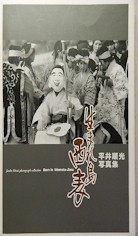 |
Born in Iriomote-Jima - Junko Hirai photograph collection Junko Hirai Copyright 1985 Published by Junko Hirai Photographs OTICE Publishers, Okinawa Heavy-paper soft-bound book of black & white photos by Junko Hirai. 131 pages of bold B&W images that capture the lifestyle of that island - festivals, sporting events, village life, seascapes, and, of course, a wonderful photo of the infamous wildcat! | |||||
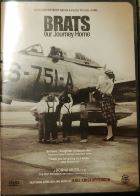 |
BRATS - Our Journey Home (DVD) Donna Musil, with narration and music by Kris Kristofferson Copyright 2005 Brats Without Borders U.S. military BRATS share intimate memories about their unique childhoods - growing up on military bases around the world, then struggling to fit into an American lifestyle with which they have little in common. Narrated and featuring songs by Kris Kristofferson. Interviews include the late General Norman Schwarzkopf and military brat author Mary Edwards Wertsch. | |||||
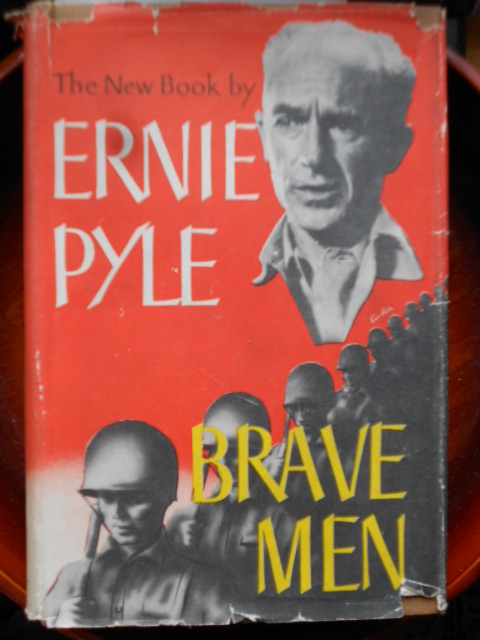 |
Brave Men (2 copies, one without dustjacket) Ernie Pyle Copyright 1943, 1944 by Scripps-Howard Newspaper Alliance Copyright 1944 by Henry Holt & Company, Inc. NY Brave Men begins with the landing on Sicily, when the Allies were making their first bold and dramatic assault upon fortress Europe. It ranges from Sicily, Italy and the grim days of the Anzio beachhead through the calm of those last few pre-invasion weeks in Britain, the savage climaxes of the Normandy beaches to the smashing drive through France. | |||||
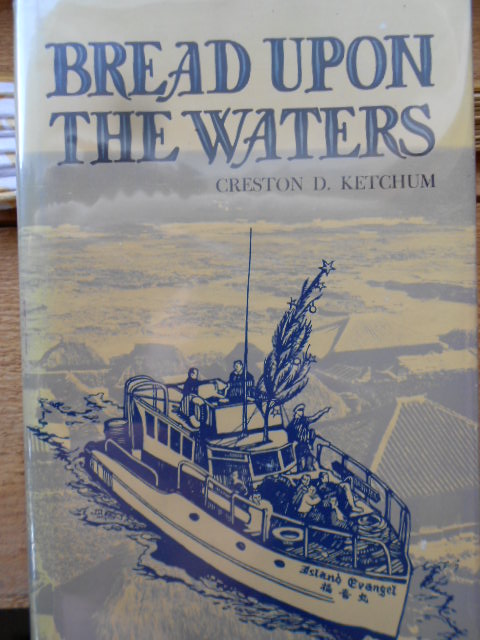 |
Bread Upon the Waters (1st edition; signed by author) Creston D. Ketchum Copyright 1964. LCCN 64-13267 Tuttle Part Christian ministry and part sea-faring adventures, Ketchum takes us on a whirlwind tour of the 5 years that he and his wife and fellow Foursquare Church missionary, Florence spent on Okinawa. Ministering to the outer "hungry little islands" his efforts brought about Christian awareness and even a few converts, almost total eradication of leprosy and tuberculosis from many of the small islands of the Ryukyus. [READ here] the pamphlet, "Operation Goodwill" Throughout the Ryukyu Islands Aboard the Mission Vessel "Island Evangel", a 36 page publication that describes Ketchum's missions. It is loaded with photos, taken by Blackie the Photographer, of the outlying islands and the people it served. | |||||
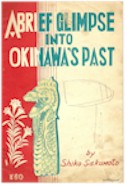 |
A Brief Glimpse into Okinawa's Past Shiko Sakumoto circa 1950s Ryukyu Education Books Co., Ltd. A cursory text of Okinawa's early days as the Ryukyu Kingdom. Advertisements are fun to read. | |||||
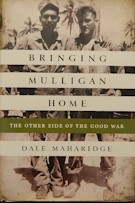 |
Bringing Mulligan Home - the Other Side of the Good War Dale Maharidge Copyright 2013 ISBN 978-1-58648-999-1 Publisher - Public Affairs, a member of the Perseus Books Group Sergeant Steve Maharidge returned from World War II an angry man. "They said I killed him! It wasn't my fault!" | |||||
|
C |
C
| |||||
 |
CAVALCADE, Literary - Oct 1964 issue featuring the play, The Teahouse of the August Moon Copyright 1964 A love of beauty, a joy in simplicity, a gracious acceptance of life. The values of the Okinawans in John Patrick's comedy The Teahouse of the August Moon seems irresponsible and even subversive to the American Marines whjo plan to bring democracy and industry to the island. But after a series of amusing events, it is hard to tell the converter from the convert. (inside cover) | |||||
 |
Checker Tale, Naha Air Base - Vol 3 No. 25 - August 26, 1955Newspaper of the Naha Air Base, Okinawa | |||||
 |
Circus Day on Okinawa (2 copies, both 1st edition) Eleanor B. Hicks Copyright 1958. Charles E. Tuttle Co. Rutland, VT and Tokyo, JA Fun little story book with Joji-chan sister, Koko-chan of the Shima family. Koko-chan is up and rarin' to go, wakes brother to remind him that today is the day they're going to the circus. | |||||
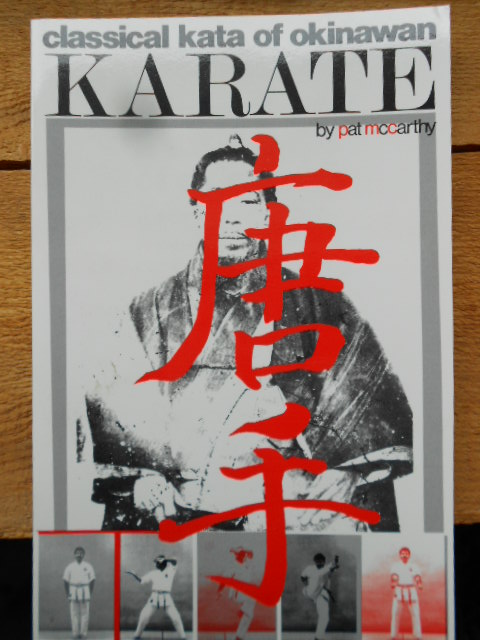 |
classical kata of okinawan KARATE Pat McCarthy Copyright 1987. ISBN 0-89750-113-6 LCCN 87-61100 OHARA Publications, Inc. Santa Clarita, CA At the time it was published, there were very few good references on karate and karate history. Since then however, there have been many excellent texts and articles, including some from the same author. | |||||
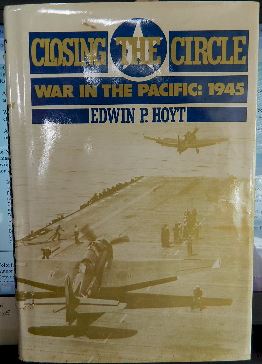 |
Closing the Circle War in the Pacific: 1945 Edwin P. Hoyt Copyright 1982 Van Nostrand Reinhold Company, Inc. Closing the Circle is military historian Edwin P. Hoyt's attempt at an overview of the last 4 months of WWII in the Pacific. Hoyt is usually a master of distilling military history of a mass market audience, but unfortunately this work falls a bit flat. The book covers the USN carrier raids on mainland Japan in the summer of 1945, the loss of the USS Indianapolis, the internal Japanese court intrigues and of course the decision to use the atomic bomb. It's such a broad scope that Hoyt can't cover it all adequately; his effort seems both cursory, breathless and unfocused. It's unfortunate that Hoyt didn't just stick to the USN carrier raids - had he concentrated on that topic he would have written a much stronger and more valuable work. (Rob Fitzgibbon - Amazon review) | |||||
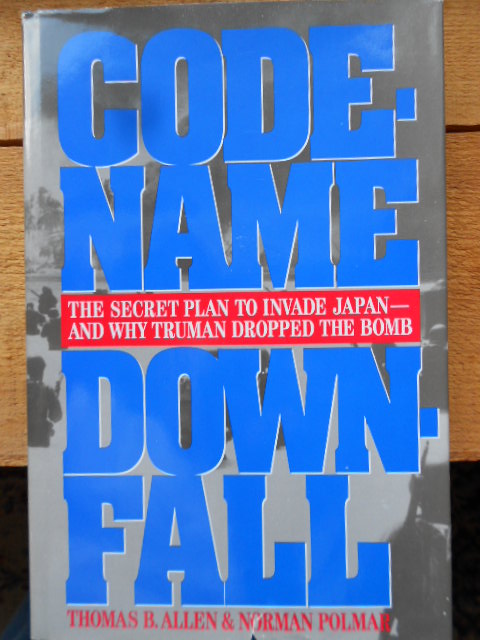 |
Code-Name Downfall: the secret plan to invade Japan - and why Truman dropped the bomb Thomas B. Allen and Norman Polmar Copyright 1995. ISBN 0-684-80406-9 Simon & Schuster In Codename Downfall, Allen and Polmar accomplish an amazing feat. In a book describing U.S. President Harry Truman's decision to use the atom bomb, they make the world's only nuclear attacks seem almost unimportant. | |||||
 |
Colorful Okinawa Japan Author unknown Copyright unknown Published by JAL (Japan Air Lines), probably in 1974 or 75 as it is intended to be distributed to those interested in the 1975 Okinawa Ocean Exposition (Expo 75). This is a nice little 'story-book' style piece with modernistic artwork and captioning in both Japanese and English. They describe it as "a pictorial profile of the Okinawa Islands". It references Naha, Naha Airport, Itoman, Tsuboya kilns, Shuri; Okinawan costumes, music and dance; Okinawa's crystal clear waters, farms, beaches, and more. Nice catchy, colorful pages. | |||||
 |
Contemporary Okinawa John Michael Purvis Copyright 2002 Doctoral thesis "As I described with Chapter 2 in the Postwar Section, I tried to combine a discussion of the socio-economic development of Okinawa in the broad with Kin Village (later a town) in the narrow. Rather than follow the standard use of 'contemporary' to relate to post-reversion (post 15th May 1972) developments in Okinawa I am starting this account with a description of the process of planning for Okinawa's reversion. Since this dissertation was submitted in 2002 it does not cover developments in Okinawa thereafter. I will upgrade this at some point but my priorities at present are on the Ancient Ryukyu and Early Modern- Modern Ryukyu sections. Part 13, 'Conclusion: Managing a Wild Horse with a Rotten Rope' is added for those who are interested because I made some suggestions then as to how Kin Town might look at improving its economy. 11 years have passed since I made these suggestions." | |||||
 |
Conversational Japanese for the Beginner Arthur Rose-Innes No copyright information found Kelly & Walsh, Ltd. I don't have a physical copy of this one in my Library but it's worthwhile having access to it. | |||||
 |
CRS Report for Congress: The U.S. Military Presence in Okinawa and the Futenma Base Controversy Emma Chanlett-Avery, Ian E. Rinehart August 3, 2012 Printed by U.S. Government, Congressional Research Service Although the U.S.-Japan alliance is often labeled as "the cornerstone" of security in the Asia Pacific region, local concerns about the U.S. military presence on the Japanese island of Okinawa have challenged the management of the alliance for decades. The Japanese archipelago serves as the most significant forward-operating platform for the U.S. military in the region; approximately 38,000 military personnel, 43,000 dependents, and 5,000 DoD civilian employees live in Japan... Read it HERE
| |||||
 |
Customs and Culture of Okinawa compiled by Gladys Zabilka Copyright in Japan 1959. This is 6th printing 1967, in Japan. LCCN 58-9984 Charles E. Tuttle Co. Rutland, VT and Tokyo, JA Very valuable resource in a small pocket-size soft cover book. 200 page wealth of information useful to anyone who seriously cares to know about Okinawa. Not too heady but just right for the beginner Okinawaphile. Most attractive to me, and I've not seen such in any other hand-book, is the final chapter that has many native songs, with sheet music and lyrics. Read it HERE (revised Second edition, 5th printing 1966) | |||||
|
D |
D
| |||||
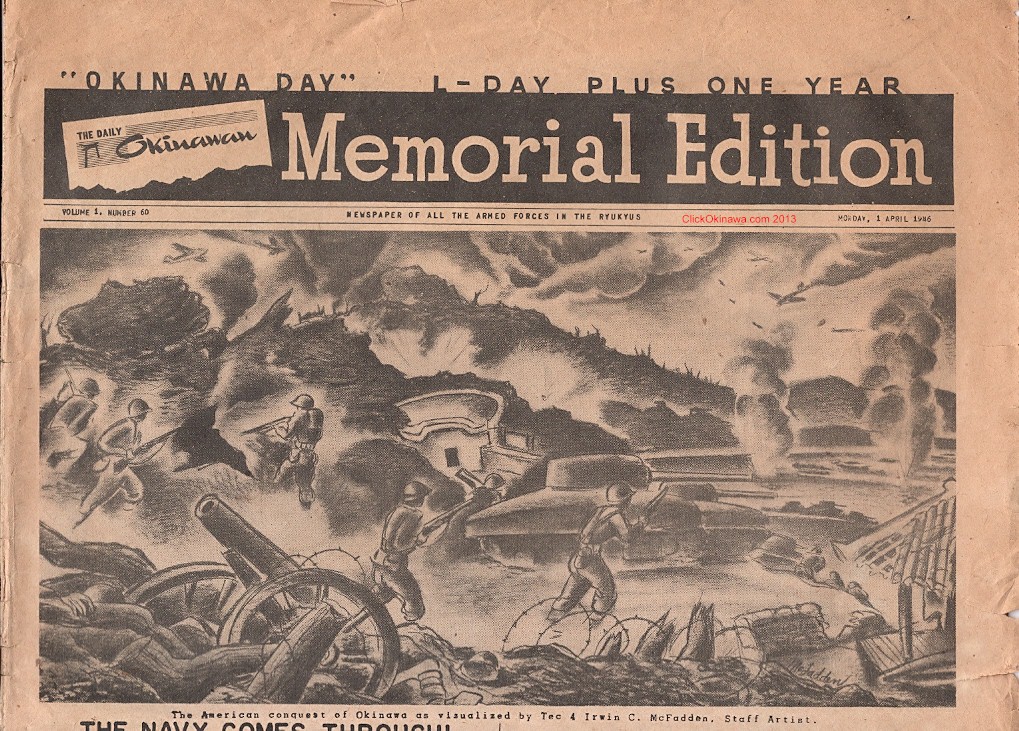 |
Daily Okinawan, TheNewspaper of all the Armed Forces in the Ryukyus. | |||||
 |
Dancing with the Dead - Memory, Performance, and Everyday Life in Postwar Okinawa Christopher Nelson Copyright 2008 ISBN 978-0-8223-4371-4 Publisher Duke Colonized by Japan, traumatized by war, dominated by an ongoing American military presence, Okinawa has never attracted the sustained attention of Western anthropologists. That has now changed, for here we have an ethnography of Okinawa that finally does justice to the complexity of its poetic and political realities. (Marilyn Ivy) | |||||
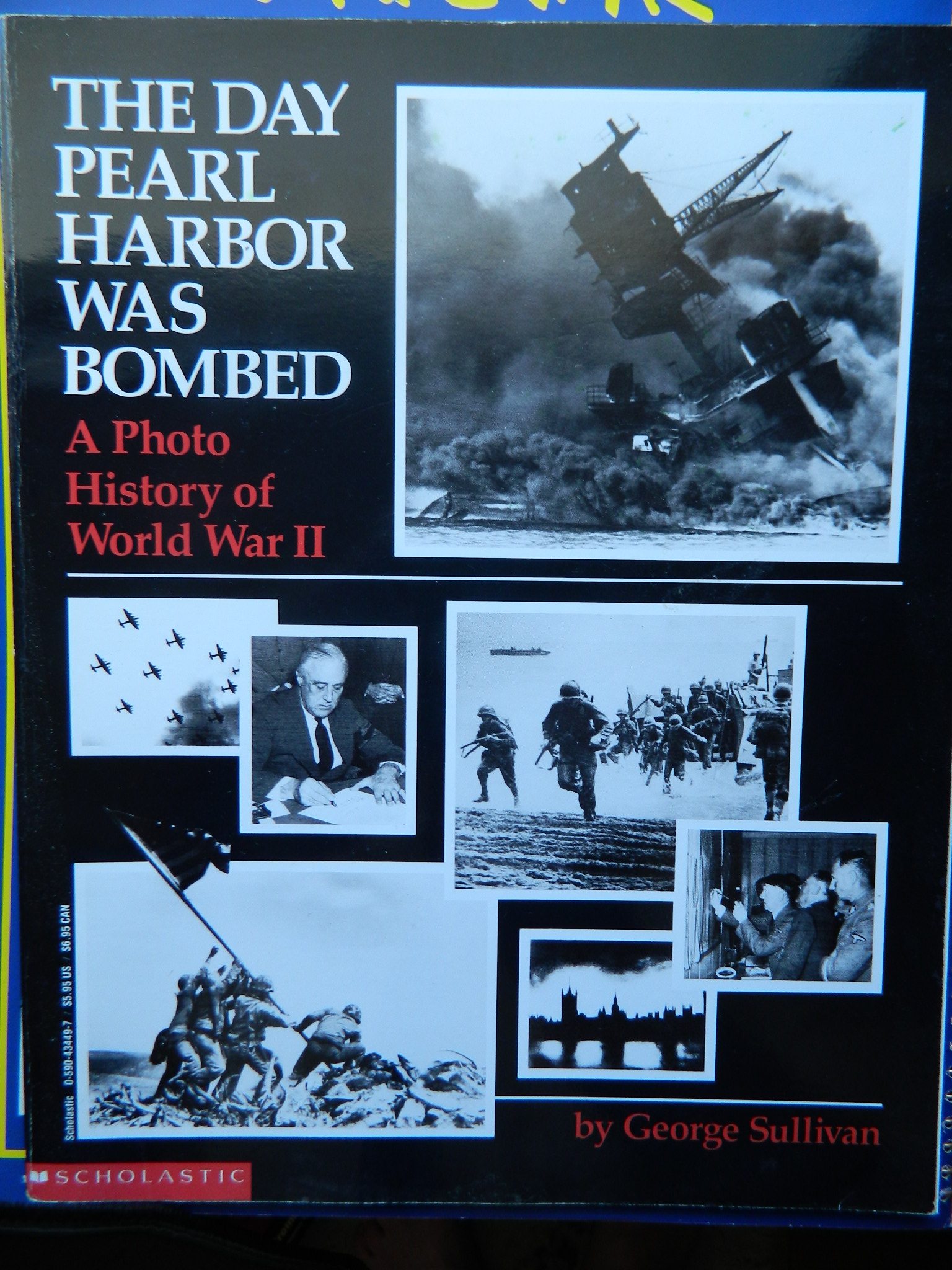 |
Day Pearl Harbor Was Bombed, The: a photo history of World War II George Sullivan Copyright 1991 ISBN 0-590-43449-7 Publisher - Scholastic Inc. A very basic text; mostly B&W photos with a few maps. Cursory text with only two pages devoted to Okinawa and Iwo Jima. Many cool photos. | |||||
| No photo |
Democracy In Okinawa U.S.-Okinawan Relations In The Cold War Chizuru Saeki Thesis paper University of North Alabama Download (MS doc) | |||||
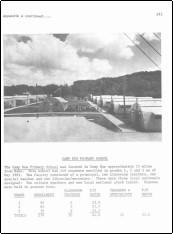 |
Department of Defense Dependents Schools, Okinawa, Japan 1946-1978, A History of the Brown, Harold Clifford Doctoral Thesis 1981 Oregon State University "... In Japan the first recorded arrival of dependents occurred May 10, 1946 when families of Army Air Corps personnel landed at Johnson Army Air Base located in Irumagawa. Johnson School opened September 7, 1946. In Okinawa, Japan, only sixteen months after one of the most costly battles of World War II in which an estimated 104,000 lives were lost, a school was established for dependent children of military and civilian personnel. | |||||
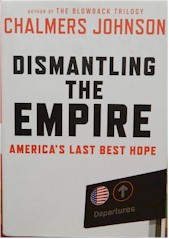 |
Dismantling the Empire - America's Last Best Hope Chalmers Johnson Copyright 2010 Publisher - Metropolitan Books "...explores the subjects for which Chalmers Johnson is now famous, from the origins of blowback to Barack Obama's Afghanistan conundrum, including our inept spies, our devastatingly bad behavior in other countries, our ill-fought wars, and our capitulation to a military that has taken ever more control of the federal budget. There is, he proposes, only one way out: President Obama must begin to dismantle the empire before the Pentagon dismantles the American dream..." | |||||
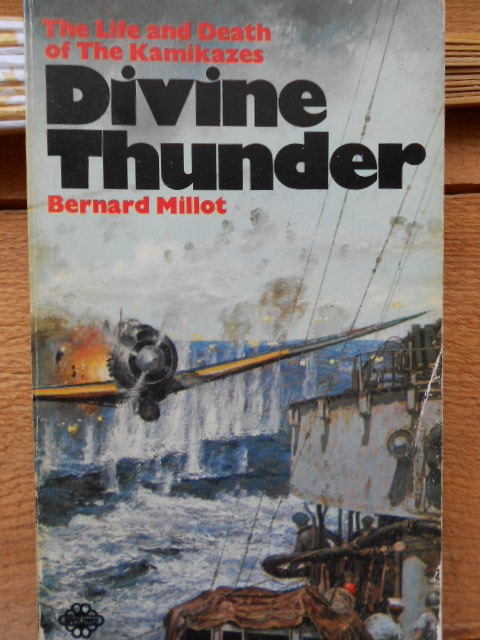 |
Divine Thunder - The Life and Death of The Kamikazes Bernard Millot Copyright 1971. Pbk. Mayflower During the battle for Okinawa 40 American ships were either sunk or damaged beyond repair, and 368 were damaged in some degree, mainly as the result of suicide attacks by Japanese pilots. At the time it seemed to most people that those taking part in such attacks must be mere robots or fanatics lacking in all normal human feelings. Bernard Millot shows them, on the contrary, as clear-thinking volunteers of the highest courage and their actions as the outcome both of their traditions and of the particular circumstances with which Japan found herself confronted at this juncture of the war. | |||||
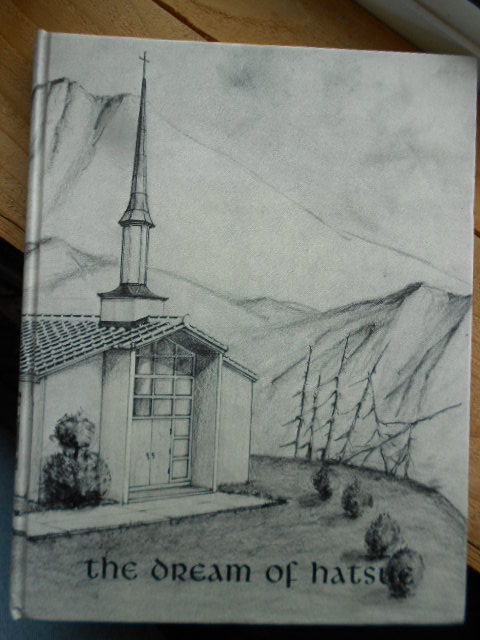 |
Dream of Hatsue, The Author not indicated Copyright date not indicated Lithographed and Bound by WALSWORTH, Marceline, Missouri, USA Photos by Blackie the Photographer | |||||
 |
Driving Manual, Japanese - looks like a pre-licensing manual 1986 (Showa 61) Small manual, all in Japanese, full of driving instructions. Lots of figures, drawings, etc. | |||||
|
E |
E
| |||||
 |
Driving Manual, Japanese - looks like a pre-licensing manual 1987 (Showa 62) Small manual, all in Japanese, full of driving instructions. Lots of figures, drawings, etc. | |||||
|
E |
E
| |||||
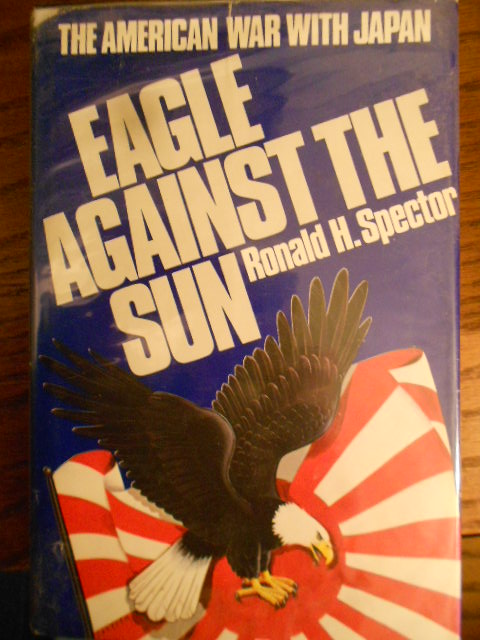 |
Eagle Against the Sun - An American War with Japan Ronald H. Spector Copyright 1985. ISBN 0-02-930360-5 The Free Press, a Division of Macmillan, Inc. NY This is a superb analysis of the Pacific War between the USA and Japan. It is always very difficult for an author to strike a balance between sufficient detail on the one hand, and the risk of overwhelming the "big picture" with too much detail, on the other. Here, the author hits it just right. This is a detailed and thorough analysis of the Pacific War that focuses on the main trends of the war, while supplying sufficient detail to support the themes that the author presents to the reader. (review at Amazon.com) | |||||
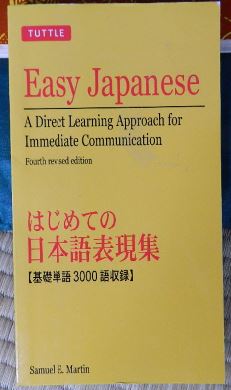 |
Easy Japanese A Direct Learning Approach for Immediate Communication 4th revised edition Samuel E. Martin Copyright 1957 / 2006 Tuttle Publishing Book of Japanese words and phrases. The vocabulary section lists Japanese words (in romaji) in alphabetical order. There is not a list of English-language words. Useful little book but not one for looking up how to say such-and-so in Japanese. | |||||
 |
Education of Tamagawa Gakuen Author unknown, possibly Kuniyoshi Obara Copyright unknown - after July, 1969 Publisher unknown A year-book style book containing many color and B&W photos with bi-lingual captions, having to do with education of Tamagawa and the Whole Man Education. Only the photos have captioning in English. The last part of the book is entirely in Japanese. It is well-protected in its own hard cardboard sleeve. | |||||
| No photo |
The Enemy of My Enemy is My Friend: - Okinawan Identity and Military Government
Policy in Occupied Okinawa, April 1945 Courtney A. Short Chapel Hill 2008 "On May 31, 1945, two American soldiers sat cross-legged on the floor of a small hut in the gutted village of Nodake on the island of Okinawa. Their hostess, a middleaged Okinawan woman, stooped down over them as she poured hot tea into small round clay cups. Many different families shared the hut with the woman and some of them crowded into the main room to join in the tea ceremony with the Americans.1 The bombings, begun in October, 1944 preparatory to the America invasion, had destroyed numerous homes in the village. Under the direction of the United States Army, several families now lived together in the homes that survived." | |||||
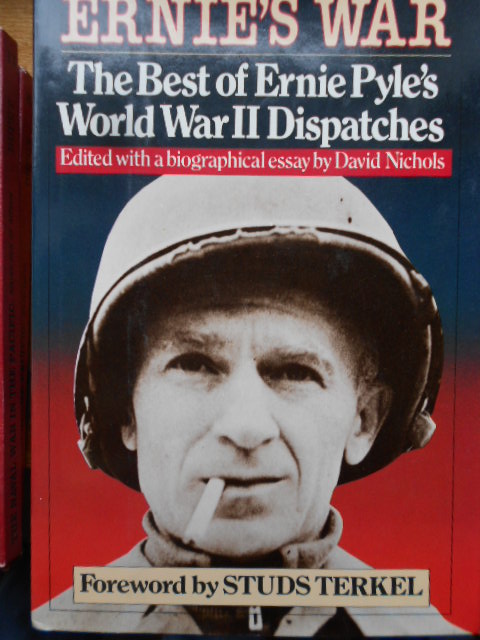 |
Ernie's War - The Best of Ernie Pyle's World War II Dispatches (1st edition) Edited with a biographical essay by David Nichols Copyright 1986. ISBN 0-394-54923-6. LCCN in-publication data Random House This is a compilation of Ernie Pyle's best dispatches from the front lines during World War II. His stories were printed in American newspapers throughout the war, and brought home to the people of those years just what our men (and women) on the front lines had to endure, and how brave they were in doing their duty day after day until the job was done. It's moving to read about the hardships our soldiers went through in order to preserve the freedoms we enjoy today. Read about and listen to Ernie Pyle | |||||
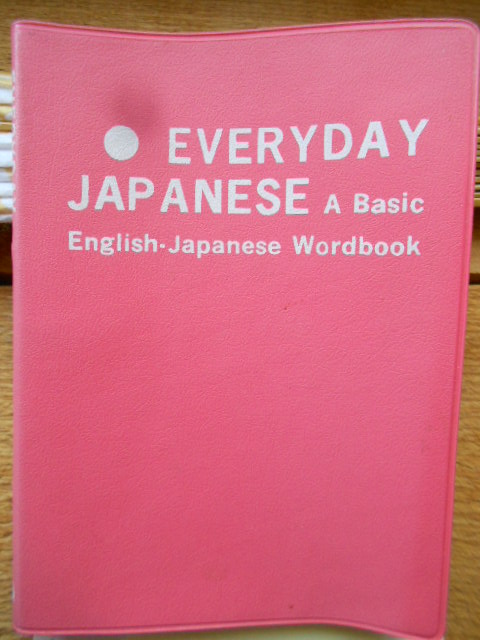 |
Everyday Japanese, A Basic English-Japanese Wordbook Eldora S. Thorlin & Noah S. Brannen Copyright 1969 (19th printing 1985). ISBN 0-8348-0037-3 LCCN 69-19854 Weatherhill - NY, Tokyo Handy little pocket-size book with vinyl covers to stand up to years of daily use.l First is a listing of English-to-Japanese translation in dictionary format. Latter portion of book are the appendices: Phrases for Everyday Situations. Auto Parts and Accessories (first time I've seen this in any book). Phrases for health matters. Numbers and Counting. Telling Time, and so on. A very handy little book. | |||||
 |
Exciting Okinawa An Informative Guidebook (English Version) Okinawa Prefectural Board of Education 1998 Translated by Antenna, Ltd. Printed by Orange Planning, Ltd. This is a fun and fact-filled paperback book that includes high-quality maps and discussions about various areas of Okinawa Prefecture. Discussed are its main facilities, cultural properties and famous places: | |||||
|
F |
F
| |||||
 |
Fading Victory The Diary of Admiral Matome Ugaki 1941-1945 Translated by Masataka Chihaya Copyright 1991 (4th edition) University of Pittsburgh Press 710 pages Long out of print, theses wartime diaries of a key admiral of the Imperial Japanese Navy, provide a revealing inside look into the Japanese view of the Pacific War. Matome Ugaki was chief of staff of the Combined Fleet under Admiral Isoroki Yamamoto until both were shot down over Bougainville in April 1943, resulting in Yamamoto's death. He later served as commander of battleship and air fleets, finally directing the kamikaze attacks off Okinawa. Invaluable for its details of the Japanese navy at war, the diaries offer a running appraisal of the fighting and are augmented by editorial commentary that proves especially useful to American readers eager to see the war from the other side. When first published in 1991, this dairy was hailed as a major contribution to World War II literature as the only firsthand account of strategic planning for the entire war by a Japanese commander. | |||||
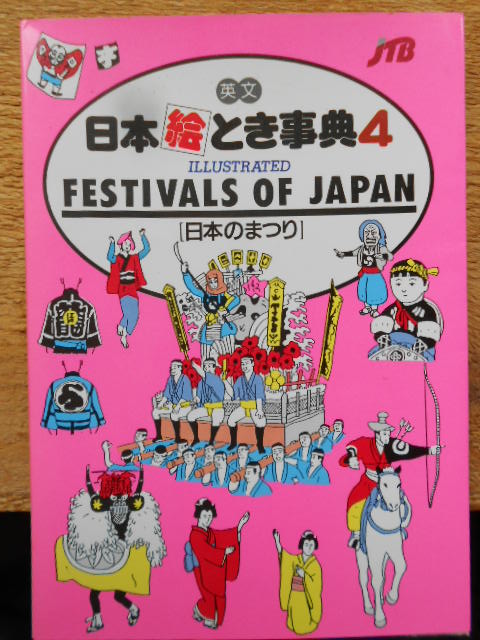 |
Festivals of Japan Author not indicated in English. (If someone can see an author on the cover, let me know) Copyright 1989 (4th edition) PUBLISHER Japan in Your Pocket proclaims the back cover - This little pocket-book is divided into 4 sections: Festivals throughout Japan; Curious Festivals; Annual Events; and Some Useful Information. The main festivals in each ;locality are shown on the book's Festival Map, and all festivals are listed in the Festival Calendar. It includes Festivals of Okinawa and Surrounding Islands. All entries in the book are done in a very cursory manner but still enough to peak the reader's interest. One would have to refer to a more comprehensive text though to get a full interpretation of each of the various festivals. | |||||
 |
Festivals of Okinawa Vol. 3 Junko Hirai Copyright 1989 Printed in Japan Here is a delightful little soft cover book of beautiful color photos of Okinawan festivals, photographed by Junko Hirai. It is a mate to another book by the same publisher entitled Shape of Okinawa Vol. 2 | |||||
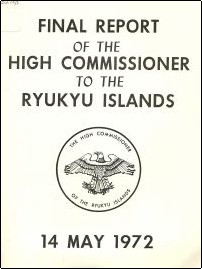 |
Final Report of the High Commissioner to the Ryukyu Islands 14 May 1972 J. B. Lampert, LtGen, USArmy Copyright - government document in the Public Domain United States Army Summary of principal events in the Ryukyu Islands during the author's administration as High Commissioner. | |||||
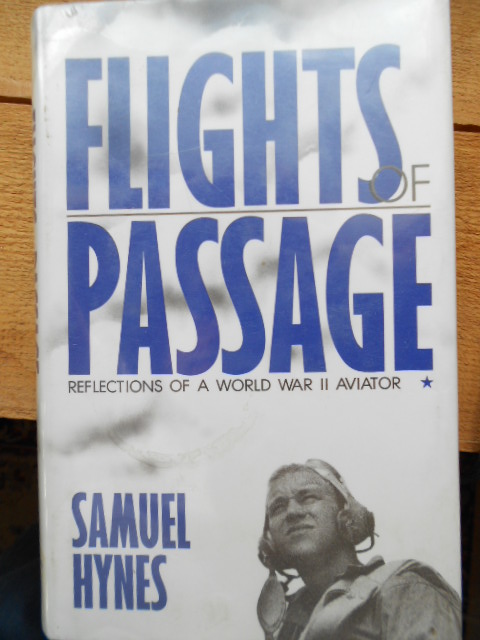 |
Flights of Passage - Reflections of a World War II Aviator (1st Edition) Samuel Hynes Copyright 1988. ISBN 0-913720-68-2 (Frederic C. Beil, NY) ISBN 0-87021-215-X (Naval Institute Press, Annapolis) ex libris Watching planes fly over his Minneapolis home, young Samuel Hynes never imagined himself flying in one, let alone being a pilot. He never saw an ocean, yet before he turned 21, he would be flying and fighting over the largest of them. World War II was a transforming conflict in many ways. For Hynes, it was his ticket to a larger world. | |||||
 |
"A Flood of Immigration" - Japanese Immigration to the Philippines 1900-1941 Grant K. Goodman - Professor Emeritus, History; University of Kansas Copyright 2011 (Creative Commons Lic) ISBN 978-1-936153-07-7 "A rarity among Asian lands, the Philippines had large areas of potentially agriculturally productive land remaining uncultivated. Thus with great potential resources, broad habitable areas open for settlement, and geographic proximity to Japan, the Philippine Islands were a natural attraction for Japanese emigrants through the first four decades of the twentieth century. | |||||
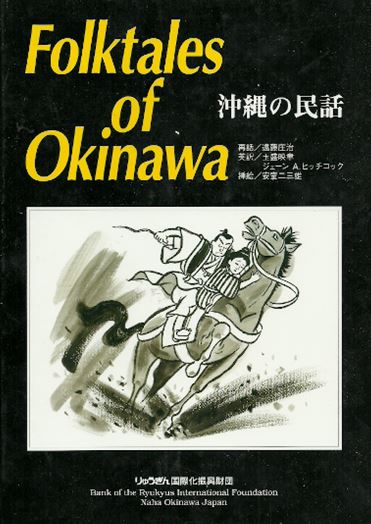 |
Folktales of Okinawa Shoji Endo - English trans;ation by Terunobu Tamamori and Jaybe A. Hitchcock Copyright 1995 (mine is third printing 1996) Published by Bank of the Ryukyus Int'l Foundation This book contains both Japanese and English text! | |||||
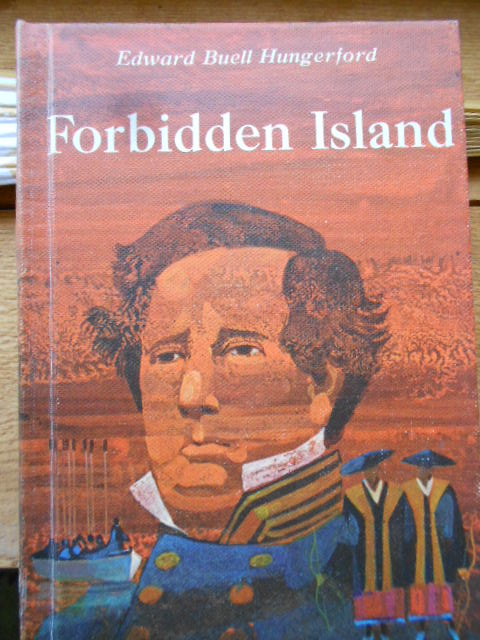 |
Forbidden Island Edward Buell Hungerford Copyright 1950. LCCN 50-8400. 3rd printing Follett Publishing Co., Chicago An improbable though absorbing yarn of a search by a young seaman in the United States Navy for his twin brother whose ship was lost somewhere off Okinawa in 1851. Coming to the mysterious islands of Japan in the service of the Perry expedition, young Barry Sturgess gradually gathers enough hints of his twin's whereabouts from Oriental friends and some aery sibling thought-transmission to rescue his brother Barney. As a member of the Perry force. Barry witnesses the cautious excursions into the alien civilization, the historic presentation of a letter from the President of the United States to representatives of the emperor, and the confusing and often humorous clashes between East and West. The Perry expedition is unusually interesting in the light of the events of the last ten years, but this book is less an objective study of Japan at the time than a Gilbert and Sullivan concept in which the Japanese are known mainly for their conscientious use of bird cages into which they stuff their prisoners. Superficial but colorful. (review at kirkusreviews.com) | |||||
 |
| |||||
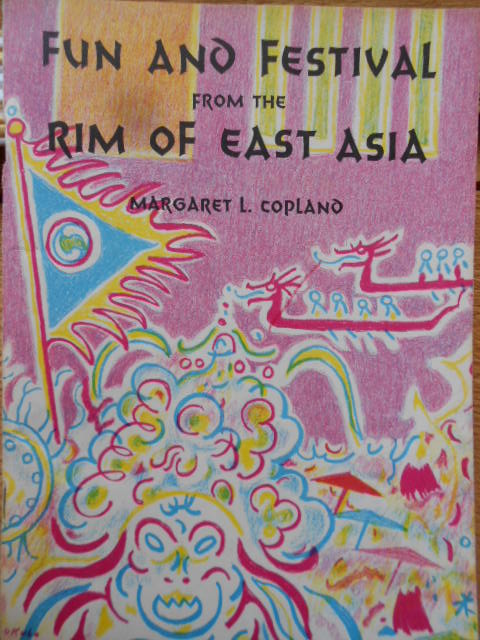 |
Fun and Festival from the Rim of East Asia Margaret L. Copland Copyright 1962. LCCN 62-7852 Friendship Press, New York As the title suggests, the book is written to illuminate some of the fun and fantasy on the Rim of East Asia - Korea, Okinawa, Taiwan, and Hong Kong. | |||||
|
G |
G
| |||||
| No Image |
Gendered Nationalism: The Himeyuri Story and Okinawan Identity in Postwar Japan Linda Angst PoLAR, Vol 20, No 1 - May 1997 "... it is the Himeyuri, the daughters of the upper classes in prewar Okinawa—most of whom died on the battlefield—who have become a primary symbol of Okinawa in the postwar era. In fact, Himeyuri now designates all alumnae of these schools. I suggest that in the fifty years since the end of the Pacific War, the name Himeyuri has acquired powerful symbolic significance within local and national discourses of postwar Japanese and Okinawan identity—far beyond the original reference to alumnae of these two elite schools. The following is the Himeyuri story." | |||||
 |
General Kenney Reports George C. Kenney No copyright Office of Air Force History, USAF, Wash DC From a series of USAF WARRIOR STUDIES, this is a 579-page compilation of reports by - guess who? General George C. Kenney, of course! | |||||
 |
A General's Life: An autobiography by General of the Army Omar N. Bradley and Clay Blair Omar N. Bradley Copyright 1983. ISBN 0-671-41023-7 LCCN in-pub data Simon and Schuster a MUST HAVE for any researcher of 1900-1955 US military and politics. Unlike MacArthur, Patton, Montgomery or even Ike, Bradley writes an unbiased and contrasted biography.By 'Becky' in Montana: | |||||
 |
Genocide Edited by Masahide Ota Copyright 1991, 1st Edition Published by Okinawa Times Company, Ltd. Printed by Bunshin Printing Company, Ltd., Okinawa, Japan If anyone can translate for me, according to the cover, please let me know. E-mail me This is a bi-lingual publication, 288 pages in length, that is mostly comprised of photographs with captions and dealing with Genocide, defined by jurist Raphael Lemkin as, "the destruction of a nation or of an ethnic group." It deals primarily with destruction of peoples throughout the world during World War II. Although not specifically referring to Okinawa, the islands are included in this treatise. The majority of the book is chock-full of photographs of deaths resulting from war. | |||||
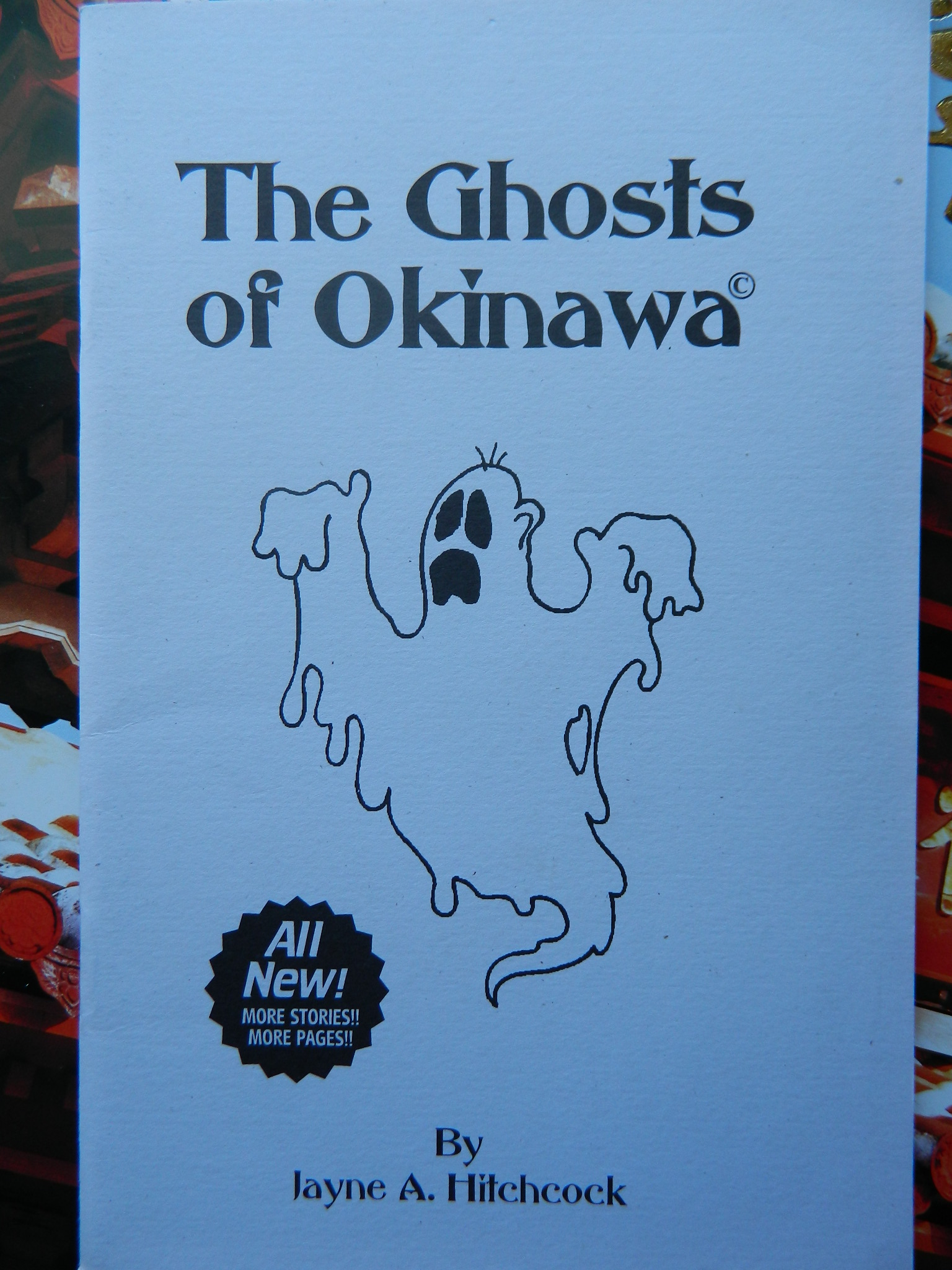 |
Ghosts of Okinawa, The (signed by author) Jayne A. Hitchcock Copyright 1995 (2nd ed. & printing 1996) Publisher Shiba Hill Cute little paperback handbook chronicling the ghostly legends of Okinawa. | |||||
 |
Girl With the White Flag, The Tomiko Higa Copyright 1991. ISBN 4-7700-1946-7 LCCN 90-23281 Kodanasha International. Tokyo, New York, London Originally published in Japan as Shirahata no Shojo A first-person testament to the terror of war involving a little girl, her sisters, and her brother, Nini, as they eked out survival during the Battle for Okinawa. One did not survive.We managed to make a hole - or rather a hollow - just big enough to hold Nini's and my bottoms. The hollow was too small and shallow to lie down in , so we just sat close together, with our legs stretched out in front and our backs against the side of the hollow. I went to sleep with my head on Nini's shoulder. Nini put his arm around my shoulder and covered us with a piece of cloth. Our sisters slept in a hollow they had dug right beside ours All the while, shells and machine gun bullets continued to fall about us, near and far, without any let-up. If we had worried about them we would not have been able to sleep at all. We had already resigned ourselves to the horror of the enemy attack. | |||||
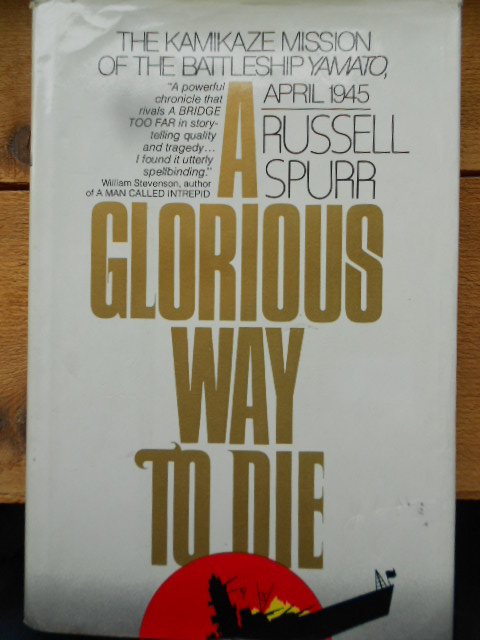 |
A Glorious Way to Die - The Kamikaze Mission of the Battleship Yamato, April 1945 (1st edition) Russell Spurr Copyright 1981. ISBN 0-937858-00-5 Newmarket Press, NY HIJMS Yamato was - and will now forever be, the largest battleship ever built. It will also forever remain a supreme curiosity that Japan - the one country which had the foresight to recognize how air power and aircraft carriers were the sea-going naval might of the future, should insist on building 2 Yamato class Battleships when their construction almost bankrupted the nation to the extent that their building even deprived the country's fishermen of their nets. | |||||
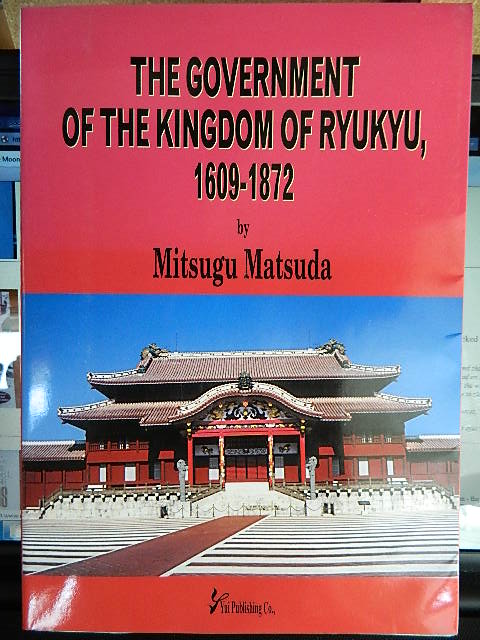 |
The Government of the Kingdom of Ryukyu, 1609-1872 Mitsugu Matsuda Copyright 2001 Yu Shuppan Co., Gushikawa, Okinawa A dissertation submitted to the Graduate School of the University of Hawaii in partial fulfillment of the requirements for the degree of Doctor of Philosophy, Jan 1967. | |||||
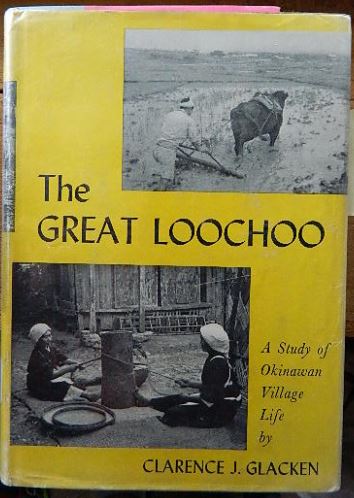 |
The Great Loochoo A study of Okinawan Village Life Clarence J. Glacken Copyright 1955 Publisher - Univ of Calif Press, Birkeley and Los Angeles A withdrawn ex libris from the Reference and Loan Library in Madison, Wisconsin. | |||||
 |
Guide Book of Okinawa Prefectural Museum Author unknown Copyright 1987 87-page soft-bound book that I purchased at the Okinawa Prefectural Museum, replete with copious photos and descriptions although all in Japanese. Came with a mimeograph quality three-leaf English language brochure. | |||||
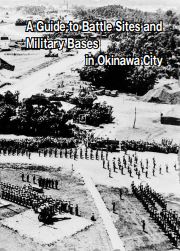 |
Guide to Battle Sites and Military Bases in Okinawa City Okinawa city office Entente and gender Equality section Feb 2012 On September 7th in 1945, the surrender document between the US and Japanese military was officially signed in Morine, Goeku Village (presently Kadena Air Base), thus concluding the Battle of Okinawa. | |||||
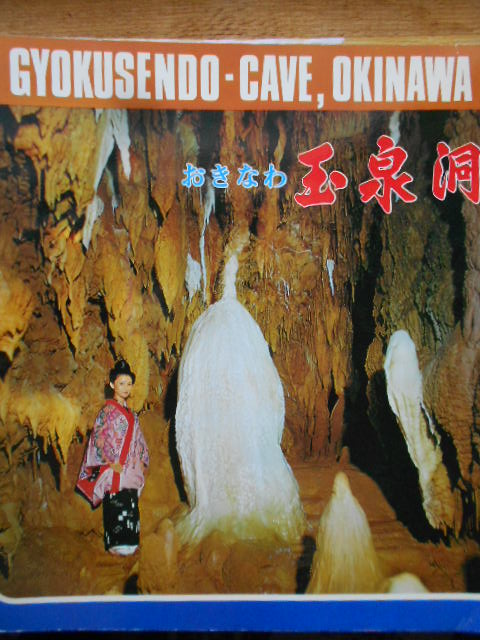 |
Gyokusendo Cave, Okinawa Author Copyright Publisher The largest cave in the Orient, is claimed in this brief, heavy paperback with lots of glossy photos of the interior of the Gyokusendo Cave. Most of the text is in Japanese but there are very, very brief English-language captions for each of the photos and a sprinkling of paragraphs explaining some of the features of the cave. Twenty-two pages. Available for sale at the entry point for the tour. | |||||
|
H |
H
| |||||
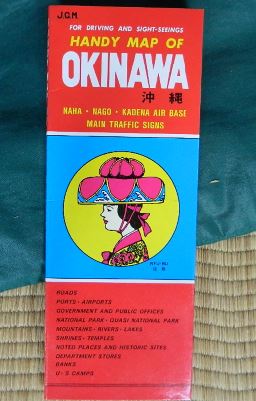 |
Handy Map of Okinawa Japan Guide Map Co. Ltd. Yokohama Date is not indicated but the map shows the old Makiminato-Naha Housing Area as it was before its return to Okinawa. | |||||
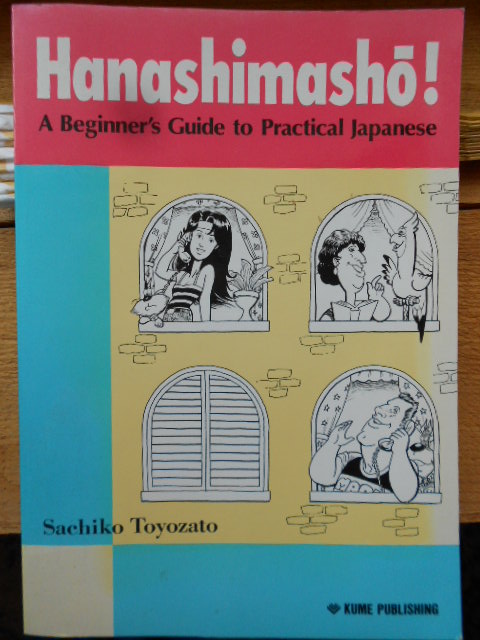 |
Hanashimasho! - A Beginner's Guide to Practical Japanese (1st edition) Sachiko Toyozato Copyright 1988. ISBN 4-906034-08-X Kume Publishing Co., Tokyo Decent full-size heavy paperback book with lessons that employ use of helpful sketches . Glossary contains a table for verb conjugation, a dictionary-like Japanese-to-English translation section, and an English-to-Japanese section. | |||||
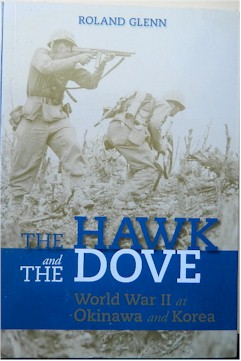 |
Hawk and the Dove, The - World War II at Okinawa and Korea Roland Glenn Copyright 2009 ISBN13: 978-0-9786899-5-7 ISBN: 0-9786899-5-7 Publisher Smith/Kerr Associates "a poignant memoir elaborating on the personal aftermath of war. Glenn conveys his heart and mind with the hopes of coming to terms and healing from Post-traumatic Stress Disorder. His personal story is an optimistic example of the profound impact early diagnosis and treatment can have." (Bob Kerrey, former Governor and Senator of Nebraska, former Navy SEAL awarded the CMoH) | |||||
 |
Hearing Voices: Female Transmission of Memories in Okinawan Literature in the 1970s and 1980s Erumi Honda 2010 Masters Thesis, Univ. of Massachusetts, Amherst "This Master’s thesis is my attempt to explore the question of what it has been like to live in Okinawa after World War II through examining literary texts set in postwar Okinawa. In particular, I will explore the ways in which Okinawan authors portray the complex realities of Okinawa after its reversion to Japan in 1972. Okamoto Keitoku made observations about the post-reversion period between the late 1970s and early 1980s and argued that this period was characterized by rapid “Japanization” and urbanization of Okinawa. According to Okamoto, these new circumstances altered Okinawan people’s lifestyles and traditional community relationships, creating a sense of anxiety among people about losing their cultural identity. These changes and the subsequent sense of loss of Okinawan identity resulted in raising public interest in what is native to Okinawa." | |||||
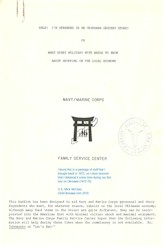 |
Help! I'm Stranded in an Okinawan Grocery Store! or, What Every Military Wife Needs to Know About Shopping on the Local Economy Navy/Marine Corps Family Service Center 1970s "This booklet has been designed to aid Navy and Marine Corps personnel and their dependents who must, for whatever reason, subsist on the local Okinawan economy. Although many food items in the Orient are quite different, they can be incorporated into the American diet with minimal culture shock and maximal enjoyment. The Marine Corps Family Service Center hopes that the following information will help during those times when the commissary is not available. So, Tabemasho or 'Let's Eat!' " | |||||
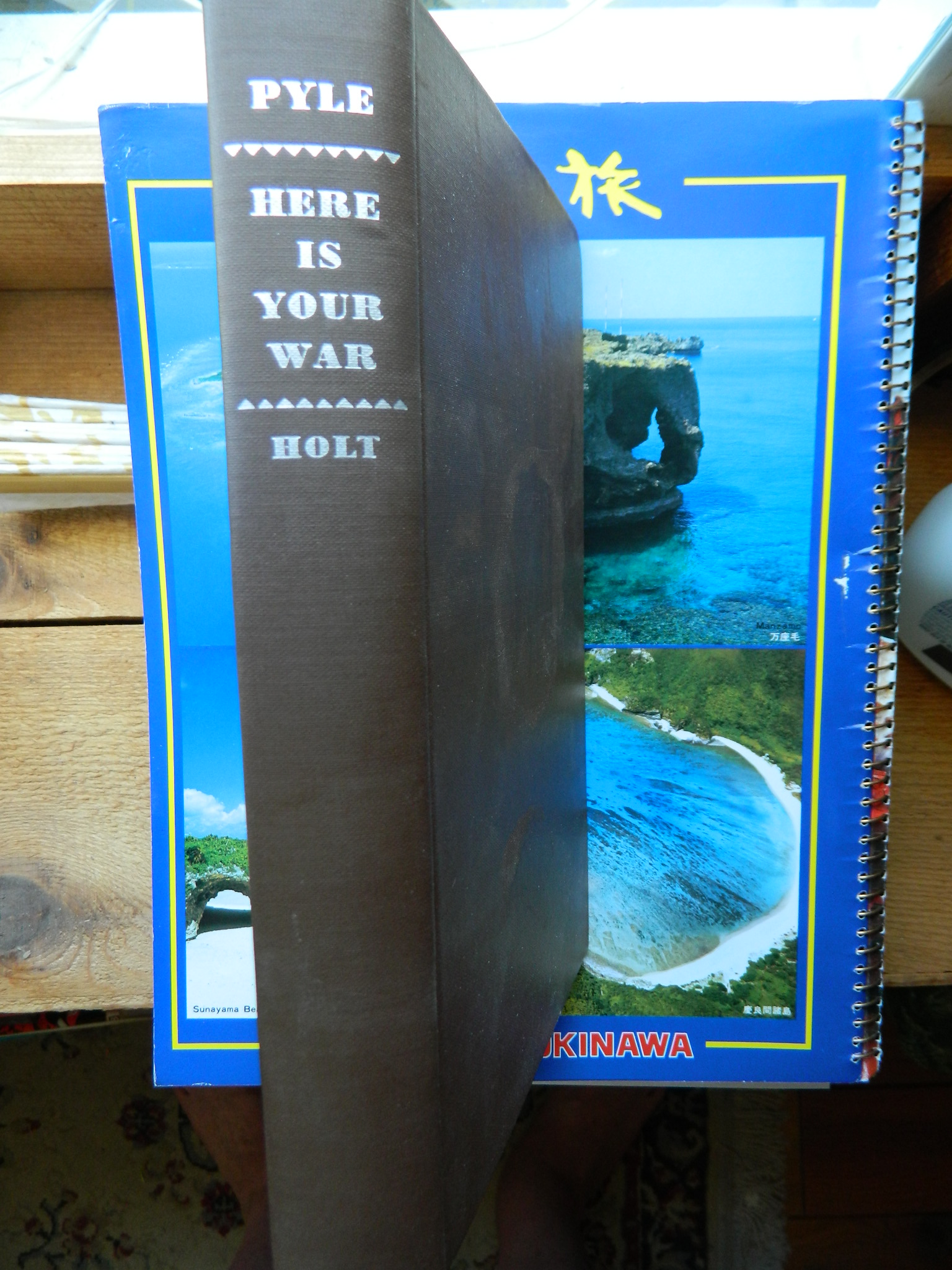 |
Here is Your War, Ernie Pyle Publisher - Henry Holt & Co. Copyright 1943 Publisher Henry Holt & Co. A wonderful book by Holt chronicling the travels and actions of the famous writer, Ernie Pyle. He starts off with Chapter 1, Convoy to Africa and ends with Chapters 16-18, The Final Push, Victory, and Aftermath. | |||||
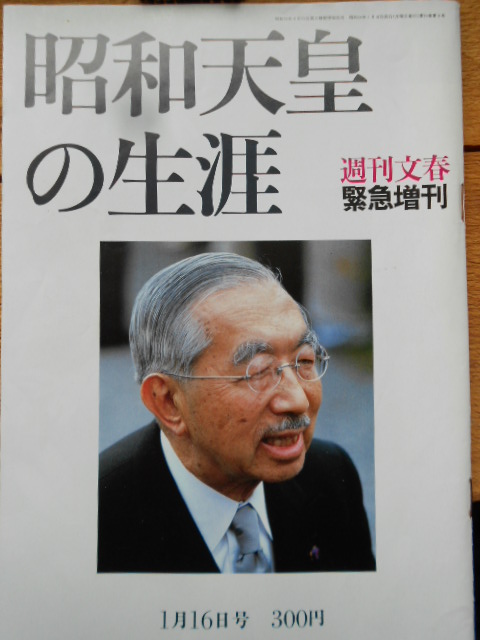 |
Hirohito - I don't know the true title as the book is 100% in Japanese Don't know - if anyone recognizes and can give specific details, please let me know I purchased this book, a 150 page pictorial biography of Japanese Emperor Hirohito, shortly after he died January 7, 1989. Can't read a lick of the text/captions but is a beautiful and moving experience. The photography is, as one would expect, meticulous. | |||||
 |
History of Nations: Japan (Ghent Edition) HENRY CABOT LODGE, Ph. D., LL. D. EDITOR-IN-CHIEF Copyright 1907, 1910, 1913 [READ it HERE] | |||||
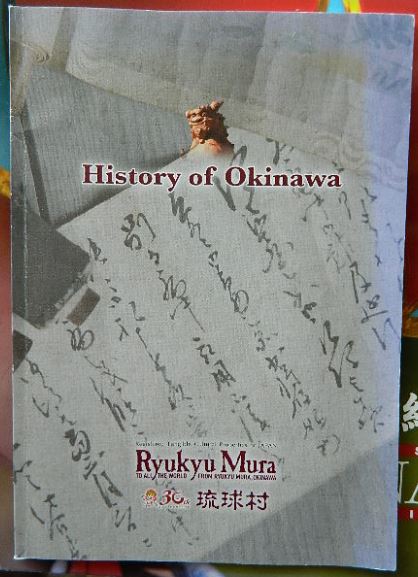 |
History of Okinawa Author - Ryukyu Mura pub. Copyright 2011, 2013 Okinawa Tourist Business Cooperative Association Publisher - Chitose Printing Company, Ltd (Okinawa) Handy little 42-page soft-bound booklet that I bought at the Ryukyu Mura gift shop. | |||||
 |
History of Postwar Yomitan I don't know - in Japanese Copyright 1993 221-page hard-bound book in Japanese language only. Packed with photos in color and in B&W. | |||||
 |
Home Country Ernie Pyle Copyright 1937 by Scripps-Howard Newspaper Alliance my copy is 7th printing - copyright 1947 by William Sloane Associates There is nothing about Okinawa in this book - except for the heart of the author. Ernie Pyle sacrificed his life for the GIs with whom he lived and, in the end, on the tiny island of Ie Shima. Ergo, Pyle has earned his place in my Library. | |||||
|
I |
I
| |||||
 |
I Was a Kamikaze (1st American edition - 1974) Ryuji Nagatsuka Copyright 1972 (English translation copyright 1973). LCCN 72-11281 PUBLISHER Translated from the French by Nina Rootes with an introduction by Robert Lecke | |||||
 |
Illustrated History of American Military Commissaries, The Volume 1 - The Defense Commissary Agency and its Predecessors since 1989 Dr. Peter D. Skirbunt 2008 Read it [HERE] | |||||
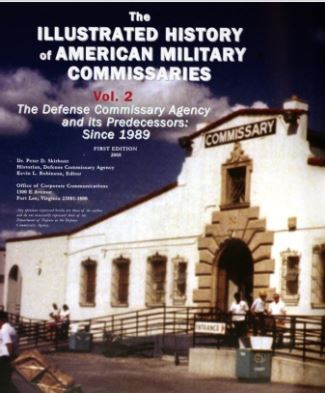 |
Illustrated History of American Military Commissaries, The Volume 2 - The Defense Commissary Agency and its Predecessors since 1989 Dr. Peter D. Skirbunt 2008 Read it [HERE] | |||||
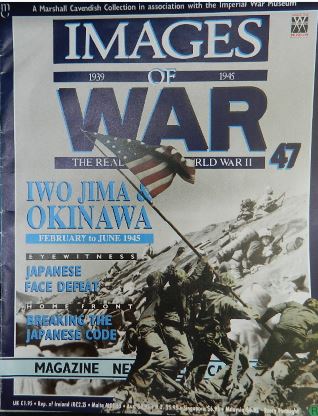 |
Images of War 1939-1945 A Marshall Cavendish Collection in association with the Imperial War Museum Copyright 1990 Marshall Cavendish Partworks Ltd., London Coverage of Iwo Jima and Okinawa. | |||||
 |
In the Philippines and Okinawa - A Memoir, 1945-1948 Willia. Triplet Copyright 2001. (ex libris) ISBN 0-8262-1335-9 University of Missouri Press In The Philippines And Okinawa: A Memoir, 1945-1948 is the third volume of the autobiography of Colonel William S. Triplet. It completes his personal story by recounting the American occupations after World War II. From overseeing the temporary burial of thirteen thousand U.S. servicemen to rounding up Japanese holdouts who refused to believe the war was ended, In The Philippines And Okinawa is a powerful, dramatic, first-hand look at the dawn of a new history arising from the horrors and heroism of World War II. A very highly recommended contribution to military history collections dedicated to the aftermath of the war in the Pacific. | |||||
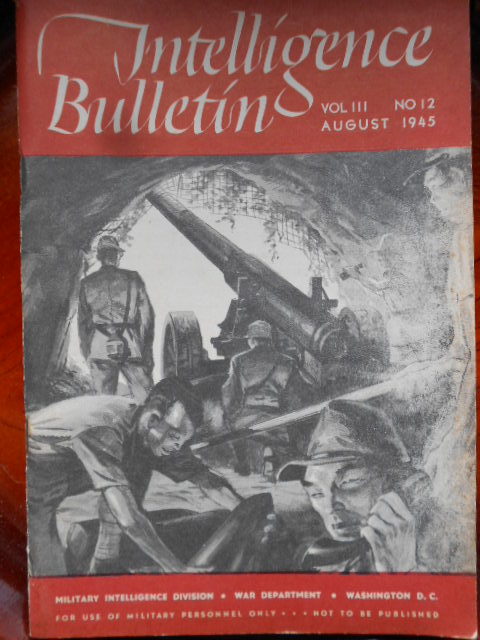 |
Intelligence Bulletin, August 1945 Military Intelligence Division, War Department, Washington, D.C. No copyright. Not to be published. For use of military personnel only. This is a nifty little monthly handbook that the War Department distributed to soldiers and commanders in the field. What makes it intriguing is that these were written and sent out during the time that the U.S. was in actual battle. What was learned from "the field" was very smartly compiled and shared widely throughout the battle units. Inside the front cover is, in part, the following: | |||||
 |
Intelligence Bulletin, September 1945 Military Intelligence Division, War Department, Washington, D.C. No copyright. Not to be published. For use of military personnel only. This is a nifty little monthly handbook that the War Department distributed to soldiers and commanders in the field. What makes it intriguing is that these were written and sent out during the time that the U.S. was in actual battle. What was learned from "the field" was very smartly compiled and shared widely throughout the battle units. Inside the front cover is, in part, the following: | |||||
 |
Is It Nationalism? History's Impact on Okinawan Identity Matthew Gottlieb Masters Thesis 2008 "... The prefectureís politics, sports, arts, and role as a peaceful land occupied by the United States underlie this. The question of the proto-entrepot past leads to the economic gap between Okinawa and the mainland. By becoming Ryukyu again with a weaponless realm and serving as a global marketplace, then the prefecture becomes just like prosperous Japan. The reversion movement was predicated on a unique identity wanting to return home. Okinawans may resent mainland tourists visiting the islands for an exotic vacation, but these people buying anthropomorphic pineapple dolls or T-shirts with the word ěporkî on it are furthering the islandsí identity. For now and the foreseeable future, Japanization is Ryukyuization." | |||||
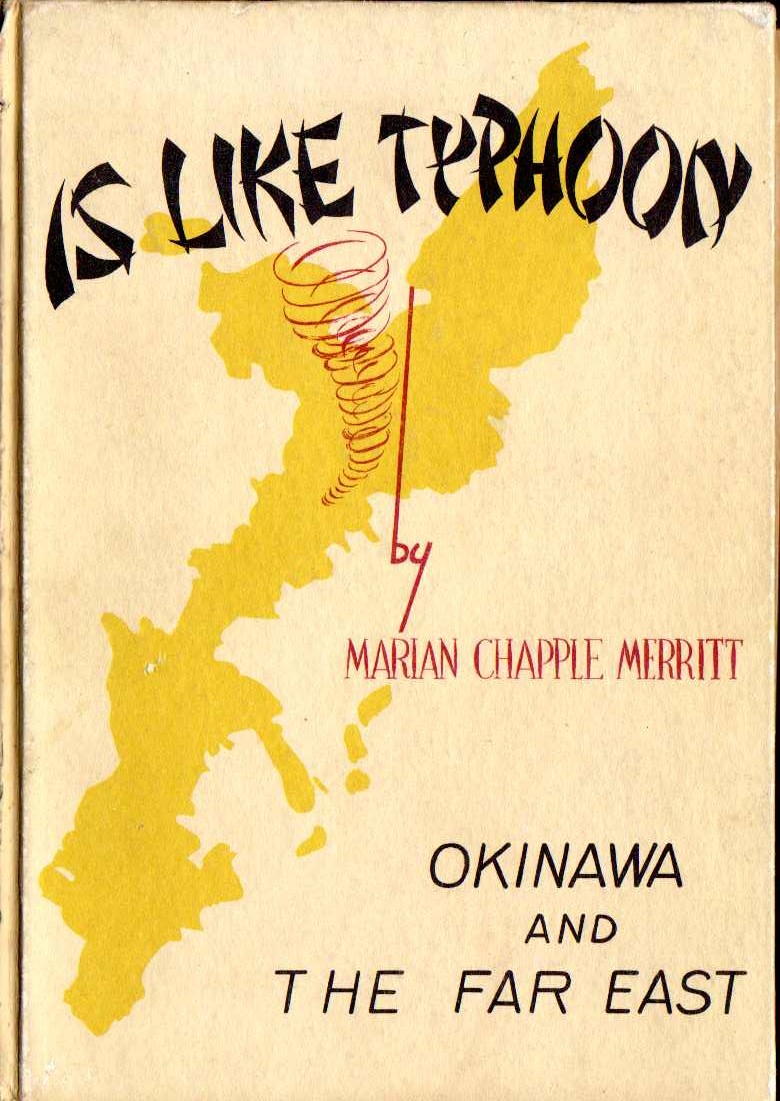 |
Is Like Typhoon Marian Chapple Merritt 1954 The World News and Publishing Co Ltd. Tokyo ...a wife's "tour of duty" of Okinawa, according to the author. This is a series of letters written to my mother and to "the girls". This is a personal account of what I saw and did and loved about Okinawa and the Orient. As such it is a collection of experiences - unrelated experiences - in a wonderful land peopled by wonderful men and women who have a philosophy of life which is different from that which I have learned as an American... | |||||
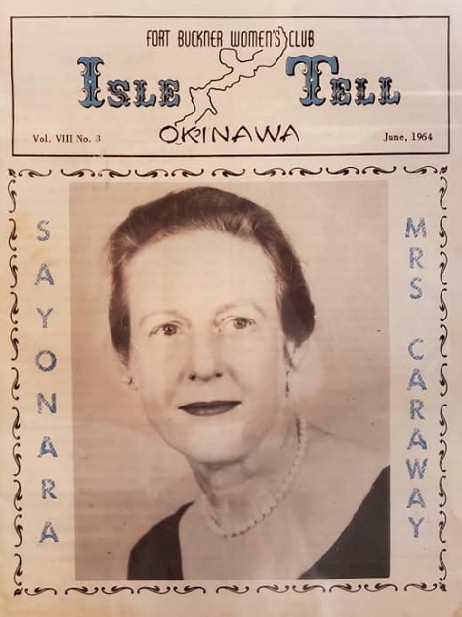 |
Isle Tell - June, 1964 Vol VIII No 3 Army Officers Wives Club, Okinawa Printed by Tiger Printing Company Somewhat similar to This Week on Okinawa this little paperback throw-away magazine provided social networking in the 1960s and 70s. | |||||
 |
Isle Tell - September, 1974 Vol XVIII No 2 Army Officers Wives Club, Okinawa Printed by Tiger Printing Company Somewhat similar to This Week on Okinawa this little paperback throw-away magazine provided social networking for the 1970s. | |||||
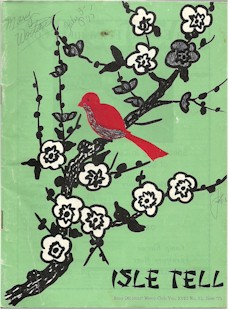 |
Isle Tell - June, 1975 Vol XVIII No 11 Army Officers Wives Club, Okinawa Printed by Tiger Printing Company Somewhat similar to This Week on Okinawa this little paperback throw-away magazine provided social networking for the 1970s. | |||||
|
J |
J
| |||||
 |
Japan: A Short Cultural History G. B. Sansom Revised edition, copyright 1962. (original copyright 1943) Appleton-Century-Crofts, Inc. NY A good primer on Japanese culture. Sansom's book has been around for a long, long time, and it has been an introduction to the subject for several generations of interested readers and budding Japanese scholars. | |||||
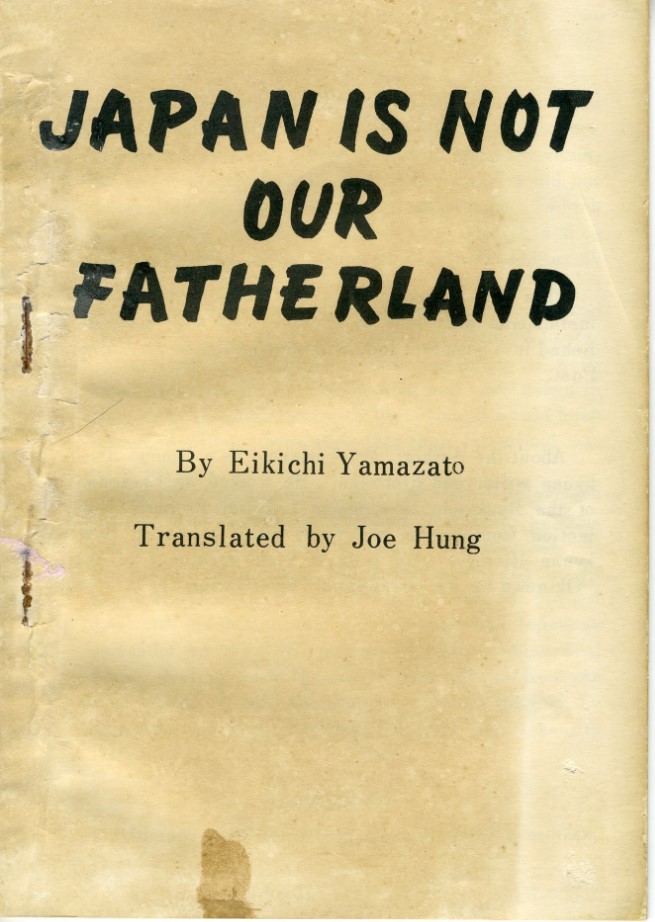 |
Japana Is Not Our Fatherland Yamazato Eikichi translated into English in 1969 by Joe Hung from a series of articles in the China Post in June 1969. The author ardently offers sound rationale for why Ryukyuans, Okinawans, do not and should not consider Japan to be their "Fatherland." A moving and passionate missive. | |||||
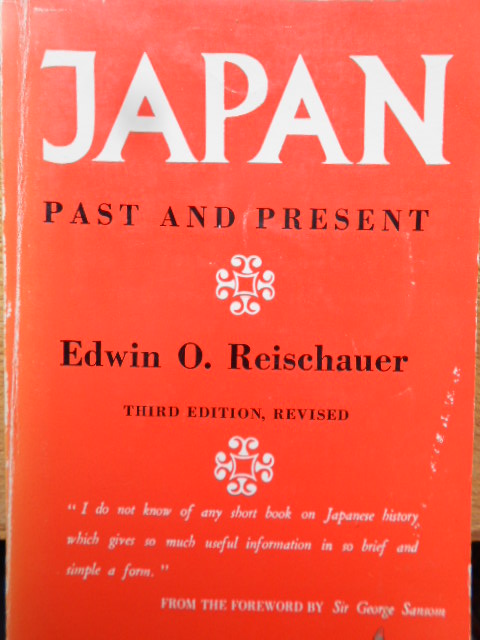 |
JAPAN Past and Present Edwin O. Reischauer Copyright in US 1946. This is a 5th printing, 1967 Charles E. Tuttle Co. Rutland, VT and Tokyo, JA 323-page paperback, including chronology and notes, that is crammed with facts. Not much about Okinawa however. Pretty dry, to the point fact book. For example, the chapter on "The Early Japanese" is condensed into 6 pages of text. Good read for someone stepping up from novice Japan historian. | |||||
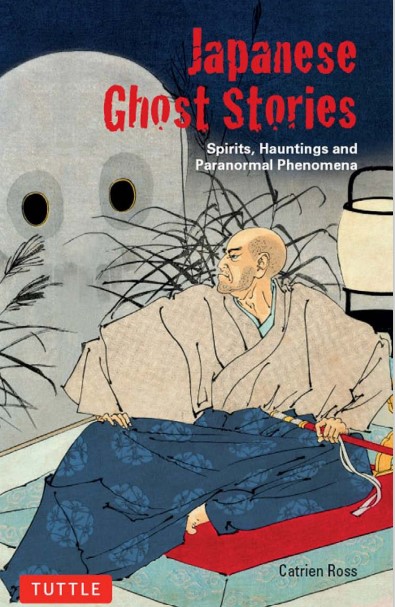 |
Japanese Ghost Stories, Spirits, Hauntings and Paranormal Phenomena Catrien Ross Copyright 1996 Tuttle "For the reader unfamiliar with Japan’s supernatural, this book should provide a preliminary introduction to the shadowy world that lies behind Tokyo’s hard, commercial dazzle. There may be readers who are disappointed that I did not include more, but to cover all was not my intent. As an exploratory journey into otherworldly things in Japan, this book is meant to offer a starting point. I hope readers will enjoy reading its pages as much as I have enjoyed writing them." (C. Ross) | |||||
 |
Japanese in 30 Hours Eiichi Kiyooka Copyright re-revised edition 1953. ISBN 0-89346-031-1 The Hokuseido Press, Tokyo First course in Japanese language for either class room use or self study. | |||||
 |
Japanese Phrasebook Yoshi Abe Copyright 1998 Lonely Planet Two-way, Japanese-to-English and English-to-Japanese phrasebook | |||||
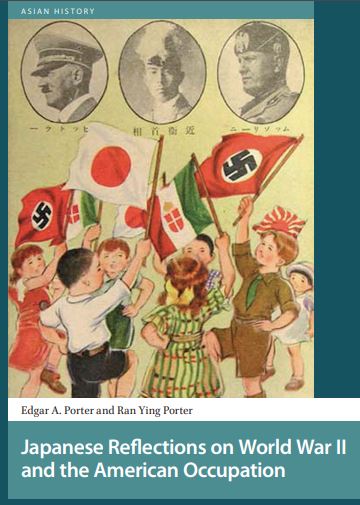 |
Japanese Reflections on WW II and the American Occupation Edgar A. Porter & Ran Ying Porter Copyright 2017 Amsterdam University Press "The personal histories of those who experienced the war and Occupation in Japan between the early 1930s and mid-1950s will soon fade away as age takes its toll. With this in mind, the authors decided to chronicle as much of that oral history as possible and to accomplish this in as deep and, at the same time, broad an approach as possible. Deep in the sense that we dug into layers of memory from citizens living in one prefecture in Japan, a place that reflects in both drama and detail the national challenges and attitudes of the times; broad in the sense that we interviewed diverse populations of Japanese citizens encompassing ages and professions across the spectrum of society during the war years."[Read it Here] | |||||
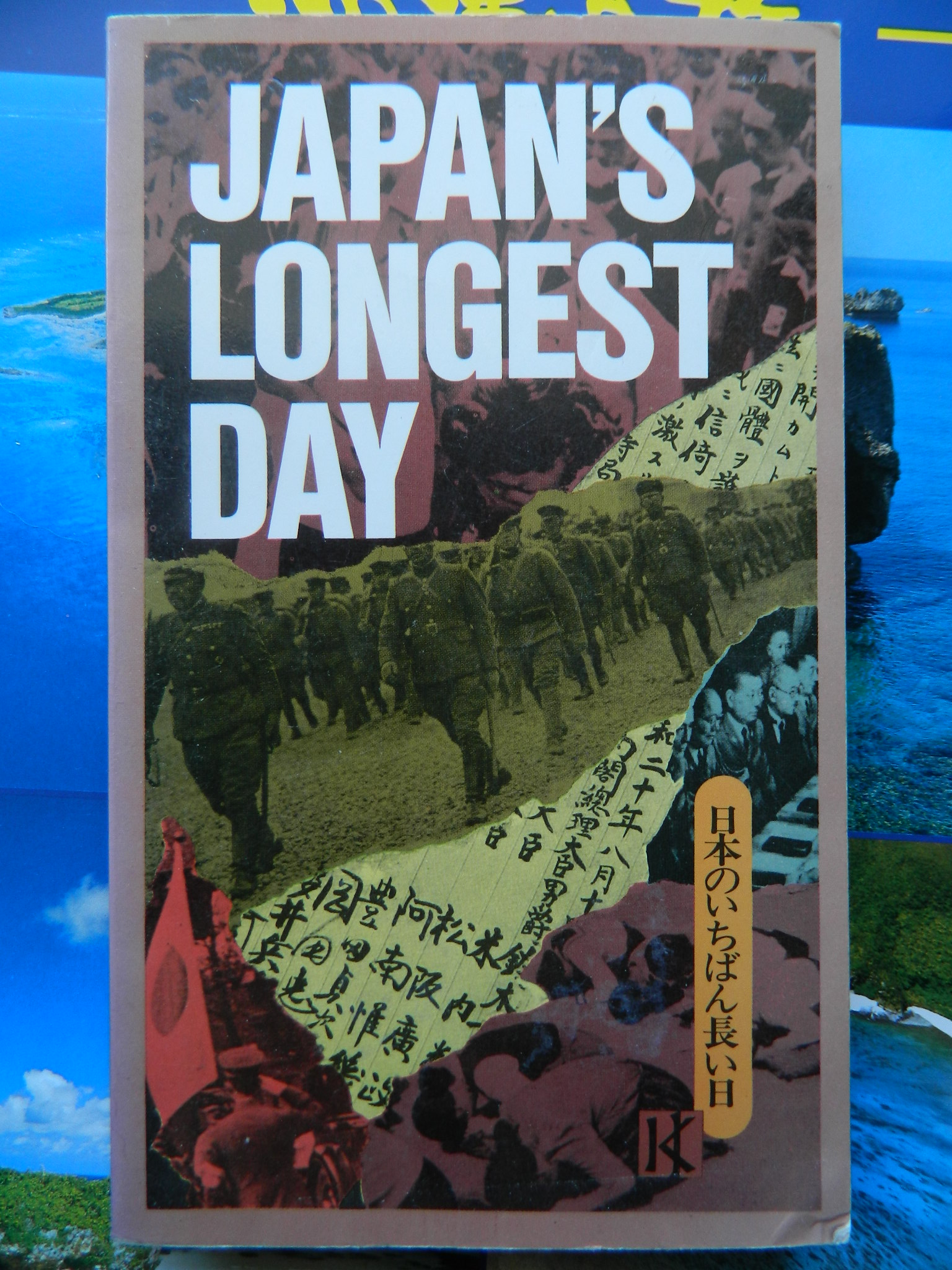 |
Japan's Longest Day Compiled by The Pacific War Research Society Copyright 1968 LoCCN 68-17573 ISBN 0-87011-422-0 First English language translation from the original Japanese, copyright 1965 by Bungei Shunju, Ltd. entitled Nihon no Ichiban Nagai Hi Publisher - Kodansha Int'l, Ltd. This is a 1980, second printing of the paperback edition. A fairly quick read with much detail and abundant photograph plates. | |||||
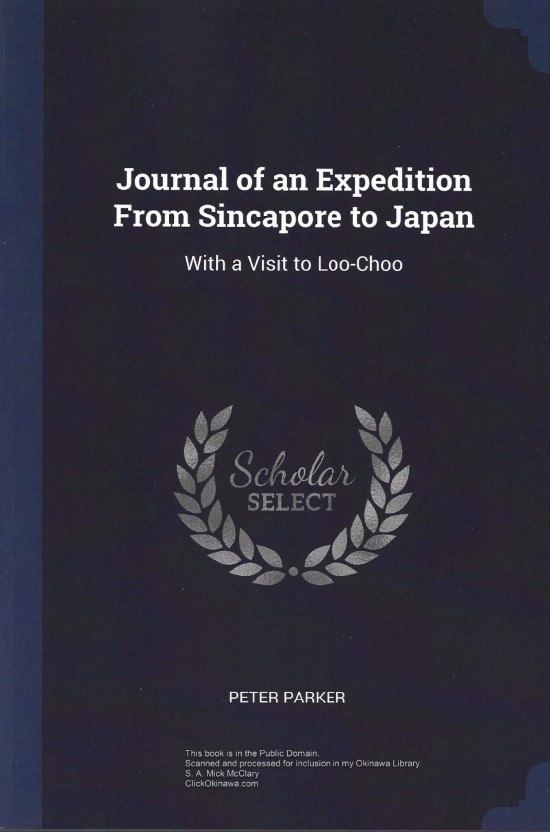 |
Journal of an Expedition from Sincapore to Japan with a visit to Loo-Choo Peter Parker Public domain 1838, London: Smith, Elder & Company, Cornhill "Descriptive of these islands and their inhabitants; in an attempt with the aid of natives educated in England, to create an opening for missionary labours in Japan," by Peter Parker, M.D., medical missionary from the American Missionary Board. | |||||
 |
Journal of the Perry Expedition to Japan (1853-1854), A S. Wells Williams 1910 Read it [HERE] (.pdf download) | |||||
 |
Journey to the Far Pacific Thomas E. Dewey Copyright 1952. LCCN 52-5222 Doubleday & Co., Inc. Garden City, NY Personal account of the travels and observations by Thomas E. Dewey, the 47th governor of New York (1943-54). The information in the book is based on his travels to 17 Pacific countries, a trip suggested by State Department adviser John Foster Dulles. Only 6 pages are devoted to Okinawa.Okinawa, half the size of the State of Rhode Island, and scene of the last great battle of the Pacific, was our midway stop on the way from Japan to Formosa. It is said that the Japanese were jealous of the Okinawan civilization, which had flourished on the island for hundreds of years. Whatever the reason, they invaded and conquered Okinawa in 1609 and the island was seldom heard of in the Western world until the final stages of the Pacific war. | |||||
|
K |
K
| |||||
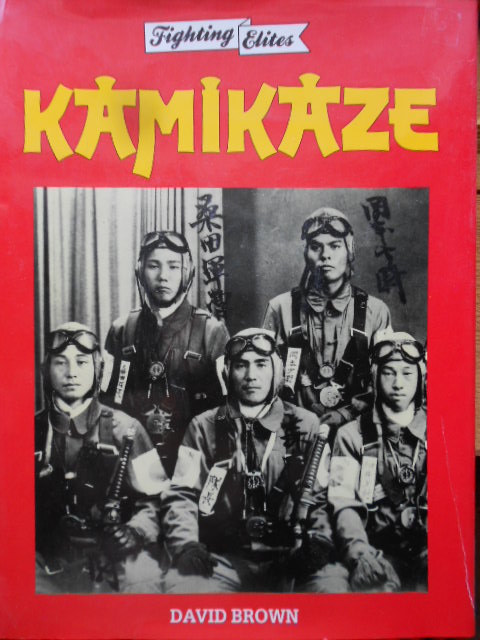 |
Kamikaze David Brown Copyright 1990. ISBN 0-86124-591-1 Printed in Hong Kong Bison Group - Bison Books, Ltd. London Kamikaze looks at the origins of the suicide campaign amid the concepts of Bushido, Japan's self-sacrificing warrior code, and Shinto, the State religion. It follows the ebb and flow of the major battles. The author also looks at kamikaze tactics and the U. S. response, and offers a critical analysis of one of World War II's most bizarre military phenomena. | |||||
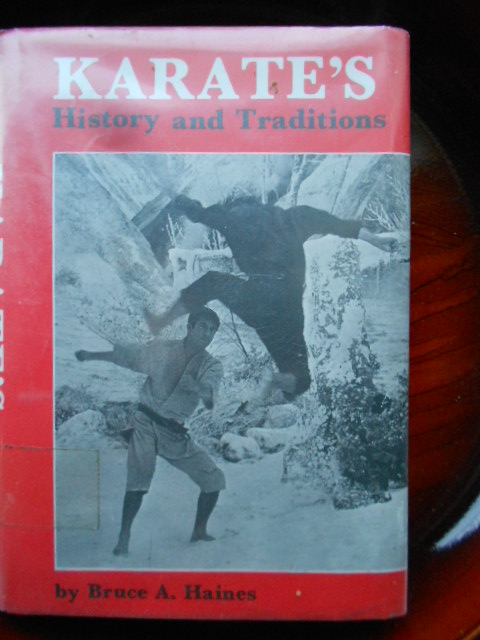 |
Karate's History and Traditions Bruce A. Haines Copyright 1984, 13th printing. 1st edition 1968. ISBN 0-8048-0341-2 LoC Catalog Card # 68-25893) ex libris Charles E. Tuttle Company - Rutland, VT & Tokyo, Japan This is the first reference book in English written on the history of karate. Compiled by a scholar with not only a deep interest but also a thorough knowledge of both Asian history and karate, this book is sure to be the definitive work in the field. | |||||
 |
Keystone - The American Occupation of Okinawa and U.S.-Japan Relations Nicholas Evan Sarantakes Copyright 2000 Publisher - Texas A&M In the mid1990s, Okinawa became the focal point of a major crisis in U.S.Japanese relations. During this diplomatic incident many Americans were surprised to learn that the United States had military bases on this island. In fact, the United States had ruled Okinawa and its surrounding islands as a colony in everything but name from 1945 to 1972. The island had been the strategic keystone of the American postwar base system of double containment in the Pacific and the only spot in that chain that American officials insisted on governing under the legal cover of “residual sovereignty.” | |||||
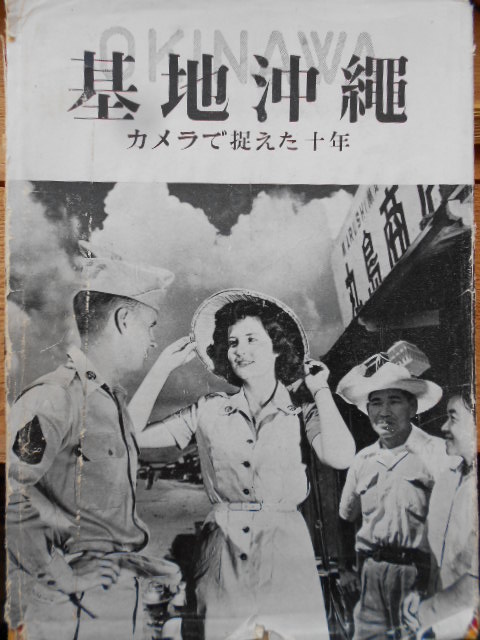 |
Kichi Okinawa Okinawa A Military Base The Okinawa Times circa. 1950s
| |||||
 |
Killing Ground on Okinawa - the Battle for Sugar Loaf Hill (3 copies) James H. Hallas Copyright 1996. ISBN 0-275-94726-2 Praeger. Westport, Connecticut The narrative is full of details but the real guts of the book is the first-hand accounts by the men involved in the assaults against the well constructed Japanese defensive positions. Not only were the Japanese well dug in and protected but they used their firepower and weapons to great advantage. They wrought destruction upon the advancing marines. Men and machines were continually being knocked out with no gain being made against the determined Japanese defence. | |||||
|
L |
L
| |||||
 |
Language and Culture Orientation Course Study guide prepared by US Army for newcomers to Okinawa circa 1960s Handy 30-page type-written and hand-drawn text/study guide. It has quite a few useful phrases with explanations of sentence structure and conversational vocabulary. | |||||
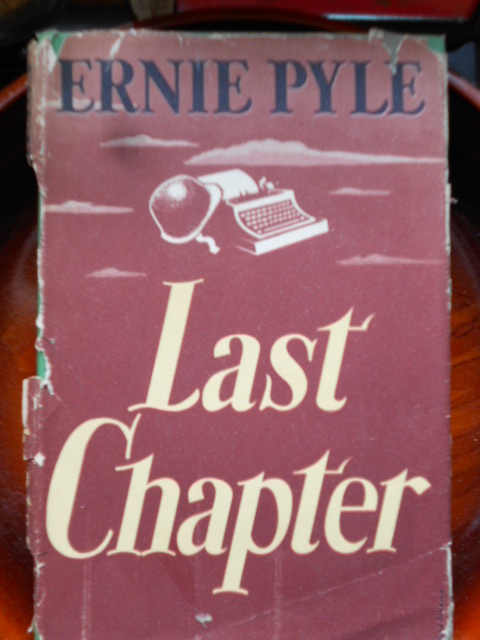 |
Last Chapter (two copies, each a 1st printing) Ernie Pyle Copyright 1945 by Scripps-Howard Newspaper Alliance Copyright 1946 by Henry Holt & Company, Inc. NY This is the final book of Ernie Pyle's war reporting. After Africa, Italy and D-Day on the European continent, Pyle took it the hard way again. There was still the Pacific war to win, and where the fighting was Ernie had to go, soul-sick though he was with the thousands of scenes of death and destruction he had already witnessed. | |||||
 |
Last Souvenir, The - Okinawa 1945 (1st Edition, pb) Jack Carroll Copyright 2009 ISBN 978-1-876963-04-0; LoCCN 2009943252 Publisher ipicturebooks This is one of those rare books that made me sad to reach the end. I wanted to know more! | |||||
 |
Leavenworth Papers #18: Japan's Battle of Okinawa, April-June 1945 Thomas M. Huber Combat Studies Institute, U.S. Army Command and General Staff College In modern military literature, there is no more pernicious theme than that the day of the infantryman has passed us by, overwhelmed by increasingly lethal technology. Japan's Battle of Okinawa takes us into the world of the modern infantryman and illustrates in vivid detail Clausewitz dictum that combat is to war as cash payment is to commerce.
| |||||
 |
Leisure Hour, The - a Family Journal of Instruction and Education No. 92, Thursday, September 29, 1853 A rare look at what we knew about Loo Choo 160 years ago, in 1853. | |||||
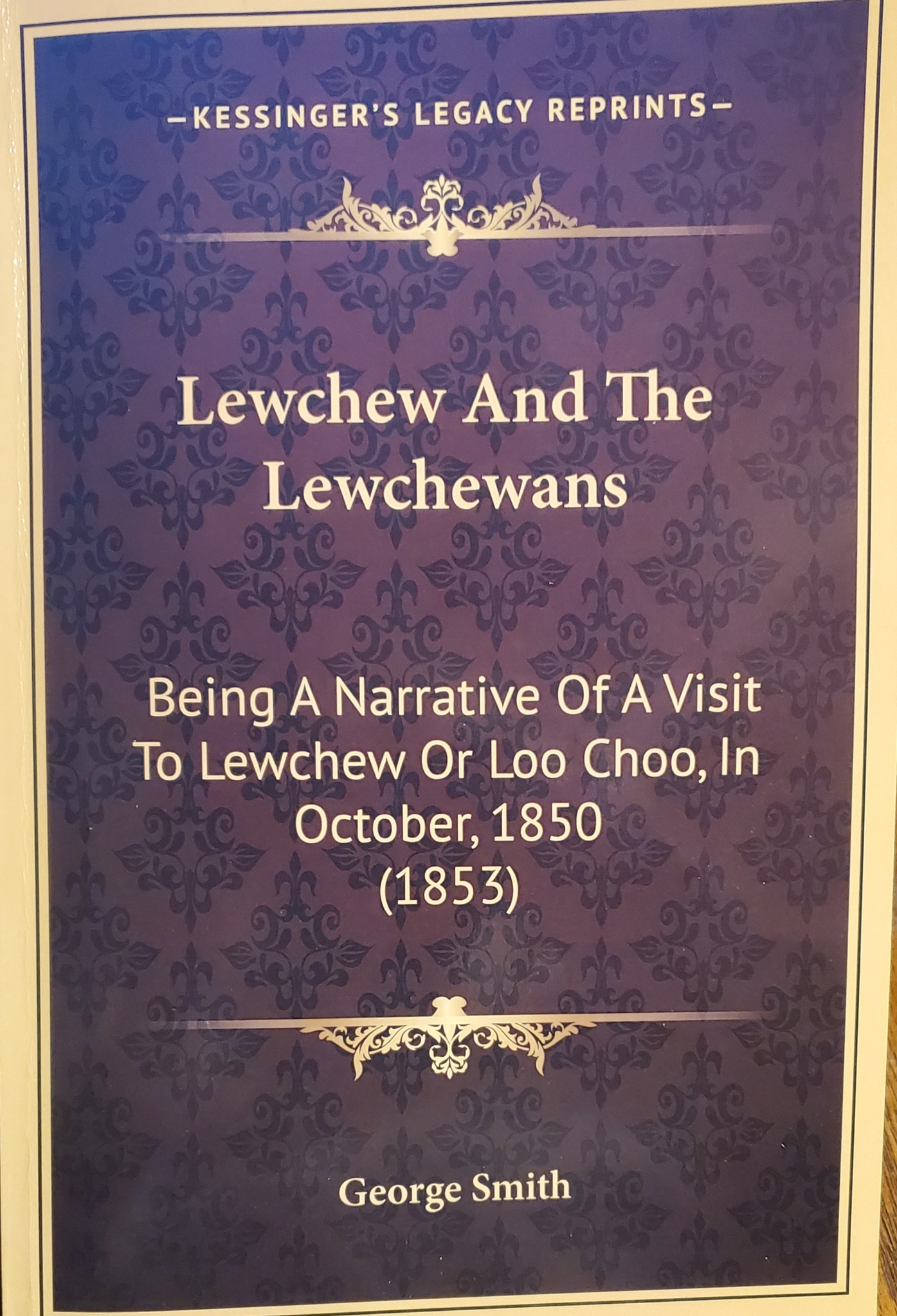 |
Lewchew and the Lewchewans - Being a Narrative of a Visit to Lewchew or Loo Choo, in October, 1850 George Smith, D.D. - Lord Bishop of Victoria Published by T. Hatchard, 187, Piccadilly, London in 1853 Probably the most comprehensive English language account relating to Okinawa published prior to the narrative of American Expedition to Japan headed by Commodore Perry which arrived in Okinawa more than two years after Smith's visit. This book is Bishop Smith's account of his efforts, supported by the British Government, to obtain better treatment of Dr. Bernard Bettelheim. Bettelheim, a medical missionary, had been sent to Okinawa in 1846 by the British Loochoo Missionary Society. His presence on Okinawa was unwelcome by the authorities and his activities were constantly limited and hindered. Both Bettelheim and the Okinawan authorities complained about his situation, but an impasse had developed. Neither side appeared to be willing to give in. Bishop Smith's visit was intended to show the Okinawans that the full authority and power of the English government supported Bettelheim's continued and unrestricted presence on Okinawa. Bishop Smith's account of his visit, which spanned the period from Oct 3 - Oct 10, 1850, provides exceptional insight into the conditions under which Bettelheim conducted his medical mission. | |||||
 |
LIFE Magazine, May 28, 1945 Okinawa Except for Japs, it is a very pleasant place [Read it HERE] | |||||
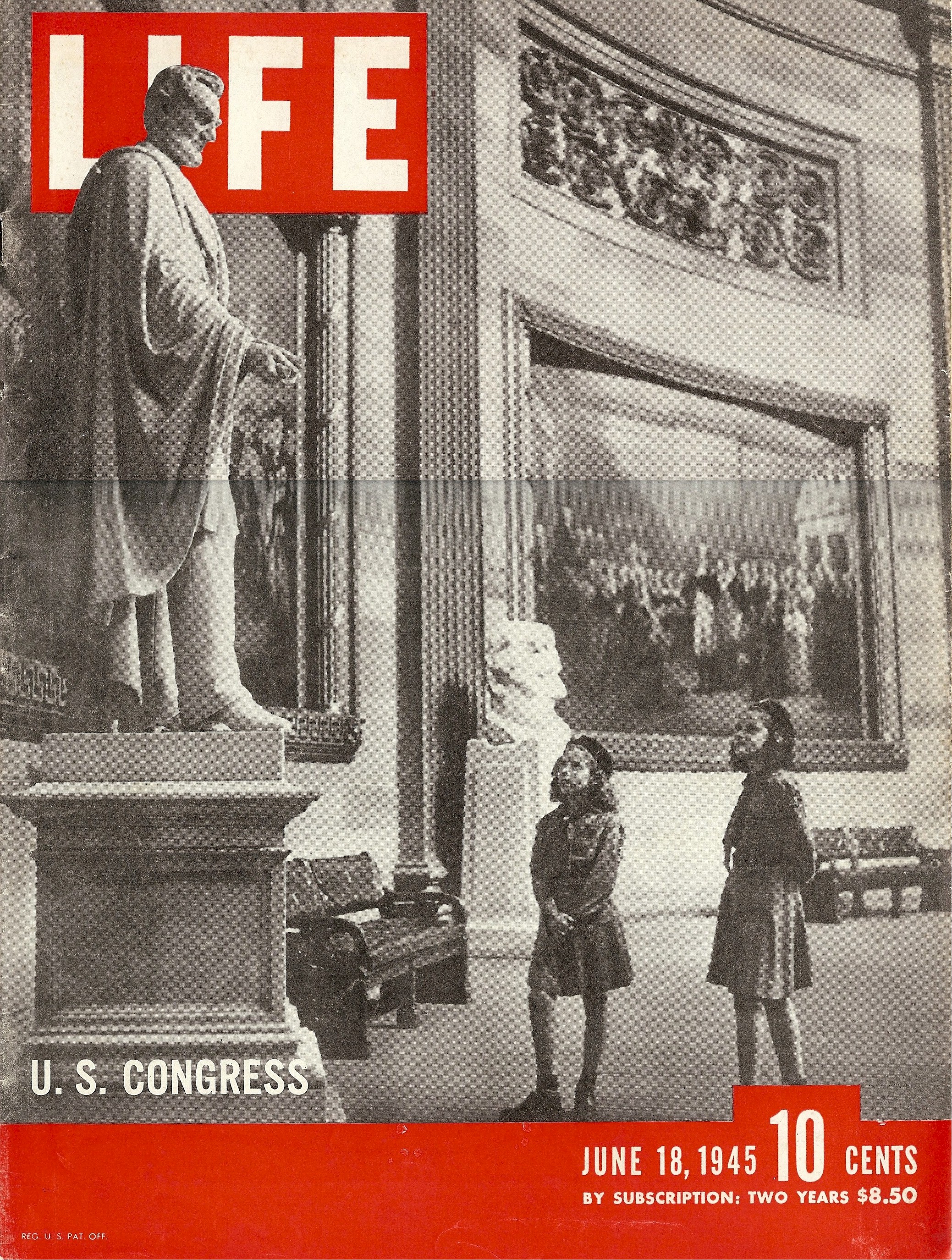 |
LIFE Magazine, June 18, 1945 Okinawa 24 Hours with Infantryman Terry Moore [Read it HERE] | |||||
 |
LIFE Magazine, Dec 19, 1945 Okinawa Junk Heap, The Article in the Dec 19 issue touches on the abandoned and neglected military "junk" left over from the final battle of World War 2. [Read it HERE] | |||||
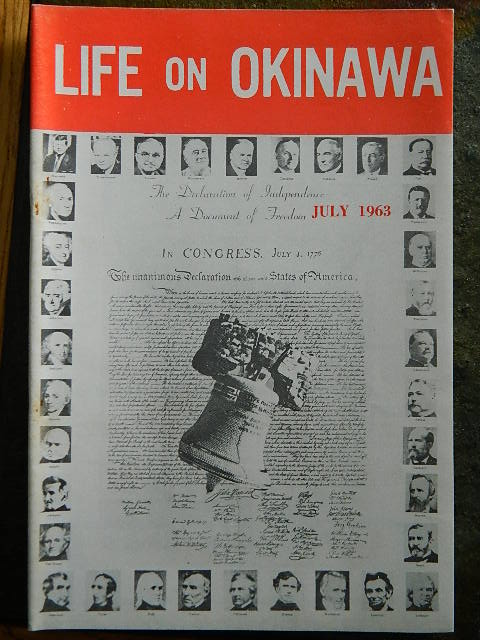 |
Life on Okinawa Monthly Magazine of the Ryukyu Islands - July 1963 Magazine Vol 3 No 5 Publisher: Tiger Printing Service, Highway 1, Machinato [READ] selected pagesSome of the features: | |||||
 |
Life on Okinawa Monthly Magazine of the Ryukyu Islands - January 1965 Magazine Vol 4 No 11 Copyright 1965 Publisher: Tiger Printing Service, Highway 1, Machinato TEXTSome of the features: | |||||
 |
Life on Okinawa Monthly Magazine of the Ryukyu Islands - February 1965 Magazine Vol 4 No 12 Copyright 1965 Publisher: Tiger Printing Service, Highway 1, Machinato [READ] selected pagesSome of the features:
If you would care to make a small donation to off-set expenses relating to creating and maintaining this Library for your use | |||||
 |
Life on Okinawa Monthly Magazine of the Ryukyu Islands - March 1965 Magazine Vol 5 No 1 Copyright 1965 Publisher: Tiger Printing Service, Highway 1, Machinato TEXTSome of the features: | |||||
 |
Life on Okinawa Monthly Magazine of the Ryukyu Islands - May 1965 Magazine Vol 5 No 3 Copyright 1965 Publisher: Tiger Printing Service, Highway 1, Machinato TEXTSome of the features: | |||||
 |
Little Ship, Big War The Saga of DE343 Stafford, Edward P., Cmdr, USN (Ret) Copyright 1984 LoCCN 84-60482 ISBN 0-688-03253-2 Publisher - William Morrow & Co. | |||||
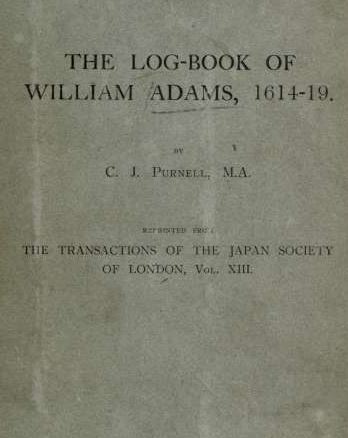 |
Log Book of William Adams 1614-19 with the journal of Edward Saris, and other documents relating to Japan, Cochin China, etc William Adams (Author), Edward Saris (Author), Christopher James Purnell (Author) 1916 London Read it [HERE] (.pdf download) | |||||
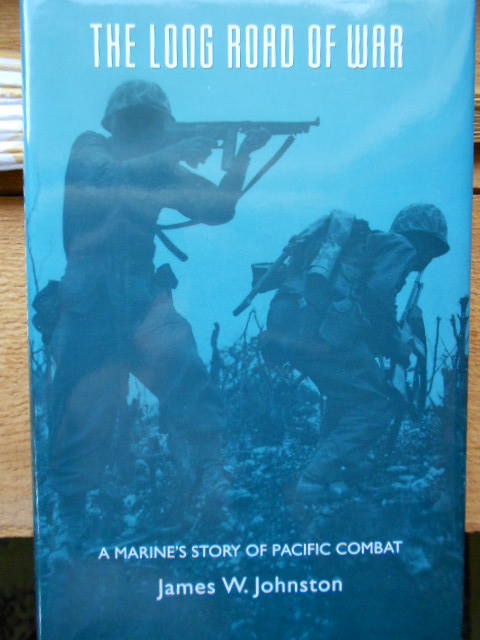 |
Long Road of War, The James W. Johnston Copyright 1998. ISBN 0-8032-2585-7 University of Nebraska Press. Lincoln and London This is another outstanding book by a 1st Marine Division man. Johnston served with E Co 2nd battalion 5th Marines on Bouganville, Pelelieu and Okinawa. To his surprise he also got a campaign star for New Guinea as he doesn't recall anything happening there. Initially he is a machine gunner with the Heavy weapons company but battle experience led to a reorganization that saw machine gunners attached to line companies (the mortars were attached to HQ Company). Accordingly, Johnston is in the thick of the action, particularly on Peleliu and on Okinawa where he commands two squads. | |||||
|
|
Loo Choo an article from the weekly magazine, "The Leisure Hour" A Family Journal of Instruction and Recreation No. 92, Thursday, September 29, 1853 Read it HERE (.pdf) | |||||
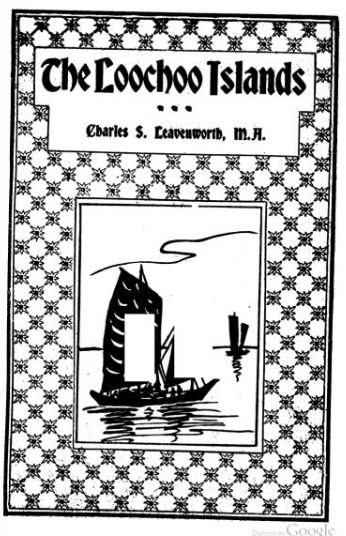 |
LooChoo Islands, The Charles S. Leavenworth, M.A. Copyright 1905. Imperial Nanyang College, Shanghai [Read the Book] | |||||
 |
Loo Choo Islands - A Chapter of Missionary History Rev. Henry B. Schwartz, A.M. Copyright 1907. Methodist Publishing House, London 1907 By his sympathetic and graphic pen, Rev. Schwartz seeks to introduce the Islanders to the Christian world, not for gain, but that we of the West may have a share of gospelizing this ancient, civilized people. The story he relates is very much condensed, but it gives in intelligible account of a people who were regarded by Commodore Matthew Perry as only second to the Japanese and with whose ruler he negotiated a treaty with America. What is of greater interest is that Schwartz and his family had consecrated themselves to the service and salvation of these long forgotten 600,000 souls. They love the people and God has given them a soul-inspiring vision of a Christian Loo Choo which they would now make a fair reality through the help of the missionary society and friends. | |||||
|
M |
M
| |||||
 |
MCAF Bus Tours 1967 Read it Here (download .pdf) | |||||
 |
MHQ - The Quarterly Journal of Military History, Spring 1995, Vol 7, No 3 Copyright 1995 American Historical Publicatios, Inc. This was "A Special Issue: The End of the War with Japan. | |||||
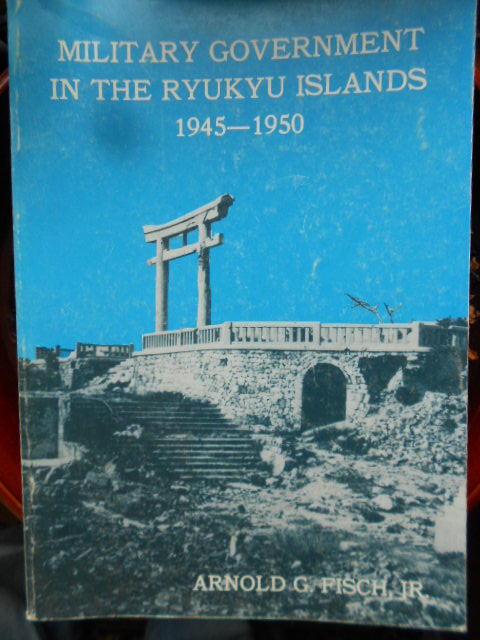 |
Military Government in the Ryukyu Islands 1945-1950 (1st printing) Arnold G. Fisch, Jr. Copyright - none. Government publication ARMY HISTORICAL SERIES. Center of Military History, United States Army, Wash D.C. 1988 The struggle for Okinawa was the last battle of World War II and the bloodiest campaign in the Pacific against Imperial Japan. Long before the battle ended, U.S. Army civil affairs officers began the task of providing essential services for the island's war-torn population. This volume is an authoritative account of the Army's military government efforts on Okinawa from the first stages of planning until the transition toward a civil administration began in December, 1950. | |||||
 Kindle ed. |
Military Police Operations in the Okinawa Campaign Major James J. Emerson Copyright 2014 Pickle Partners Publishing This is an interesting work that addresses the missions of Military Police during the Okinawa campaign. Having recognized that there is very, very little written about the MPs during Operation Iceberg the author has extrapolated data from numerous sources to create a fairly graphic picture of what those Army and Marine Corps cops did. Despite significant failures of leadership during the planning phases of the campaign the MPs, once they got their feet on the ground, did an amazingly good job. With fewer troops than needed (and requests for more turned down) and emerging policing requirements that had not been anticipated they were able to get the job done - sometimes at the cost of interfering with and even stalling combat troops. | |||||
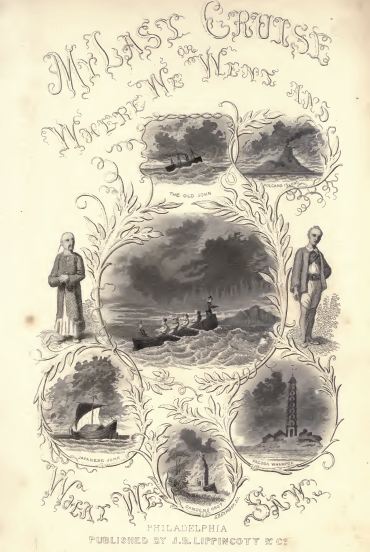 |
My Last Cruise or Where We Went and What We Saw, The North Pacific Surveying and Exploring Expedition Alexander W. Habersham, Lieut., U.S. Navy 1858 J. B. Lippincott & Co., Philadelphia Being an account of Visits to the Malay and Loo-Choo Islands, the Coasts of China, Formosa, Japan, Kamtschatka, Siberia, and the Mouth of the Amoor River | |||||
 |
My Three Years with Eisenhower 1942-1945 Harry C. Butcher, Capt, USNR - Naval Aide to Gen. Eisenhower Copyright 1946 Simon and Schuster My Three Years with Eisenhower could have been written only by the man who lived with Dwight D. Eisenhower day and night; who acted as his friend and confidant; whose duties ranged from opening the General's car door to handling such ticklish jobs as the battle between General Patton and Sergeant Bill Mauldin; who saw Dwight Eisenhower, in his intimate day by day life, develop from a relatively unknown staff officer to the Commander of the greatest military operation in all history. Captain Harry Butcher served for three years as naval aide to General Dwight D. Eisenhower during World War II. As he wrote in his introduction, "I want to make it clear to the reader that this effort is my responsibility and not General Eisenhower's. Yet I like to think that, although I wrote the book, General Eisenhower lived it." General Eisenhower did indeed live it. So did Franklin Roosevelt, Winston Churchill, Harry Hopkins, Bernard Montgomery, and General George Marshall and dozens of others of the English and American leaders who bore in their minds and in their hearts the terrible responsibility of planning and executing the war against Axis Europe. | |||||
|
N |
N
| |||||
 |
Naha Air Base, Okinawa A nifty "yearbook" style soft cover publication from the 1960s intended to acquaint newcomers to Naha Air Base to the many facilities and amenities at the base. If you were ever stationed on Naha AB, and especially if you were there in the 60s this is going to be a walk down Memory Lane for ya! Dozo! [Read it HERE] | |||||
 |
Naha NCO Wives Club newsletter Most of the 1965 issues Here is a list of the issues that I have here in the Library. Click on the hyperlink to download the issue: | |||||
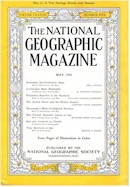 |
National Geographic, May, 1945 Peacetime Rambles in the Ryukyus William Leonard Schwartz [Read it HERE] | |||||
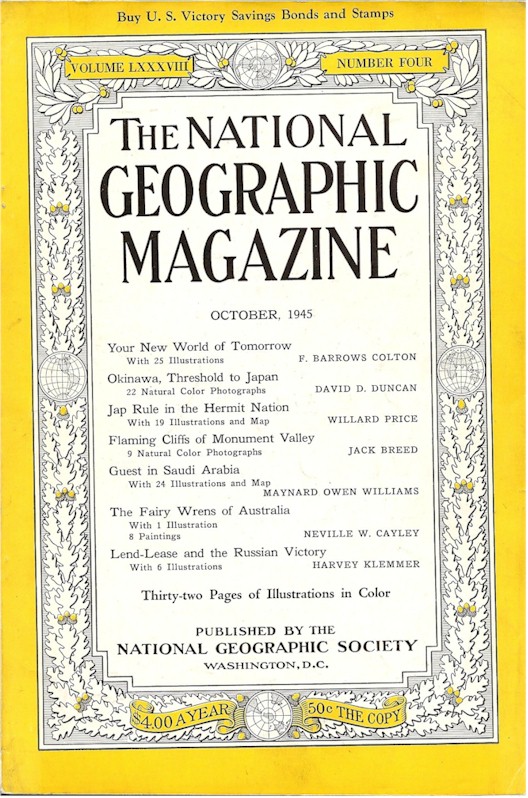 |
National Geographic, October, 1945 Okinawa Threshhold to Japan [Read it HERE] | |||||
 |
National Geographic, February, 1955 Okinawa The Island Rebuilt [Read it HERE] | |||||
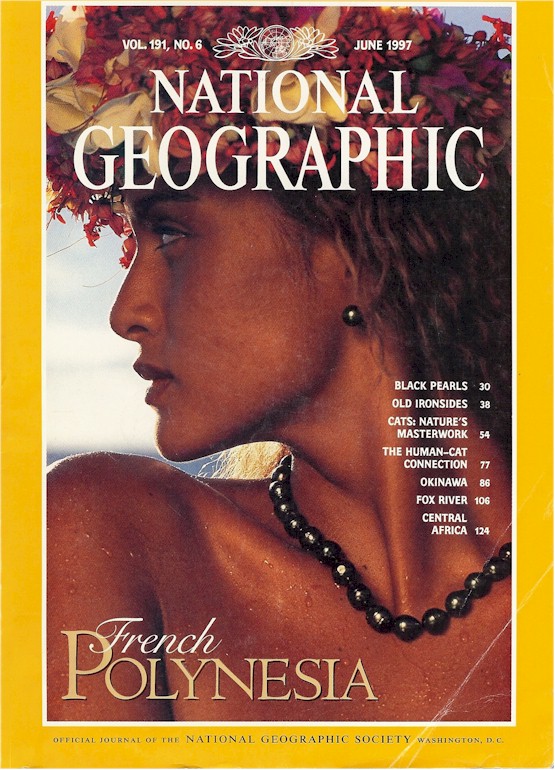 |
National Geographic, June, 1997 Okinawa Claiming its Birthright [Read it HERE] | |||||
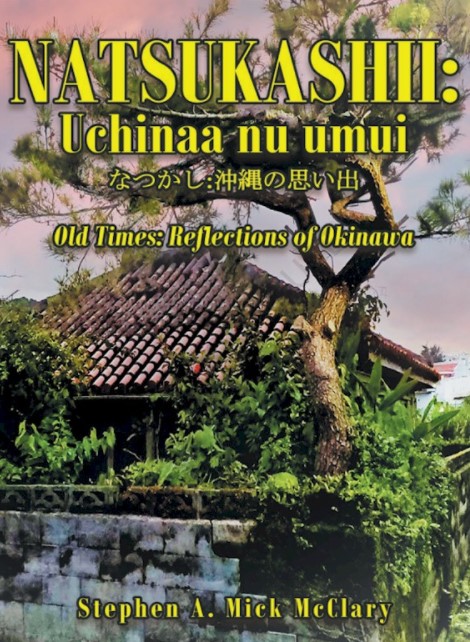 |
NATSUKASHII: Uchinaa nu umui Old Times: Reflections of Okinawa McClary, Stephen A. Mick Copyright 2021 Publisher: AuthorHouse, LLC NATSUKASHII: Uchinaa nu umui / Old Times: Reflections of Okinawa offers you an extensive up close and personal experience as you follow him, day by day, throughout his last five trips to Okinawa. He details what it's like to live and play on the island by way of reading his stories that are complemented by historical details that are woven into his dialogue as well as links to hundreds of his videos that allow you to accompany him on adventures from underwater caves to the majestic top of Rainmaker Mountain. Ride along as Mick takes you on windshield tours along the Okinawa Expressway and down country roads of remote outlying islands. Sail with him as he ferries to Ieshima or slog through the mud with him at a rice field festival. Traipse along through tall grass | |||||
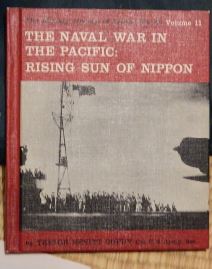 |
Naval War in the Pacific, The: Rising Sun of Nippon The Military History of World War II: Vol. 11 DuPuy, Trevor Nevitt Col. US Army Ret. Copyright 1963 Publisher - Franklin Watts, Inc. Chapters range from the Growth of Japanese Sea Powers to Guadalcanal. | |||||
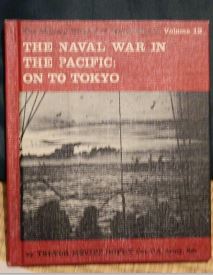 |
Naval War in the Pacific, The: On to Tokyo The Military History of World War II: Vol. 12 DuPuy, Trevor Nevitt Col. US Army Ret. Copyright 1963 Publisher - Franklin Watts, Inc. Chapters range from The Japanese Offensives through to the Strangulation of Japan. | |||||
| No Image |
Negotiating process around ‘homeland level status’ reversion between Japan and Okinawa, The Hiroshi Komatsu Dec 2017 International Relations of the Asia-Pacific Volume 18, (2018) 71–98 "This article explores the negotiations between Japan and Okinawa to clarify the latter’s role in this process. I focus on visits to Tokyo by Chobyo Yara, Chief Executive of the Government of the Ryukyu Islands, to meet with Japanese Government officials, including Prime Minister Eisaku Sato and Foreign Minister Kiichi Aichi. In particular, I consider ‘homeland level status’, a term used in these discussions to define the conditions for Okinawa’s reversion to Japan." | |||||
 |
Night in the American Village: Women in the Shadow of the U.S. Military Bases in Okinawa Akemi Johnson, Nancy Wu, et al. Copyright 2019 Blackstone Publishing "Thought-provoking and timely, Night in the American Village is a vivid look at the enduring wounds of US-Japanese history and the cultural and sexual politics of the American military empire." (Amazon review) | |||||
|
O |
O
| |||||
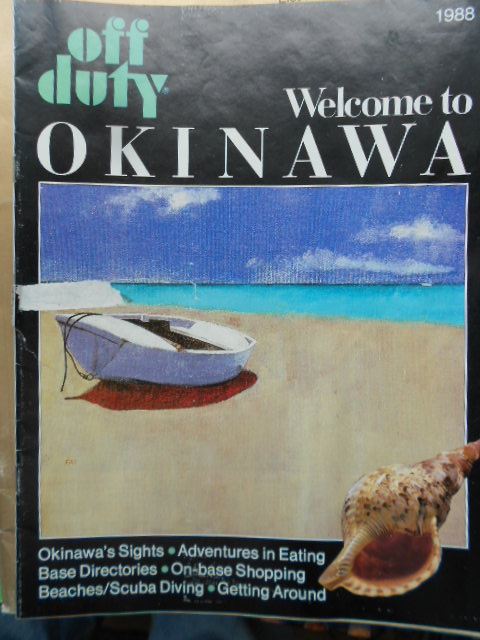 |
off duty / Welcome to Okinawa 1988 - No copyright information found. Published by Off Duty Publications, Ltd., Hong Kong. Has the usual Department of Defense disclaimer. A bit ho-hum, shiny magazine style piece with a few good stories, "What's Good About Okinawa", "Flavors of Okinawa", "Exploring the Island", "Setting Up House", "Survival Kit", and some directories for Camps Foster, Lester, Hansen, and Schwab; Torii Station, and Kadena Air Base - with maps of the bases. | |||||
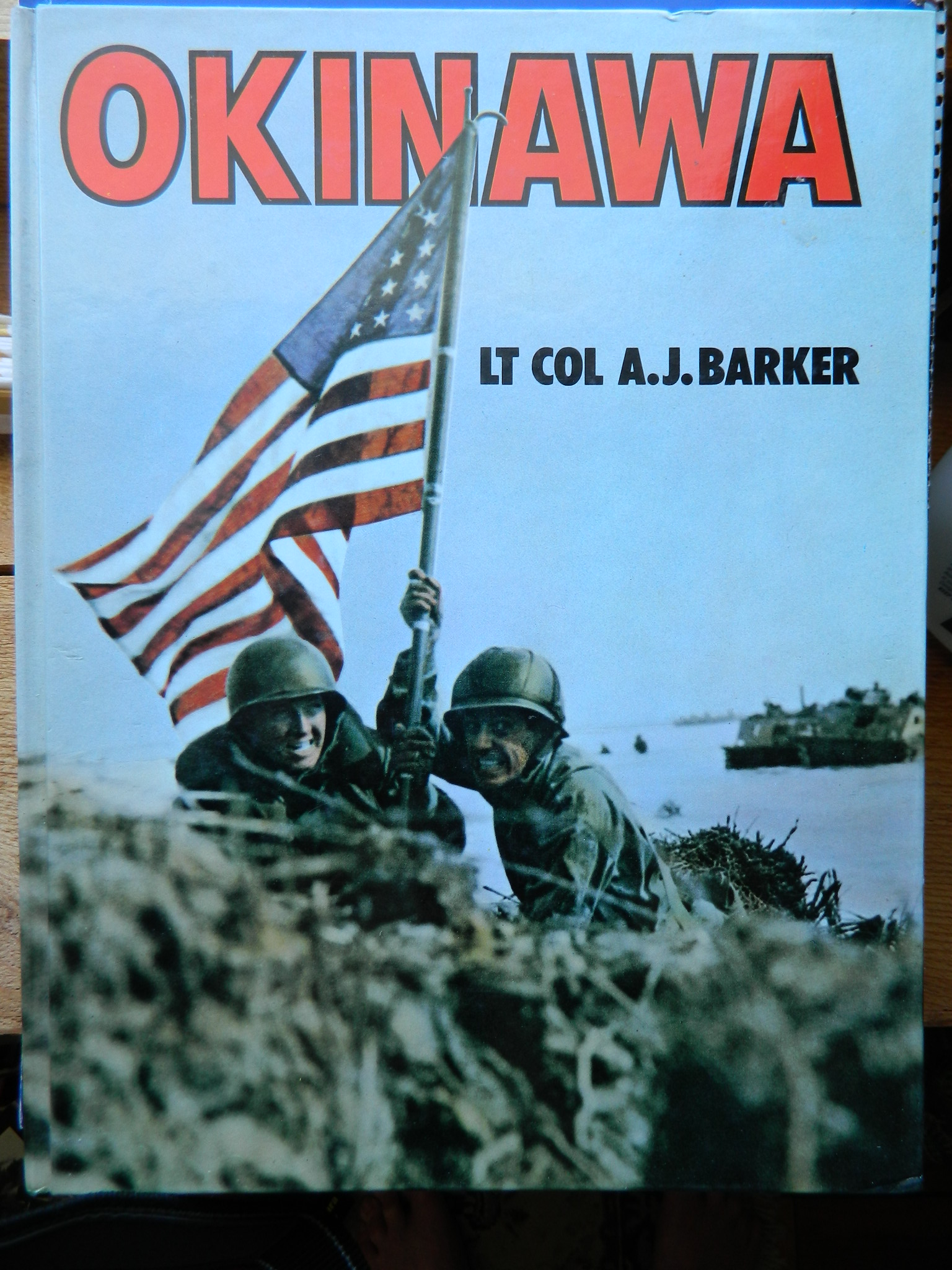 |
Okinawa (2 copies) A. J. Barker, LtCol Copyright 1981 LOCCN 81-80454 ISBN 0-88365-547-0 Publisher - Galahad Books Coffee table type book replete with color and B&W photos with copious text. A good primer on Operation Iceberg. | |||||
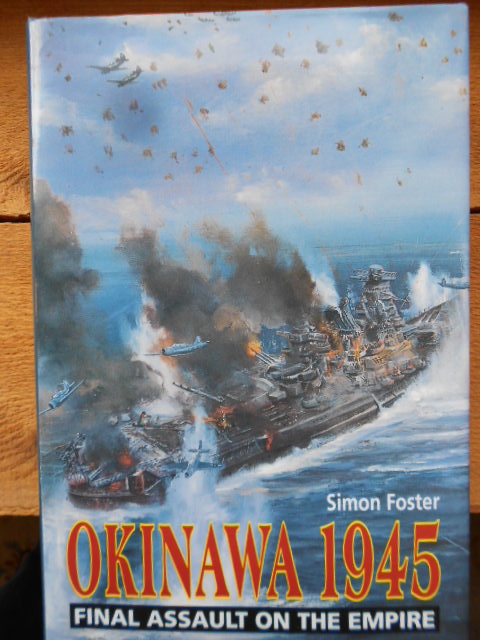 |
Okinawa 1945 Final Assault on the Empire Simon Foster Copyright 1994. Reprinted 1995. ISBN 1-85409-195-6 Arms and Armour Press, London The battle for Okinawa was a long, drawn-out affair that resulted in a tremendous loss of life, ships and aircraft. The Japanese had introduced kamikaze attacks earlier but they reached a new level at Okinawa. Twenty two ships were sunk and 250 damaged, some so badly that they were out of the war. Over 500 aircraft were lost and casualties in the action were close to 50,000. | |||||
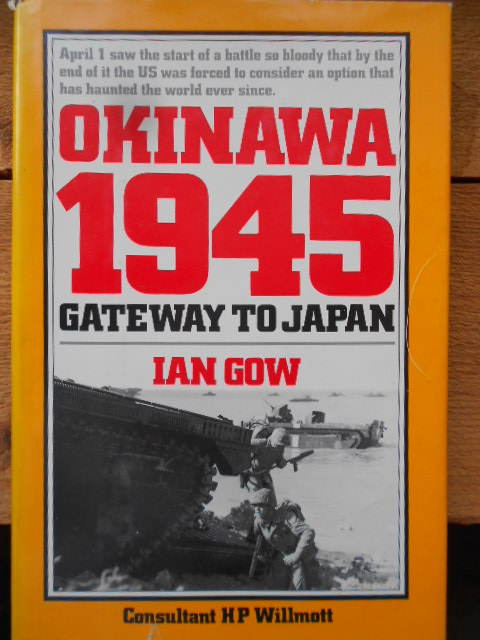 |
Okinawa 1945 Gateway to Japan Ian Gow Copyright 1985. ISBN 0-385-19918-X LCCN in-pub data Doubleday & Company, Garden City, NY From a unique dual viewpoint, encompassing both the American and Japanese perspectives, Ian Gow has put together an exciting, comprehensive account of the battle. Fascinating material has been gathered from Japanese sources that had never before been seen in English. This scrupulously researched volume also contains appendices that include a calendar of events, a guide to the military forces involved, and comparative battle statistics. | |||||
 |
Okinawa - A Military Base - "Kichi Okinawa" The Okinawa Times Copyright - unknown
| |||||
 |
Okinawa - A People and Their Gods (1st Edition) James C. Robinson Copyright in Japan 1969. LCCN 69-16179 Charles E. Tuttle Co. Rutland, VT - Tokyo, Japan A theological study of unusual (at least to Western world) religious beliefs and practices. This is a complemetary piece to Women of the Sacred Groves and to On the Threshold of the Closed Empire. | |||||
 |
Okinawa: a tiger by the tail M. D. Morris Copyright 1958 LCCN 68-10108 Hawthorn Books, Inc. The United States - Japanese power struggle, and what may happen | |||||
 |
OKINAWA Air Force Guide circa 1966 Pub. by Life on Okinawa Enterprises, Co. Paper cover 64-page magazine published for U.S. Air Force personnel and families to familiarize themselves with USAF missions, services and general information about the 313th Air Division, Naha Air Base, and Kadena Air Base. Read it [HERE] ! (.pdf file) | |||||
 |
Okinawa: An Introduction Christopher Ames (signed by author) and Hisashi Ashimine No copyright information in this English-language 62-page booklet. NTT Communications Corporation had a hand in production. Published some time in 2000. (one of the references in bibliography is dated 2000, and a comment in the forward includes the phrase, "...in the Fall of 200 he will metriculate..." thus suggesting a future time. Nice soft-cover magazine size publication that is not a "welcome to Okinawa" theme. | |||||
 |
Okinawa and the Ryukyu Islands - the First Comprehensive Guide to the Entire Ryukyu Island Chain Robert Walker Copyright 2014 Tuttle Publishing, Tokyo/Rutland, VT Detailed information on all inhabited islands from Osumi to Yaeyama. | |||||
 |
Okinawa Area Guide Author ? Copyright ? Publisher ? 45 islands of Okinawa - Culture, Cuisine and Marine Sports. "Area Guide" on the cover are the only English language words in this entire 190-page colorful large pocket-size book. It has maps of various areas of the main island of Okinawa as well as surrounding islands. Replete with brilliant color photos there is apparently much information about the various sites and sights to be enjoyed. | |||||
 |
Okinawa Battle Ends St. Louis Dispatch St. Paul, Minnesota Thursday, June 21, 1945 [Read it Here] | |||||
 |
Okinawa by Road - a Traveler's Guide to the Islands Author ID not found Copyright not found Kume Publishing Company A comprehensive guide to the Okinawa Islands, complete with full-color road maps. A detailed guide to the main U.S. bases, and airplane, bus and ferry information included. | |||||
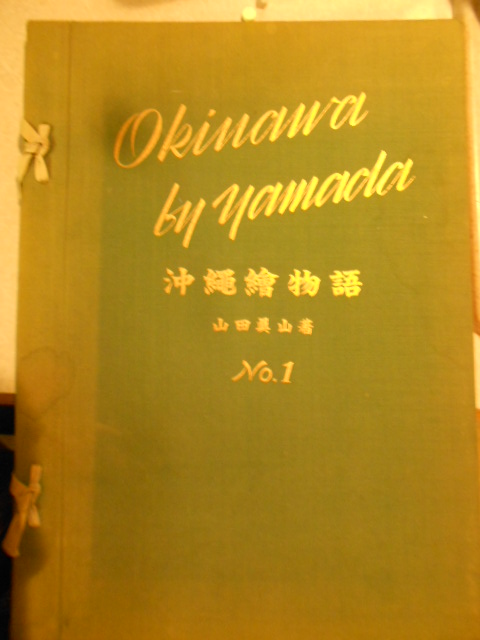 |
| |||||
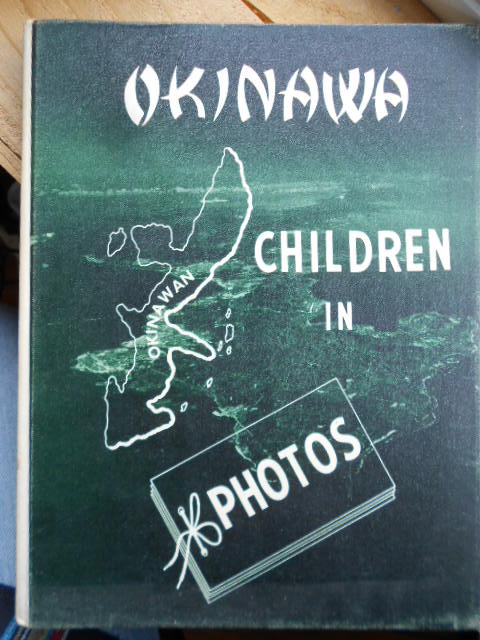 |
Okinawa Children in Photos Text by Eva Sevland. Photos by Blackie the Photographer, Blackie Bradford Copyright unknown. Taylor Publishing Company, Dallas, TX This is another year-book style book containing many, many B&W photos of the children of Okinawa. No date is found in the book but it appears to be, based on my observation of what few automobiles are depicted, circa. 1950s. | |||||
 |
Okinawa Diet Plan Bradley J. Willcox, MD; D. Craig Willcox, PhD; and Makoto Suzuki, MD Copyright 2004 Potter (Random House) Get leaner, live longer, and never feel hungry. | |||||
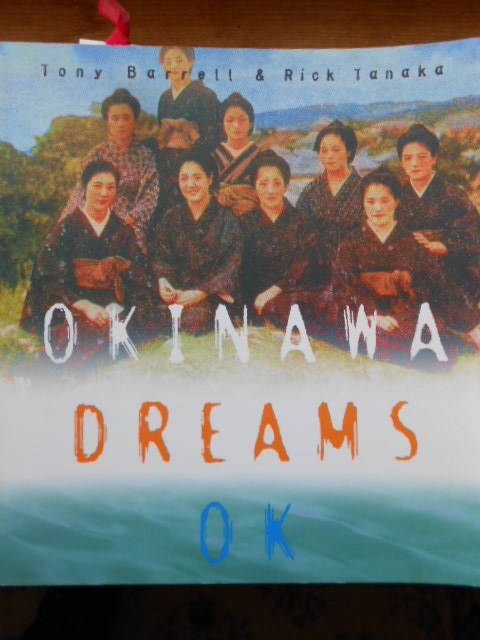 |
Okinawa Dreams OK Tony Barrell and Rick Tanaka Copyright 1997. ISBN 3-931126-11-0 Die Gestalten Verlag, Berlin, GE The book Okinawa Dreams Ok provides a much needed update on the current situation in Okinawa, with a particular emphasis on the developments that occurred after the brutal rape of a 12-year-old Okinawan girl by three U.S. servicemen. Delving into not only the everyday impact of the U.S. military and the Japanese government's decisions to keep the military in Okinawa, this book also focuses on the Okinawan people (Uchinanchu) as they continue to define themselves culturally and and collectively on their own terms, in the face of the constant threats from the military. Overall this book is a must read for all people interested in issues of social justice and who stand firmly against imperialism wherever it rears it's head, and who stand for the right to self-determination for all people. With the advent of the "Pacific Century" this book helps to demonstrate that the myth of Japan's homogeneity has always been imagined, and that now, more than ever, the Okinawan people are coming into their own, and increasingly defining themselves, and their land, on their own terms. (review at amazon.com) | |||||
 |
Okinawa Explorer, 3rd Edition A complete guidebook to Okinawa Kenny Ehman Copyright 2005 (3rd edit 2010) - ISBN 978-0-9768462-3-9 Publisher TK2 Productions Guidebook is divided into three main sections based on Okinawa's history: Nanzan (southern kingdom), Chuzan (central kingdom), and Hokuzan (northern kigdom). Each section contains selected places for travel with explanation on history, culture, entertainment, food, and accommodations. | |||||
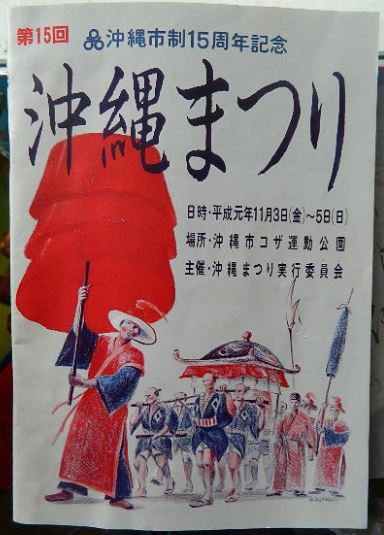 |
Okinawa Festival November 3-5, 1989 Okinawa City - Koza Athletics Park Hosted by Okinawa Festival Executive Committee Produced entirely in Japanese this little booklet contains information about the 1989 Okinawa Matsuri. | |||||
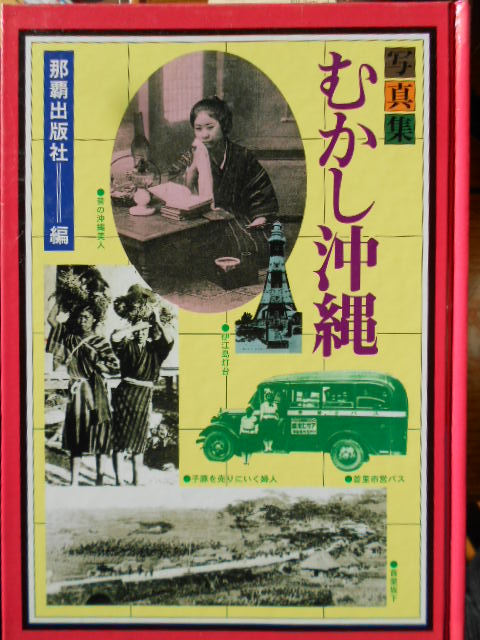 |
Okinawa: the Floating Dragon This book is entirely in Japanese Copyright - ? Publisher - ? Great little hard-cover book is 271 pages of excellent black & white photos with text and captions in Japanese. The first eight photos are colorized. The book appears to be entirely photos of pre-war Okinawa depicting their architecture and culture. Very interesting and I truly regret being unable to read it. | |||||
 |
Okinawa Guide 2013 Marine Corps Community Services 2013 Published by MCCS Marketing, Okinawa, Japan Here is a fairly comprehensive - and valuable - resource for those things that American military members on Okinawa should know and want to know. It's a glossy paper-bound reference chock full of information along with more than enough advertising. | |||||
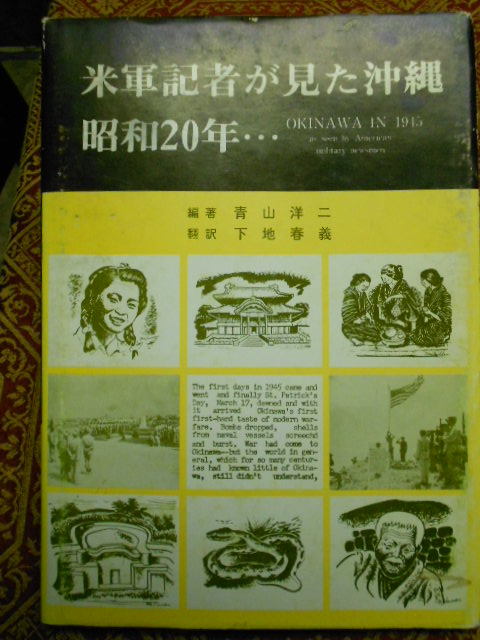 * * |
Okinawa in 1945 - as seen by American military newsmen Author unknown. Edited by Yogi Aoyama Copyright uncertain. June 1980 is referenced in Japanese language preface. Publisher uncertain. May be Haruyosi Shimoji Nice hard-cover book, 103 pages in length, containing numerous sketches, drawings and photographs of Okinawa as percieved in 1945. It is primarily a Japanese-language book but with ample English-language captions throughout. The first 1/3 of the book is replete with sketches and captions. In the mid-portion of the book there are photos with two columns of text; one in Japanese and the other in English. In the last third of the book are photos with bi-lingual captions.
| |||||
 |
Okinawa in Color Blackie the Photographer (Blackie Bradford) 1962 Box 62, Koza, Okinawa Delightful photo and memo booklet, constructed of heavy paper and with 39 beautiful photos of Okinawa scenery and people. I think it's one of Blackie's best collection of photos in a single binding. | |||||
 |
Okinawa in the Asia Pacific Hiroshi Kakazu Copyright 2012 Okinawa Times, Inc., Naha | |||||
 |
Okinawa in the News - Stories Selected from The Shimpo Weekly News, Second Edition A. P. Jenkins Copyright 1993 The Hirugi Publishing Company, Okinawa, JA This is a neat little soft-bound handbook containing a compilation of stories that had been printed in The Shimpo Weekly News, a publication whose primary purpose was to keep English-reading folks apprised of happenings on Okinawa and to also provide for an English-language periodical that native Okinawans could peruse in their quest to master the English language. | |||||
 |
Okinawa Island Guide, 2013 Magazine Copyright 2013 Okinawa Index, Inc. "Culture, food, healthy aging | |||||
 |
Okinawa: Isle of Smiles - An Informal Photographic Study William E. Jenkins Copyright 1951 Bookman Associates, NY The photography is amazing in this book of 270 black & white stills of mainly children of post-war Okinawa. I enjoy the pictures immensely but the text leaves a lot to be desired. References are made to photographs that are many pages away so the reader, in order to follow the author's streams of thought, finds himself flipping back and forth, hither and yon trying to tie it all together.The Chinese have a saying, "One picture is worth a thousand words." I have fallen back upon that old proverb in the preparation of this book. During my two years on the island, I have really had an opportunity to indulge my hobby of photography. ... I have been guided by the advice of many of my Okinawan friends. I explained that many of the people in America would hope to learn something about their island, and themselves, from the pictures. | |||||
 |
Okinawa Living - Issue #98, April 2006 A Marine Corps Community Services Publication MCCS Marketing Branch, MCB Camp S. D. Butler, Okinawa High-quality magazine published by the Marine Corps contains great articles
The same publisher puts out a weekly issue entitled Okinawa Living Weekly | |||||
 |
Okinawa Living magazine February 2014 issue #192 Marine Corps Community Services publication Glossy magazine published monthly. I picked up this copy during my 2014 month on island. | |||||
 |
Okinawa Memories US Naval Supply Depot Pubished ? 1946 This appears to be a locally produced keep-sake publication for the troops of the Naval Supply Depot. Typewritten with photographs and hand-drawn illustrations. No publication date - Donn Cuson did a few calculations and suggests that it was published in late 1946. He says, "based on the cover illustrator Irwin McFadden and when he was on Okinawa (he was an illustrator for the Daily Okinawan); also Col Murray (Marine Corps) Deputy Commander for the Military Gov. (Navy gave military gov control to Army on 1 July 1946); and LCDR Hanna (he set up the Higaonna Museum in Ishikawa) and his dates on Okinawa. All combined it points to late 46." Compiled and edited by: H. H. Smith-Switzer | |||||
 |
Okinawa Odyssey - signed by author Bob Green Text copyright 2004. ISBN 1-931721-39-4 (alk paper). LCCN in-publication data Illustrations copyright 2004 by Charles Shaw Bright Sky Press, Albany, Texas Bob fought with the 763rd Tank Battalion on Okinawa. He starts of though recounting the story of his family as ranchers in Texas - Confederate ancestors and all. At first I thought this was a bit staid but it grew on me. Interestingly, he attended a military school which offered cavalry training and this saw him assigned to armour training when the war came. Some might find these opening chapters a bit plodding but once he gets to Leyte his delivery warms up considerably. | |||||
 |
Okinawa: Peace, Human Rights, Women, Environment 1996-1997 Report Okinawa Christian Heiwa Center December, 1997 Okinawa Christian Peace Center #305 Read the entire publication [Here] | |||||
 |
Okinawa: Photographic Interpretation Squadron One United States Navy 1945
| |||||
 |
The Okinawa Prefectural Museum - Aid for Appreciation (2 copies) Edited by Okinawa Prefectural Museum Published Nov 3, 1975 Ryukyu Bunka-sha Co., Naha, Okinawa Bilingual heavy paperback manual includes fair-quality black & white photos of the art pieces of the museum with captions and text. Textiles, pottery, lacquerware, paintings, calligraphy, burial urns and funeral customs, fishing utensils, farming implements, machinery, food storage implements and methodology, musical instruments, and many other interesting aspects of Okinawan culture. | |||||
|
Okinawa Sketch-Book Mirian Mann & Jean Shadrach No identifying information. Appears to be circa. 1950s or 1960s "Marian Mann, an accomplished artist, felt compelled to set on paper or canvas her impressions and feelings about Okinawa and the people who live on the island ... we enjoyed getting a closer look at the Ryukuan way of life." Jean Shadrach. [click HERE to read the book] - a new browser window will launch. At the end of the book you can close the window or it will take you back to my "Home" page. | ||||||
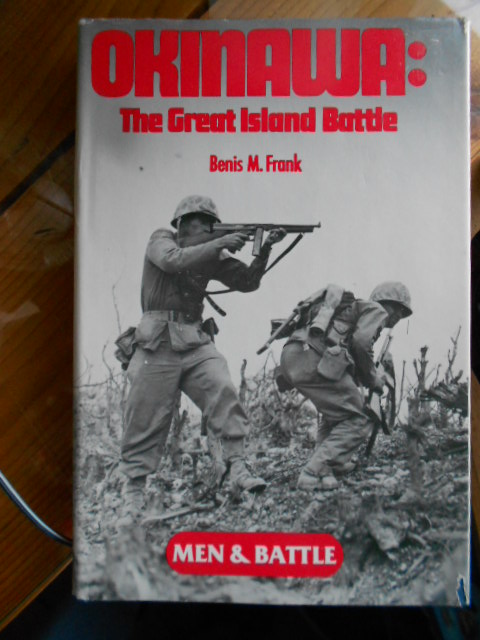 |
Okinawa: the Great Island Battle Benis M. Frank Copyright 1978. ISBN 0-525-93006-X E.P. Dutton, a Division of Sequoia-Elsevier Publishing Co, Inc., NY and simultaneously in Canada by Clarke, Irwin & Company, Ltd. in Toronto and Vancouver. Shuri Castle and Sugar Loaf Hill, the Big Apple and Naha - these names that were once famous live again in the pages of this book, and so does the heroism that these battle objectives witnessed. Nor is the account one-sided: a special feature of (the book) is the inclusion of much previously unpublished eyewitness Japanese material, so that the reader sees the battle from both sides. | |||||
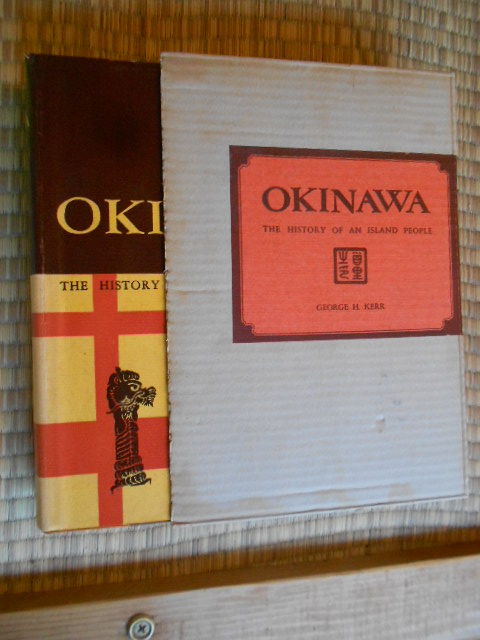 |
Okinawa: the History of an Island People (6 copies) George H. Kerr Copyright 1958, 1st Edition. LoC Catalog Card # 58-12283 in protective cardboard sleeve Copyright 1958, 1st Edition. LoC Catalog Card # 58-12283 ex libris Copyright 1958, 2nd printing 1959 " ex libris Copyright 1958, 6th printing 1967 " ex libris Copyright 1958, Revised edition copyright 2000. LCCCN 00055232 (2 copies) Charles E. Tuttle Company - Rutland, VT & Tokyo, Japan Researched and written by George H. Kerr, I believe that this book is accepted as the text of authority with regard to the history of pre-war Okinawa. I've read and re-read this book and have a much greater understanding of the people of the Ryukyu Islands - and I also have a much deeper regret for having not known this history while living among the Okinawans. "...this is the history of a little-known people whom events have made it necessary to know well. It is also one of those all-too-rare books that happily combine solid scholarship and detailed accuracy with a forthright, enjoyable literary style that does justice to the storybook quality of many of the episodes. It will long remain the standard history of Okinawa and the Ryukyus." A portion of the book can be read here, at Google: [Excerpts] The Revised edition (2000) contains an Afterword by Dr. Mitsugu Sakihara, professor and president of Hawaii International College. Prior to assuming his duties at Hawaii International he taught for many years at the University of Hawaii-Manoa, where he continues to teach an annual course on Okinawan history. Dr. Sakihara was a 1987-88 Fullbright professor to Japan.
Among the revisions, annotated in the Afterword, following the alphabetical index, are:
These are important modifications to Kerr's original work and should be incorporated into previous editions. | |||||
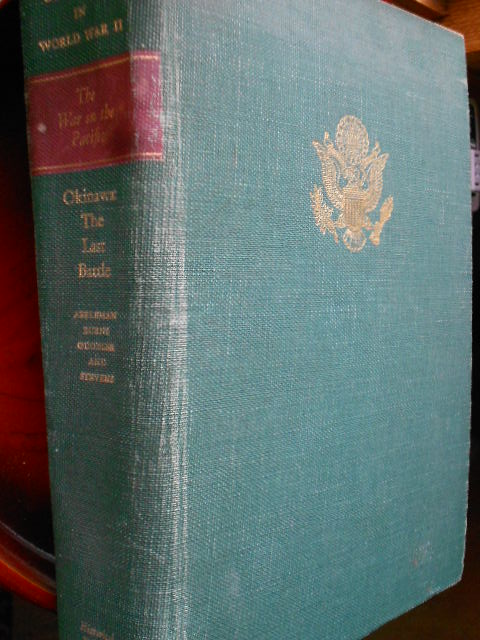 |
Okinawa: the Last Battle Roy E. Appleman, James M. Burns, Russell A. Gugeler and John Stevens. No Copyright - published in 1945 Published by: Historical Division, Department of the Army, Washington D.C. 1948 In my opinion, this is the ultimate treatise - detailed description of the military events leading up to and play-by-play account of the Battle for Okinawa! Well written and exquisitely authoritative. Loaded with photos, charts, tables, organizational charts, maps and detailed text. | |||||
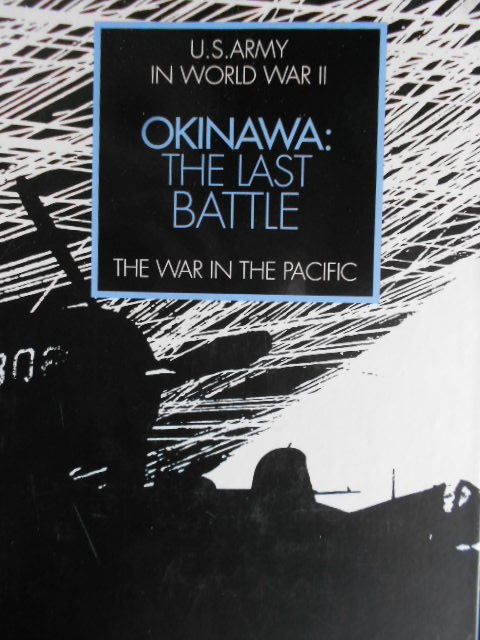 |
Okinawa: the Last Battle - 50th Anniversary Commemorative Edition by the National Historical Society Roy E. Appleman, James M. Burns, Russell A. Gugeler and John Stevens. 1994 See description above. | |||||
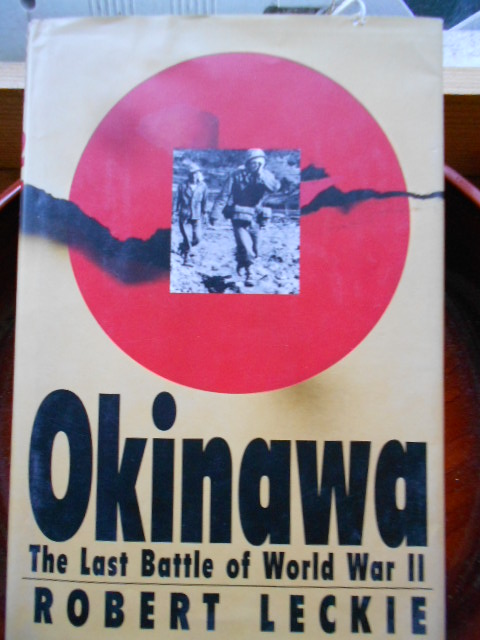 |
Okinawa: the Last Battle of World War II (3 copies) Robert Lecke Copyright 1995. I believe this is a copy of the 10th printing. IBSN 0-670-84716-X Viking Penguin, a division of Penguin Books USA Inc. The author, who himself fought as a Marine through many Pacific battles, retells this epic story of war from both sides, with strikingly close portraits of the Japanese generals, who in the battle's last moments committed hara-kiri. Robert Lecke especially focuses on the American soldiers themselves and their commanding officers, drawing brilliantly illuminated portraits of individuals who fought a merciless enemy in the tradition of American military history at its most splendid and most self-sacrificing. | |||||
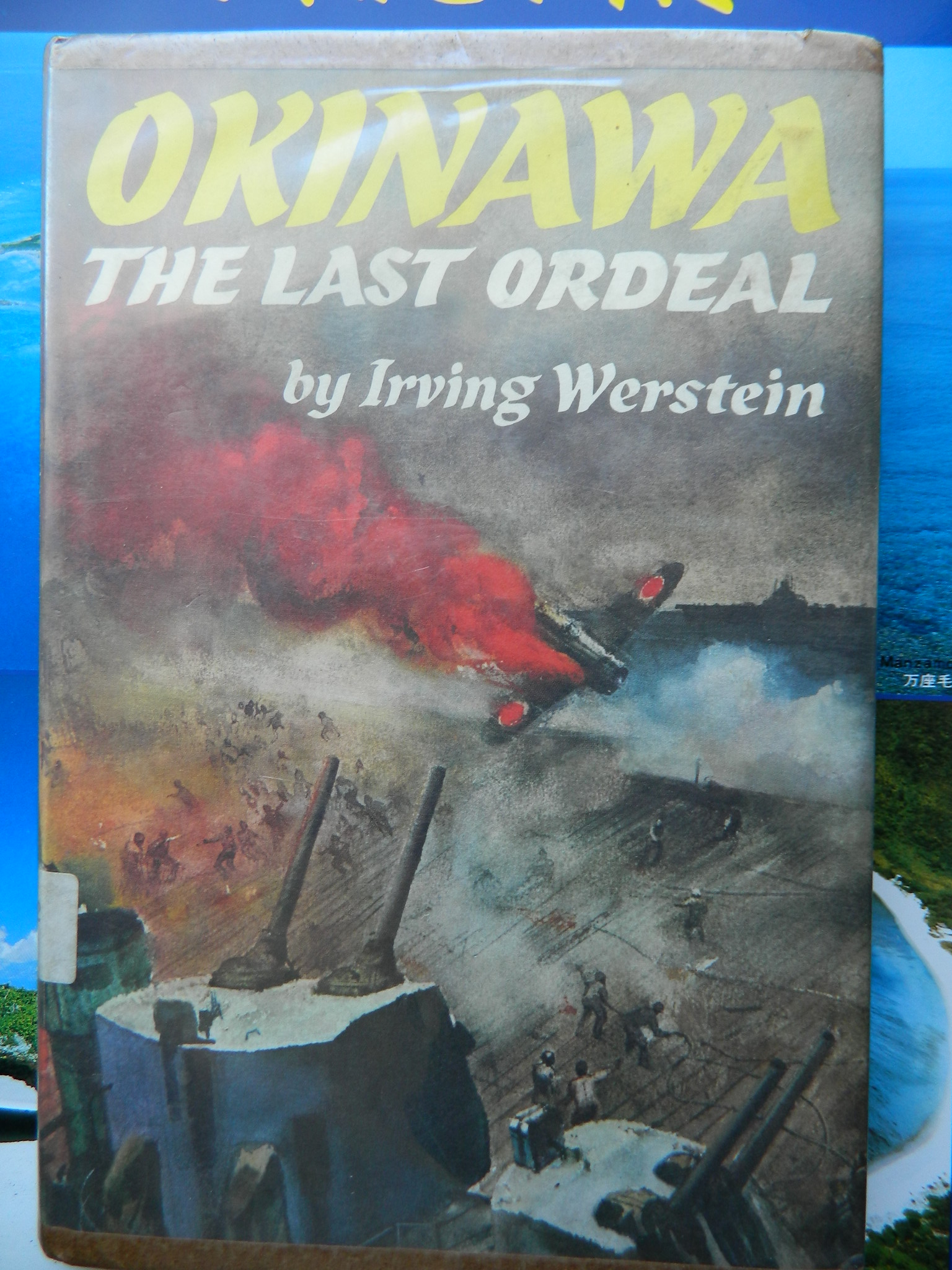 |
Okinawa: the Last Ordeal Irving Werstein Copyright 1968 LoCCN 68-28668 ISBN 0-690-59176-4 Publisher - Thomas Y. Crowell Co. / NY ex libris from a middle school library, so you know it's not going to be a deep thinking account of the Battle. Actually though, it was a very fast and enjoyable read. | |||||
 |
Okinawa-shi Gallery of Postwar Culture and History Published February 28, 2011 by Okinawa City Hall Edited by General Affairs Department History Compilation Subsection Printed by MARUMASA Printing Co., Ltd. Wonderful book of collection of museum pieces that represent the "Koza Champuru" from the 1940s thru Reversion in May of 1972. This book, chock full of photos and narratives, shows us much about the evolution of Koza into its international appeal. | |||||
 |
Okinawa - The Ryukyu Islands
| |||||
 |
Okinawa the Southern Gateway Written: S. Kishaba; Art Director: Debra McCormac; Graphic artists: Keiji Mishima, Masaru Oshiro Copyright 1988 Design Printing by Heart Plan Printing, Okinawa, Japan Handy little soft-cover handbook that was most likely produced by the U.S. Navy since it has a disclaimer about advertising, etc. not being endorsed by the Department of Defense, and welcoming comments by BG R. B. Johnston, Commading General of Marine Corps Base, Camp Butler, and by Capt. A. C. Konczey, Commander Fleet Activities, Okinawa. There are no such welcoming comments by anyone Army or Air Force. | |||||
 |
Okinawa Today - The Community Magazine 1-15 March, 1988 Published by Great Circle I'll have some page samples soon | |||||
 |
Okinawa Today - The Community Magazine 16-31 March, 1988 Published by Great Circle I'll have some page samples soon | |||||
 |
Okinawa Today - The Community Magazine 1-15 May, 1989 Published by Great Circle I'll have some page samples soon | |||||
 |
Okinawa Today - The Community Magazine 1-15 June, 1988 Published by Great Circle I'll have some page samples soon | |||||
 |
Okinawa Today - The Community Magazine 1-15 March, 1989 Published by Great Circle I'll have some page samples soon | |||||
 |
Okinawa: touchstone to victory - (1st edition, 2 copies; 3rd printing, 1 copy) Benis M. Frank Copyright 1969 Publisher - Ballantine Books, Inc. Paper back pocketbook with many B&W photos of fairly good quality. | |||||
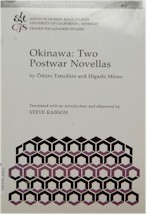 |
Okinawa: Two Postwar Novellas Oshiro Tatsuhiro and Higashi Mineo Translated with an intro and afterword by Steve Rabson Copyright 1989 Japan Research Monograph - Institute of East Asian Studies, UC Berkeley | |||||
 |
Okinawa War, The (revised 2nd edition 1987) Gordon Warner Copyright 1985 Publisher - Ikemiya Shokai & Co., Naha, Okinawa This is another year-book style publication loaded with color and B&W photos and a multitude of maps. Lots of maps! Fairly in-depth commentary. I have enjoyed this book for several years as a quick reference for most of the questions I've looked up. The index in the back is helpful but not really very detailed. | |||||
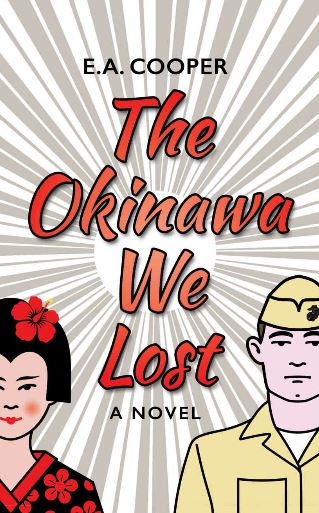 |
The Okinawa We Lost Ed Cooper Copyright 2018 Publisher - Camphor Press Ltd. Green recruit PFC Timothy Cole is fresh off the boat in the GI paradise of Okinawa. Looking for adventure, the “cherry boy-san” finds his first true love – a beautiful Okinawan nightclub hostess called Kimiko. | |||||
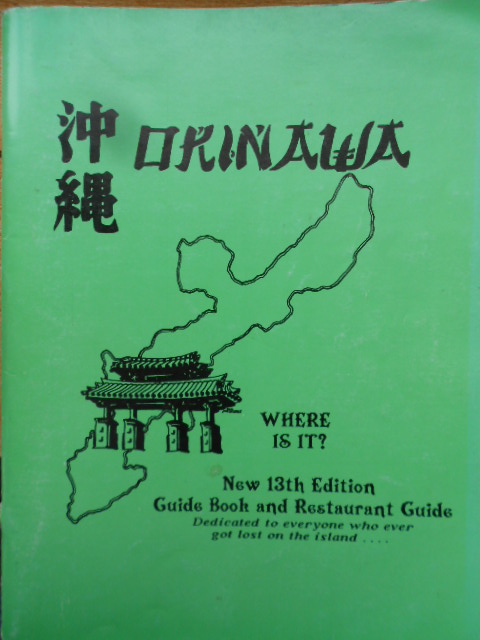 |
Okinawa - Where Is It? (New 13th Edition) Green Cover, paperback No publication date or copyright information. Released between summer of 1986 - 1989. All Souls' Episcopal Church, 935 Makiminato, Urasoe City Here's an indisputably indispensable guide to touring the islands! Undoubtedly, there is a much newer edition of this wonderful guide available today. I'd have never seen many of the wonders of Okinawa without this book. Between this and "Okinawa by Road" I don't think a person would need any other guide until ready to delve into the truly in-depth aspects of the island culture. Unfortunately, I didn't have enough time on island to mature to that point. I always look forward to a time when I will return to Okinawa. | |||||
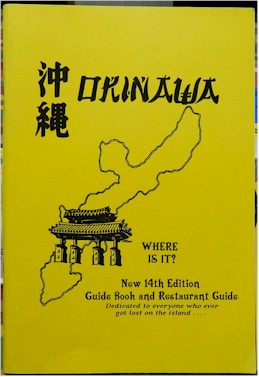 |
Okinawa - Where Is It? (14th Edition) Guide Book and Restaurant Guide | |||||
 |
Okinawa - Where Is It? (Revised 15th Edition) Gold Cover, paperback No copyright information for this 1994 publication All Souls' Episcopal Church, Aza Yoshihara, Chatan-Cho, Nakagami-gun This one is the "Okinawa 50th Anniversary Memorial Edition." | |||||
 |
Okinawa Yellow Pages 2009 by PEACE Phone Services 2-5-8 Mihama, Chatan-cho, Okinawa-ken 904-0115 More than a mere telephone directory - One of the best bargains I ever got on Okinawa! This FREE publication is chock full of good useful information. Publication began in 1988. I don't know if it is still being published any longer. | |||||
 |
Okinawa's Complete Karate System, Isshin Ryu Michael Rosenbaum Copyright 2001 Publisher - YMAA Publication Center While providing the context in which martial arts developed on Okinawa, Okinawa's Complete Karate System offers a comprehensive history of Isshin-Ryu as well as a thorough investigation of its founder's life and philosophy. Dealing in depth with the system's lineages, the internal and external aspects of the art, and multiple interpretations of all Isshin-Ryu kata, this book is a unique, compelling, and engaging experience. | |||||
 |
Okinawa's Tragedy - Sketches from the Last Battle of WW II William T. Randall Copyright 1987 The author explains in his introduction that the 24 sketches (stories) in the book are extrapolated from two or more sources per sketch then translated into English for this booklet. The stories are based on accounts that were given in a number of Japanese publications. MESSAGE OF DEATH FROM THE SUN Read it [HERE] | |||||
 |
Okinawan Cookery and Culture - 1st printing Hui O Laulima (illustrated by Kirie Fujii) Copyright 1975 Fisher Printing Company, Honolulu, HA Fund-raiser publication for the United Okinawan Association in Hawaii. Nice little book with some Okinawa history, some photos and descriptions of various aspects of Okinawan culture and, of course, some recipes, starting with Basic Miso Soup all through to Kashogan (peanut butter balls). It finishes with a glossary defining the Okinawan terms used in the recipes. | |||||
 |
Okinawan Diaspora Edited by Ronald Y. Nakasone Copyright 2002 Publisher - University of Hawai'i Press "The first Okinawan immigrants arrived in Honolulu in January 1900 to work as contract laborers on Hawai'i's sugar plantations. Over time, Okinawans would continue migrating east to the continental U.S., Canada, Brazil, Peru, Argentina, Bolivia, Mexico, Cuba, Paraguay, New Caledonia, and the islands of Micronesia. The essays in this volume commemorate these diasporic experiences within the geopolitical context of East Asia" | |||||
 |
The Okinawan Diaspora in Japan Crossing the Borders Within Steve Rabson Copyright 2013 ISBN 978-0-8248-3534-7 University of Hawai'i Press "This book is an important contribution to a long neglected aspect of Japanese history. Drawing on interviews, memoirs, and popular literature, excerpted in smooth and seemingly effortless translations, Steve Rabson provides a compelling portrayal of the transformation of rural agrarian subjects into an urban proletariat. Readers will find themselves immersed in the experiences of discrimination and betrayal, extermination and neglect, hope and assimilation that have shaped and transformed the lives of Okinawans since Japan first brought the southern islands under its colonial rule." | |||||
 |
Okinawan-EnglishWordbook Mitsugu Sakihara Copyright 2006 University of Hawai'i Press A short lexicon of the Okinawan language with English definitions and Japanese cognates. | |||||
 |
Okinawan Folk Stories Masaaki Nagata Copyright 2005 This is a fun little paperback full of Okinawan folk tales, written in Japanese, Hogen and English. Simple hand-drawn illustrations. A pretty cool feature includes an audio CD containing the tales recited in Hogen with pleasant folk music playing softly in the background! | |||||
 |
Okinawan Mind in Proverbs, The Zenko Shimibukuro Copyright 1983 Printed in Japan In a 'Preface for Foreign Readers' the author writes, in part:This is a book about Okinawan proverbs. It has been written for both the Japanese and English-speaking people who are interested in Okinawa and her culture, especially in the Okinawan dialect...Example: Chira kagi yaka chimu gukuru. - Kind hearts are better than fair faces. | |||||
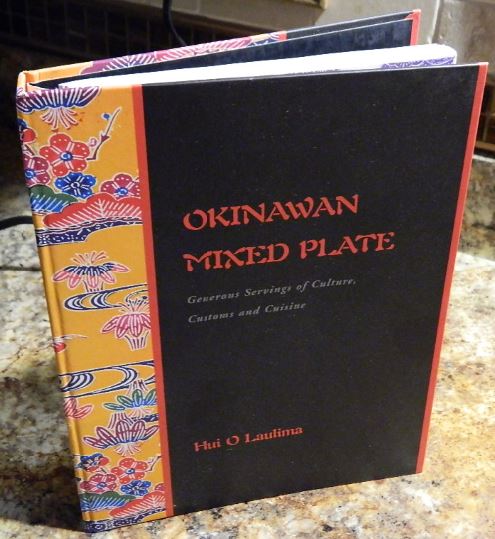 |
Okinawan Mixed Plate - Generous Servings of Culture, Customs and Cuisine Hui O Laulima Copyright 2000 Honolulu, HI This book of Okinawan history, culture and recipes "is the result of many hands pulling together in the spirit of laulima - working together ... cooperation. This book is released as Hawai'i celebrates one hundred years since the first Okinawan immigrants arrived in Hawai'i. The culture they brought with them enriches our island community. | |||||
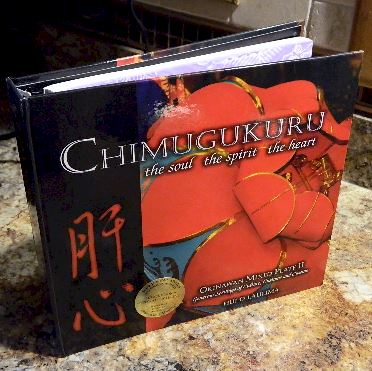 |
Okinawan Mixed Plate II - CHIMUGUKURU the soul, the spirit, the heart Hui O Laulima Copyright 2008 Mutual Publishing, LLC Honolulu, HI Hui O Laulima was organized in 1968 as a women's auxiliary of the United Okinawan Association of Hawai'i. Over the years it has taken the lead in promoting the Okinawan culture in Hawai'i through exhibits, demonstrations, cultural grants, and publications such as Chimugukuru - the soul, the spirit, the heart. | |||||
 |
Okinawan Reversion Story, The - War, Peace, Occupation, Reversion 1945-1972 (signed by author) Gordon Warner Copyright 1995 - First edition, First Printing Publisher - The Executive Link, Naha, Okinawa | |||||
 |
Okinawan Samurai Instructions of a Royal Official to his Only Son Andreas Quast and Motobu Naoki copyright 2018 Pub: Waldbronn, Baden-Wurttemberg, Germany "Troubled about the future of his only son and heir, a royal government official of the Ryukyu Kingdom wrote down his "Instructions" as a code of practice for all affairs. Written in flowing, elegant Japanese, he refers to a wide spectrum of artistic accomplishments that the royal government officials were ought to study in those days, such as court etiquette, literature and poetry, music, caligraphy, the tea ceremony, and so on." | |||||
|
No cover photo |
Okinawan Studies No. 3 - The Okinawas of the Loo Choo Islands - A Japanese Minority Group June 1, 1944 Office of Strategic Services, Research and Analysis Branch, Honolulu, Hawaii (Unclassified) The Office of Strategic Services, formed June 13, 1942, as a wartime intelligence agency. The OSS was the forerunner of the Central Intelligence Agency. Obviously the American military had a keen interest in learning everything they could since they had their eye on Okinawa. This report is, for its time, an extensive informative piece on many aspects of the Ryukyu Retto. I have it in .pdf form, not printed in hard copy yet. It's a very large file so won't upload to my server but you can Read it [HERE] | |||||
 |
Okinawans in Latin America, The J. L. Tigner Doctoral Thesis, 1956 Published on demand by UNIVERSITY MICROFILMS, Ltd. High Wycomb, England I just received this 565-page tome today (9-14-15) from a friend in Ruckersville, Virginia. His name is Warren Rucker and he had obtained this book while researching his Masters Thesis. It is a dissertation by James Lawrence Tigner submitted to the Department of History and the Committee on Graduate Study of Stanford University in partial fulfillment of the requirements for the degree of Doctor of Philosophy. | |||||
 |
The Ordinance Department: On Beachhead and Battlefront Lida Mayo Copyright 1968 Center of Military History, United States Army, Wash D.C. Read it [HERE] | |||||
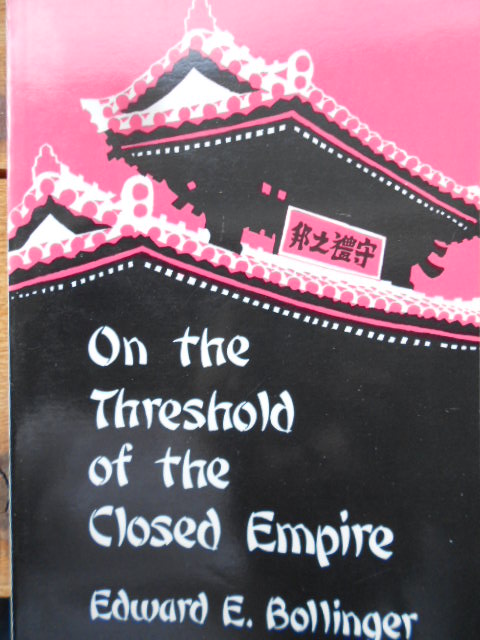 |
On the Threshold of the Closed Empire Edward E. Bollinger Copyright 1991. ISBN 0-87808-230-1 LCCN 91-73083 Published by William Carey Library, Pasadena, Calif. This is a book that fascinated me. It's essentially a treatise on the theological inroads made to the Ryukyu kingdom in the early days. We often hear or read of Commodore Perry who is credited with having opened Okinawa to the Western world. Perry indeed! The commodore was a relative late-comer to the island. Bettelheim and Forcade were leaps and bounds ahead of Perry when it came to knowing the Ryukyuans and their culture and politics. | |||||
 |
One Year - The Ryukyus in War and Peace Edited by Public Relations Office, Okinawa Base Command No Copyright - US Govt Publication Printed and Published by Kelly & Walsh, Ltd., Shanghai Small paper magazine presumably produced in 1946. | |||||
 |
Opened Up on Okinawa - An Overseas Teaching Experience Marla Taviano Copyright 2001. ISBN 0-595-17722-0 Writers Club Press I would like to tell you a story of how God plucked me up out of my comfort zone. How He whisked me across the Pacific to the tiny island of Okinawa for 10 adventure-packed weeks of student teaching. But this book is more than just a story. It attempts to depict the work God performed in my life in the short time I called that island "home". | |||||
 |
"Operation Goodwill" - Throughout the Ryukyu Islands Aboard the Mission Vessel "Island Evangel" Rev. Creston Ketchum (author of Bread Upon the Waters) 1957 Printed by Hoshi Printing Co. Compiled by Creston Ketchum Translated by Yoshiharu Iha Photos by Blackie the Photographer Bi-lingual (English and Japanese) 36 page pamphlet that shows and describes the missions of Cres Ketchum as he meandered for 16 years through the waters of the Ryukyu Islands, bringing healing and Christ to the citizens of the outlying Ryukyu Islands. To fully appreciate this little booklet one must first read his book, Bread Upon the Waters. Some of Blackie the Photographer's finest work (in my opinion) is included in this 1st edition publication. Read the .pdf [HERE]. - will launch a new browser tab/window | |||||
 |
Operation Iceberg - The Invasion and Conquest of Okinawa in World War II Gerald Astor Copyright 1995. ISBN 1-55611-425-7 LCCN 94-68093 Donald I. Fine, Inc., NY Operation Iceberg is a masterwork of the oral history approach to telling a story. Astor ably edits and arranges the various oral accounts into a quick-paced, yet comprehensive account of a rather complex and important battle. Astor has collected inputs from Marines, Sailors, Soldiers, and Airmen who were there and made victory possible. But the accounts would be nothing if they weren't arranged into a pattern that the reader could follow. Astor does that, and provides his own brief narrative to fill in any gaps that the oral accounts have left. As a result, the book becomes a text on the Battle for Okinawa and not just a collection of personal reminisces. (review at Amazon.com) | |||||
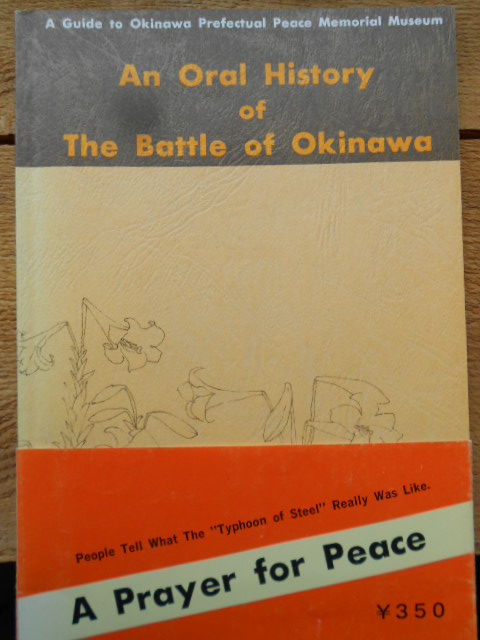 |
An Oral History of the Battle of Okinawa - A Prayer for Peace (1st printing) Survivors' Testamonies No copyright indicated. 1985 Published by Relief Section, Welfare Department, Okinawa Prefecture Government, 1-2-32 Izumizaki, Naha City, Okinawa A Guide to Okinawa Prefectural Peace Memorial MuseumImportance of Peace | |||||
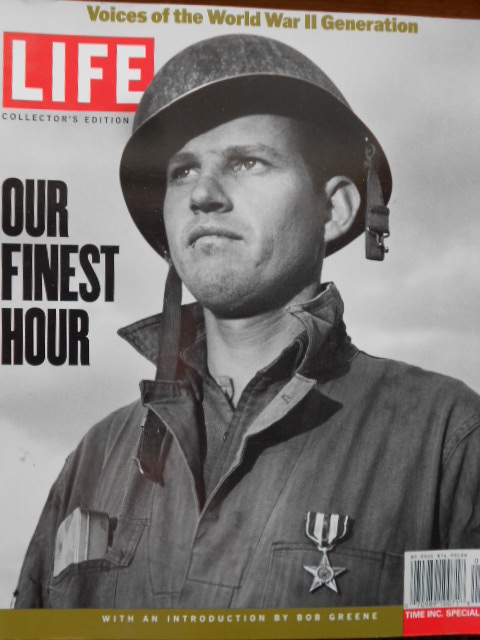 |
Our Finest Hour - Voices of the World War II Generation Life Magazine special edition with introduction by Bob Greene Copyright 2000. LCCN 00-101239. ISBN 1-883013-98-4 Life Books / Time Inc. Coffee-table magazine full of photos and personal accounts by those who served during WWII. A nice tribute and valuable addition to anyone's military history or, of course, Okinawa library. That said, there really isn't much about the Okinawa campaign but I include it anyway because it's such a nice publication and a great read. | |||||
 |
Our Okinawa Prefecture Prefectural government publication Public Information Section, General Affairs Dept. 1980 Nifty little handbook replete with data about the Okinawa Prefecture. Contains a few B&W photos of moderately poor quality. | |||||
|
P |
P
| |||||
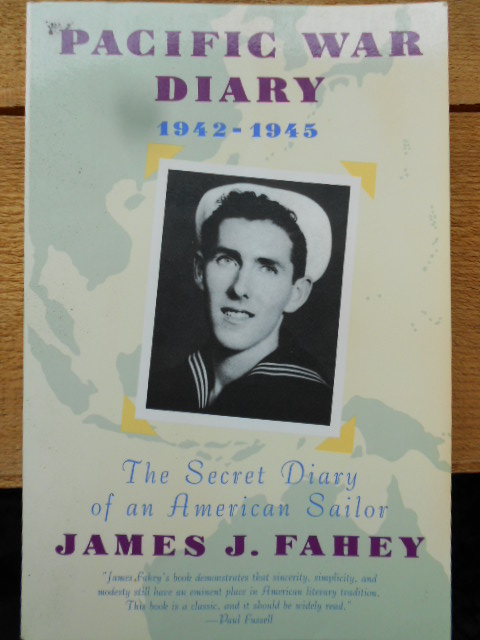 |
Pacific War Diary 1942-1945 - The Secret Diary of an American Sailor James J. Fahey Copyright 1963. ISBN 0-395-64022-9 Houghton Mifflin Company, Boston - New York A great insight from the point of view of a grunt sailor. Not your typical historical document, written by an admiral, general or committee of experts. Not written by a submarine commander, a bomber pilot or a soldier-turned-Senator. Here's a book written by a young "nobody" sailor who, knowing that it was against regulations, was driven anyway to maintain a daily journal. According to Edward L. Beach, Captain, USN, author of Run Silent, Run Deep, "It was contrary to Navy regs to keep a diary during World War II, but we are all gainers from James Fahey's violation of this rule. He wrote an extremely rare story, that of an ordinary sailor during the war, and because of him the world got an unusual view of it, and one of the best books about the war." | |||||
 |
Path to War, The - US Marine Corps Operations in Southeast Asia 1961-1965 George R. Hoffman, Jr., Col, USMC (Ret) 2014 US Government Printing Office ISBN 978-0-16-092044-8 This pamphlet history, one in a series devoted to U.S. Marines in the Vietnam War, is published for the education and training of Marines by the History Division, Marine Corps University, Quantico, Virginia, as part of the U.S. Department of Defense observance of the fiftieth anniversary of that war. Editorial costs have been defrayed in part by contributions from members of the Marine Corps Heritage Foundation. | |||||
 |
Peapul Yomitan Son Nokyo Feb 1988, issue No. 46 Love this little magazine that I picked up back in 1988! I can't read a word of it but really like the name - "Peapul" ! | |||||
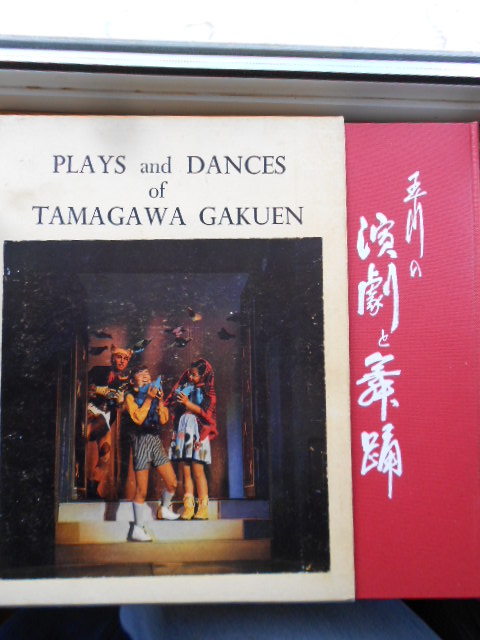 |
Plays and Dances of Tamagawa Gakuen Supervised by Kuniyoshi Obara; Compiled by Akira Okada & Junko Okada Copyright 1964 Tamagawa University Press, Machida City, Tokyo A year-book style book containing many color and B&W photos with bi-lingual captions, depicting, as the title suggests, several scenes froma wide variety of plays and dances performed by Tamagawa students. A beautiful book, it is well-protected in its own hard cardboard sleeve. | |||||
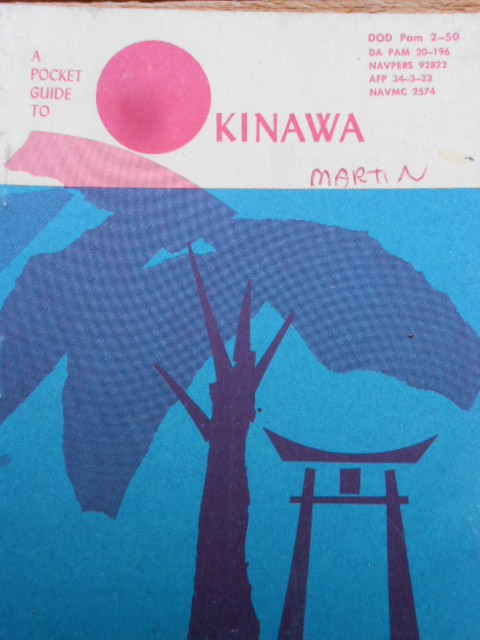 |
A Pocket Guide to Okinawa - 1961 Department of Defense No copyright - 1961 The Office of Armed Forces, Information and Education, Department of Defense Interestingly, this little pocketbook (145 pages) has imprinted on the 2nd page, For sale by the Superintendent of Documents, U.S. Government Printing Office, Washington 25 D.C. Price 45 cents. I don't know if the GI had to pay 45 cents or if the services were responsible for that payment. | |||||
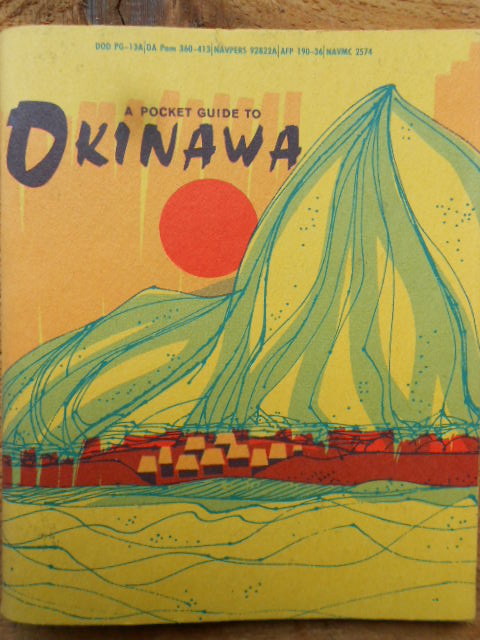 |
A Pocket Guide to Okinawa - 1968See "A Pocket Guide to Okinawa (1961)" above. | |||||
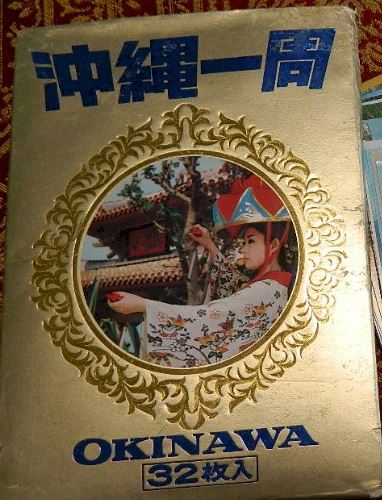 |
Postcards - set of 32 photos of Okinawa photographer(s) - unknown Beautiful photos from the late 1950s and early 1960s - estimated by content of photos.See postcards [HERE] | |||||
 |
Princess Lily of The Ryukyus Jo Nobuko Martin Copyright 1984 Published by Shin Nippon Kyoiku Tosho Co., Ltd. Tokyo "Jo Nobuko Martin writes of what happened in 1945 to Okinawa, her native island, and of earlier Okinawa as well. Okinawa is a beautiful place, populated by gentle, pleasant people, and it is also a tragic place. The tragedy did not negin in 1945 but it reached new heights in the spring and summer of that year, when the island was invaded and taken by the Americans. | |||||
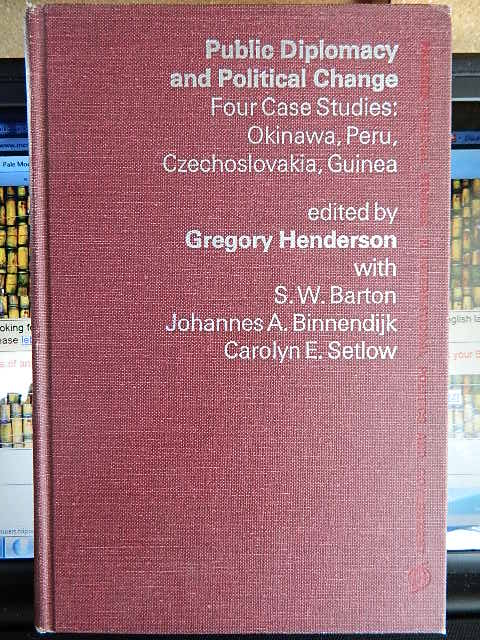 |
Public Diplomacy and Political Change Four Case Studies: Okinawa, Peru, Czechoslovakia, Guinea Edited by Gregory Henderson with S.W. Barton, Johannes A. Binnendijk, and Carolyn E. Setlow Copyright 1973 Publisher Praeger Publishers, Inc | |||||
|
Q |
Q
| |||||
 |
Quick - News Weekly, Vol 2, No 15, April 10, 1950 Copyright 1950. Published weekly by Cowles Magazines, Inc., DesMoines 4 Iowa Little pocket-size paperback magazine covering myriad topics and issues of the day. | |||||
|
R |
R
| |||||
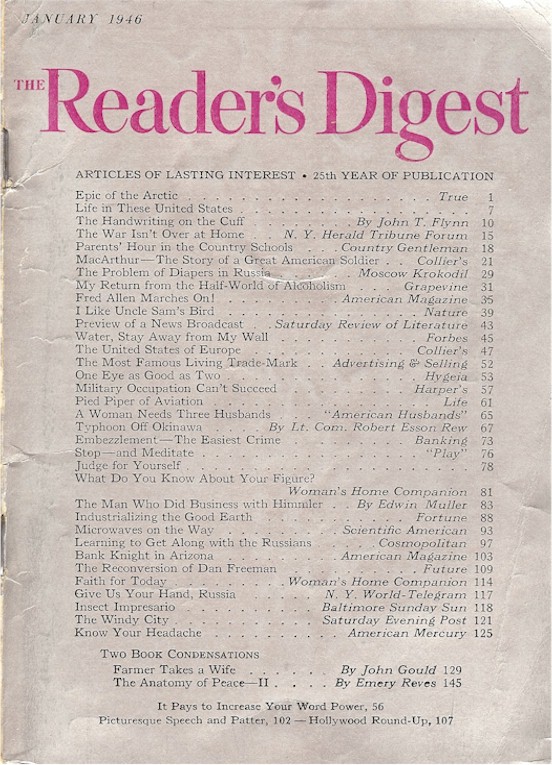 |
Reader's Digest, January, 1946 Typhoon Off Okinawa [Read it HERE] | |||||
 |
Reader's Digest, August, 1955 A Bell for Okinawa Old time advertising! Japan: Ten Years After [Read it HERE] | |||||
 |
Reader's Digest, August, 1959 Our Men on Okinawa - Why We Must Keep Them There [Read it HERE] | |||||
 |
Reader's Digest, November, 1960 The Village That Lives By the Bible [Read it HERE] | |||||
 |
Reflections East and West: Views from Okinawa Edward Bollinger No Copyright. 1st printing 1978. This 2nd printing 1983 Publisher Dixon Press, Ltd., Taipei, Taiwan Selections of short talks on culture and religion of East and West, originally presented over the Far East Broadcasting Company, Okinawa ken, Japan. The talks were intended to help Americans residing on Okinawa understand the cultural history and ways of thinking fo the peoples of Okinawa and other parts of Asia. | |||||
 |
Religion and Folklore of Okinawa, The (3rd edition) Kanhan Teruya No information re copyright or publisher Author's original preface is dated 1957 This appears to be an addendum perhaps to the original book written in Japanese. It is entirely type-written with not a single photgraph except for the front and back covers. Translation into English language was provided by Edward E. Bollinger. | |||||
 |
Reluctant Admiral, The: Yamamoto and the Imperial Navy Hiroyuki Agawa Copyright 1979 (English lang) Publisher - Kodansha Int'l Ltd. (Tokyo) / originally published by Shinchosha in 1969 under title Yamamoto Isoroku A deeper read than most - not for all tastes. | |||||
|
Internet Resource Not in my Library |
Reports of General MacArthur The Campaigns of MacArthur in the Pacific - Volume I Facsimile reprint 1994 Prepared by his general staff Volume I narrates the operations of forces under General MacArthur's command from the Japanese attack on Luzon in 1941 through the | |||||
|
Internet Resource Not in my Library |
Reports of General MacArthur MacArthur in Japan: The Occupation: Military Phase (Vol I Supplement) Facsimile reprint 1994 Prepared by his general staff Volume I Supplement describes | |||||
 |
Request for the Early Return of the Yomitan Auxiliary Airfield July 1991 Published by the Yomitan Township Office, 37-Namihira, Yomitan Publication of the Yomitan Township, intended for U. S. President, Sec of State, Sec of Defense, Speaker of the House, and the Vice-President, full of data re the Yomitan Peninsula. It outlines the history of Yomitan since the U.S. military invasion of Okinawa, including land usage, accidents, and other activities imposing hardship on the people of Yomitan. A very interesting read, especially so since Yomitan is a place that is still to this day close to my heart. | |||||
 |
Requiem for Battleship Yamato Yoshida Mitsuru Copyright 1985. ISBN-10: 029596216X / ISBN-13: 978-0295962160 University of Washington Press (July 1, 1985) Requiem for Battleship Yamato is Yoshida Mitsuru's story of his own experience as a junior naval officer aboard the fabled Japanese battleship as it set out on a last, desperate sortie in April 1945. Yoshida was on the bridge during Yamato's fatal encounter with American airplanes, and his eloquent, moving account of that battle makes a singular contribution to the literature of the Pacific war. The book has long been considered a classic in both Japan and the United States. As with most great battle stories, its ultimate concern is less bombs and bullets than human nature, less death than life.. | |||||
 |
Restaurant GuideBright, colorful photography on good shiny stock, this is a throw-away guide to various restaurants on Okinawa. 26 pages of eateries from McDonald's to ... Who Knows? It's all in Japanese. Oh, there is one other that includes English - the Grand Canyon Western Steak House. This was obviously intended to cater to Japanese, and probably those from the mainland. One page is great - full-page ad showing an 8-ounce bottle of Coca-Cola and the dated (1980s) slogan, I feel Coke. I loved those big billboards! | |||||
 |
Rising Sun, The: the Decline and Falls of the Japanese Empire 1936-1945 John Toland Copyright 1970. LoC Catalog Card # 77-117669 Random House Inc., NY simultaneously in Canada by Random House of Canada, Ltd, Toronto. This monumental narrative history, told primarily from the Japanese viewpoint, traces the dramatic fortunes of modern Japan from the invasion of Manchuria and China to the atom bomb. The Rising Sun not only reveals an enigmatic and aggressive people fighting for survival as a modern nation, but refutes many assumptions and misconceptions about the motivations of those in power as well as their conduct of the war. | |||||
 |
The Road to Tokyo World War II Keith Wheeler Copyright 1979. ISBN 0-8094-2540-8 Time-Life One of a set of Time-Life history and photo essay books. A must have for history wonks who really like photos to boot! Chapter include: 1. Master Plan for Invasion. 2. Brutal Battle for Iwo Jima. 3. Bold Forrays by the Fleet. 4. Assault on Okinawa. 5. Ordeal by Kamikaze. 6. Ushijima's Savage Retreat. | |||||
 |
Roadshow - August, 1990 issue magazine Copyright 1990 Hefty magazine with some "comic book" quality pages depicting black & white photos of various entertainers and other pop culture figures. The first half of the magazine - about 40-50 pages - are the cheesy ones that comprise maybe 1/2 of the mag. The next 40 pages or so are glossy page B&Ws and the last 40 pages are glossy color layouts of Japanese and American film personalities. Also have the October, 1990 and the February 1985 issues. | |||||
 |
Ryukyu Islands, The (2 copies) Shannon McCune Copyright 1975. ISBN 0-715-36893-1 (Great Britain), 0-811-71495-0 (USA) Publishers: Great Britain- David & Charles (Holdings) Ltd., Newton Abbot Devon USA - Stackpole Books, Harrisburg, PA This is an interesting and factual piece which discusses, in 1975, tidbits of information regarding the Okinawan people, the geography, geology, archeology, bathymetry and numerous other aspects of the islands of the Nansai Group. Brief presentation of the early history of Okinawa's struggle with its dual allegiance to China and Japan, its trade and culture. McCune handles the traditional way of life and brings us into the 20th century with economic advancement, plotics and the development of tourism. | |||||
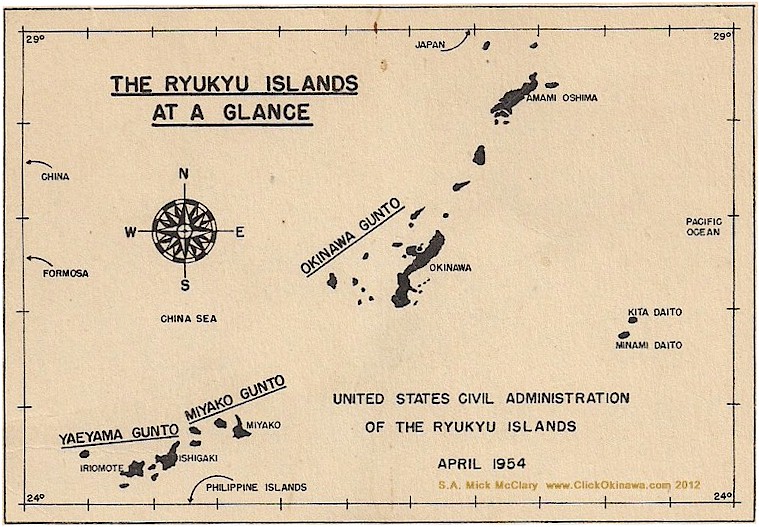 |
Ryukyu Islands at a Glance, The United States Civil Administration of the Ryukyu Islands - April 1954 U.S. Army No Copyright - 45-1106 Army-AG Admin Cen-AFFE-7.5M Publishers: U.S. Army Booklet prepared by the Economics & Finance Department of the United States Civil Administration of the Ryukyu Islands. | |||||
 |
Ryukyu Kingdom and Province Before 1945 Kerr, George H. Issued by The Pacific Science Board National Academy of Sciences - National Research Council June 15, 1953
The first English-language in-depth written study of the history of the Ryukyu Islands. | |||||
 |
Ryukyuan Review January 1, 1955 issue Unofficial Publication of Ryukyus Command, Fort Buckner [READ] it Here | |||||
 |
RYUKYUS - The U.S. Army Campaigns of World War II U. S. Army 31 page pamphlet provides an historical overview of operations on Okinawa. I don't know who was the target audience for this publication (Army War College?) but it's packed with information about thew Battle for Okinawa. In the introduction, it reads, in part:This brochure was prepared in the U.S. Army Center of Military History by Arnold G. Fisch, Jr. I hope this absorbing account of that period will enhance your appreciation of American achievements during World War II. Read it [HERE]
If you would care to make a small donation to off-set expenses relating to creating and maintaining this Library for your use | |||||
 |
Ryukyu Islands and Okinawans - Sightseeing & Lifestyle Kiyoshi Nakachi Copyright 1996 Published by Okinawa Times, Inc. This is another neat, small and informative paperback that I purchased at Tuttle Bookstore in Plaza House shopping center (Rte 330 aka "Miromi Street") in March 2014. Tons of good information presented briefly and many accompanied by maps. | |||||
 |
RYUKYUS OPERATION (A Compendium) - RESTRICTED Armed Forces Staff College 1951 Published by US Army "For Instructional Use Only" Read the entire book [HERE] | |||||
|
S |
S
| |||||
 |
Safety Guide for Visitors to Okinawa Okinawa Prefecture Okinawa Convention & Visitors Bureau Read it [HERE] (.pdf file) | |||||
 |
Saturday Evening POST, The - November 17, 1945 Okinawa Now A POST Picture Story [Read it HERE] | |||||
 |
Sayonara James A. Michener Copyright 1953. LCCN 54-5953 Random House, NY Lloyd Gruver, a jet pilot ace in Korea, is sent back to Japan on a new assignment. The son of a General, his fiancee Eileen is the daughter of General Webster. There is a problem with Airman Kelly, who wants to marry a Japanese girl even though she would not be allowed to come to America. General Webster's wife disapproves of American soldiers accompanying Japanese girls; and the General's wife commands the General. Eileen wants a regular marriage, not spending years of loneliness as a stateside Officer's wife. | |||||
 |
Search and Recovery Effort for Remains of World War II Dead "The Dig" Les Ashe A document for participant preparation regarding "The Dig" - an activity of the Konko-Kyo Group. | |||||
 |
The Second World War John Keegan Copyright 1989 Publisher - Viking Another treatment of WW2 condensed into this 595 (excluding the bibliography and index) book. Nothing particularly remarkable about this one. A fairly sizable number of photos and maps make this standard fare for the intermediate historian. | |||||
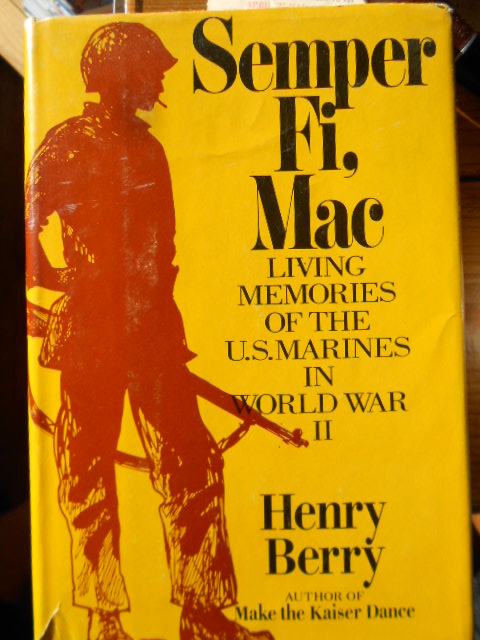 |
Semper Fi, Mac - Living Memories of the U.S. Marines in World War II Henry Berry Copyright 1982 Arbor House, NY This is not a book about the Marine Corps. It's about Marines - the tough battle-trained troops that stormed the beaches at Bougainville, Tarawa, Saipan, Iwo Jima, Okinawa - in some of the bitterest and bloodiest fighting of World Was II. Here some of the survivors, from the perspective of time and age, recreate in more than one hundred interviews a personalized microcosm of the Pacific war experience - the comaraderie, the women, the loneliness, the fear - and the profound emotional as well as spiritual rewards. | |||||
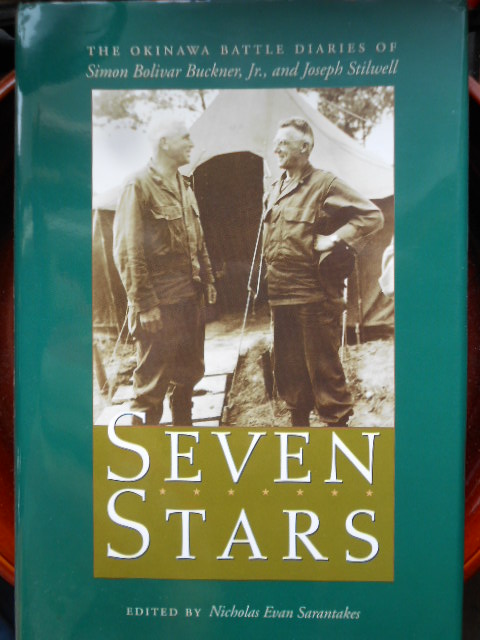 |
Seven Stars: the Okinawa battle diaries of Simon Bolivar Buckner and Joseph Stilwell (1st edition) Edited by Nicholas Evan Sarantakes Copyright 2004. ISBN 1-58544-294-1 (alk paper). LCCN in-Publication Data Texas A&M University Press, College Station Seven Stars collects the battle diaries of two starkly different generals from the World War II battles fought at Okinawa. Lieutenant General Buckner was a straight laced, clockwork-precision type who preferred to use artillery and tanks to reduce entrenched positions, while General Stilwell was a short-tempered outsider who disdained set-piece battles in favor of maneuver. In addition to presenting disparate views of history in each man's own words, editor Nicholas Sarantakes offers informed and informative explanations of crucial events referred to in the battle diaries, as well as glossaries of main characters and military terms. A welcome addition to military reference shelves and primary reference sources of the Pacific battles of World War II, and utterly involving for scholars of military science and lay readers alike, Seven Stars is very highly recommended reading for students of 20th Century Military History. (review Amazon.com) | |||||
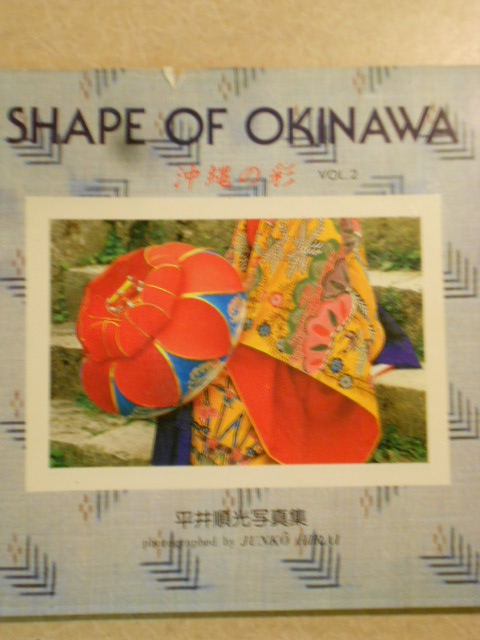 |
Shape of Okinawa Vol. 2 Junko Hirai Copyright 1988 Printed in Japan Here is a delightful little soft cover book of beautiful color photos of Okinawan people, places, markets, country-side, city-scapes, military bases, flowers, crafts, dances - you name it! All are photographed by Junko Hirai. It is a mate to another book by the same publisher entitled Festivals of Okinawa Vol.3 | |||||
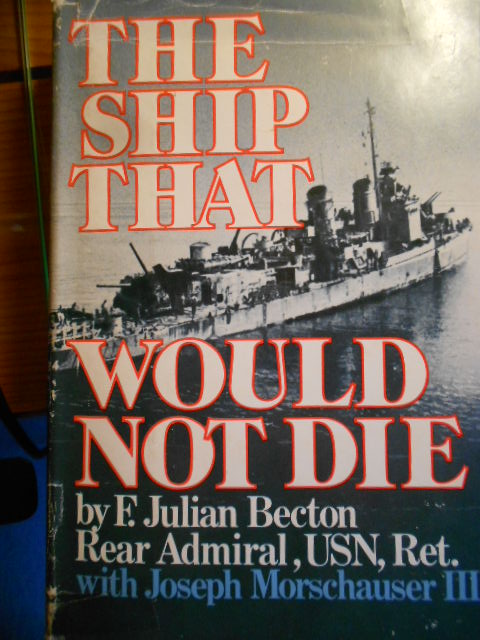 |
Ship That Would Not Die, The F. Julian Becton, Rear Admiral, USN, Ret. with Joseph Morschauser III Copyright 1980. Prentice-Hall Inc., Englewood, NJ This is a moving story of a ship on a picket line that survived kamikaze attacks - not all did. The USS Laffey did and so did her skipper and crew. Read of dedicated sailors, professional in every way, and how they were determined to stay afloat - and to win!
| |||||
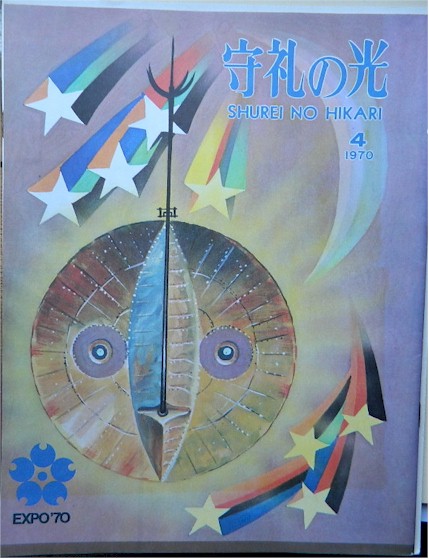 |
Shurei no Hikari in Japanese language April, 1970 Published by the High Commissioner of the Ryukyu Islands Entirely in Japanese, accompanied by a second publication (see below) with English language text and drawings that correspond to those in this booklet. | |||||
 |
Shurei no Hikari - English Text April, 1970 Published by the High Commissioner of the Ryukyu Islands LIGHT OF THE LAND OF COURTESY | |||||
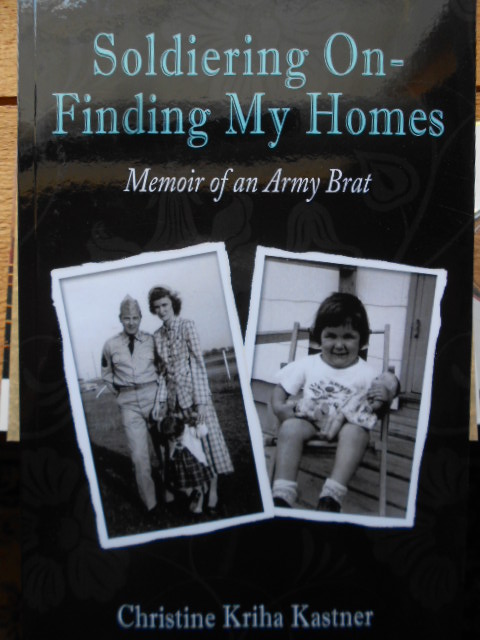 |
Soldiering On - Finding My Homes Memoir of an Army Brat Christine Kriha Kastner Copyright 2011 - ISBN: 978-1-4567-4185-3 LCCN 2011903223 AuthurHouse Signed by the author, this little book came as a real joy in reading. Having grown up and AF brat myself I am able to associate with so many things that the author expresses. As an added bonus, she even mentions me by name on page 130! Now you just can't beat that. | |||||
 |
Southern Breeze - photographs by Shokyu Otsuka Shokyu Otsuka Copyright 1998 - 2nd printing 200 - 3rd printing 2003 Publisher Akiya Miyazato, Ryukyu Shimpo Japan Library Association selected book | |||||
 |
Speak, Okinawa (a memoir) Elizabeth Miki Brina Copyright 2021 Publisher - Knopf a retrospective on a life of sadness and regret. Regret, and guilt, for her choices and missed opportunities to connect in a meaningful way with her Mom. Some inconsistencies and a few frank errors: | |||||
 |
The Spirit of Okinawa Photography and bi-lingual captions: Shokyu Otsuka Published by Marine Corps Community Services First edition, sixth printing 2012 This one's a treasure! Large, hard-bound coffee-table style book of color photographs of all aspects of life on Okinawa. It's simply beautiful and was presented to me in 2017 by a beautiful soul, my friend, Michael J. Martin who lives in Yomitan. | |||||
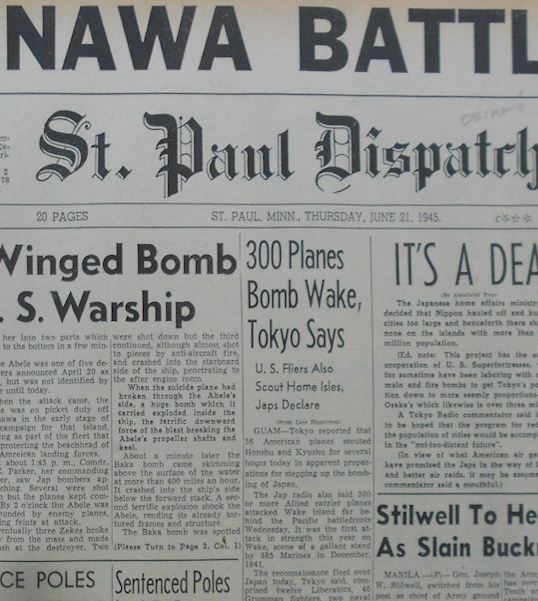 |
St. Paul Dispatch, Thursday, June 21, 1945 Newspaper Excellent stories about operations on Okinawa - headline "Okinawa Battle Ends" | |||||
|
|
Status of Forces Agreement - United Nations forces in Japan Tokyo, February 19, 1954 Presented by the Secretary of State for Foreign Affairs to Parliament by Command of Her Majesty, March 1957 [Download Here] (2.71MB .pdf file) | |||||
 |
Still Having Fun: A Portrait of the Military Marriage of Rex and Bettie George 1941-2007 Candace George Thompson Copyright 2012 - ISBN 978-1-937763-62-6, 1st Edition Publisher Westview, Inc. Just finished reading "Still Having Fun" and have just experienced a reflection of my past while growing up in the military. Instead of Okinawa, my experience as a child in a military family was in France. Having lived on Okinawa though for 7 years, as a young military member with a brand spanking new family (wife and child) I can relate to many of the situations, people and places that are depicted in this critical and intimate peek into the lives of a young couple and their very small children. Much of what they experienced in the late 1940s still applied to my experience in the early 1970s. Their experiences in Germany largely mirrored mine in France. I recommend this excellent read to anyone who has lived the life or who simply wonders, "What the heck was it like living on a small island with very, very few amenities?" A study of love and devotion to duty and to family, this work deserves to be read. | |||||
 |
Story of Ernie Pyle, The Lee G. Miller Copyright 1950 The Viking Press, NY This book, written by Ernie's closest friend, is his story as he would have wanted it told, directly and simply, without distortion and abiding strictly by the facts - the tribute of one newspaperman to another. It contains a good deal of Pyle's private correspondence, to his friends and bosses, and especially to his wife, "That Girl," with whom love was strong enough to withstand perhaps the most tragic stress to which a marriage can be subjected. This body of hitherto unpublished Pyle writings gives special interest to the book. (from flap) | |||||
 |
A Stroll Along Ryukyu Martial Arts History Andreas Quast Copyright 2015 Self-published: AQ North Rhine-Westphalia, Germany "Based on his acclaimed previous studies, the author here presents a synopsis of the development of Ryukyu martial arts. The events described herein are all real, that is, they are all historical. Strolling along the chronology of martial arts of Ryukyuan provenance a large number of varifiable events are not only detailed but also decorated with dozens of precious illustrations. ... it provides a pristine ground to stand on for the practitioner who wishes to understand the primordial origins of Ryukyu martial arts." | |||||
|
T |
T
| |||||
 |
Taira: An Okinawan Village - Six Cultures Series, Volume VII Thomas W. Maretzki and Hatsumi Maretzki Copyright 1966. LCCCN 66-18785 Publisher John Wiley and Sons, Inc. One of a careful study of child rearing within six widely divergent cultures Taira is ethnologically compared with small towns and villages in Mexico, Kenya, Kalapur (India), New England (USA) and the Philippines. | |||||
 |
Takoyama Habu Center brochureNo longer in existence, the Takoyama Habu Center was one of the island's most popular places to go to see the infamous Habu-Mongoose Fight. | |||||
 |
Tale of Genji, The translated by Dennis Washburn Murasaki Shikibu Written in the 11th century W.W. Norton & Company DURING THE first decade of the eleventh century Murasaki Shikibu, a woman born into the middle ranks of the aristocracy in the Heian period (794– 1185 CE), began writing a fictional narrative that was recognized by her contemporaries as distinctive and remarkable even as it was being composed. Expansive in form, compelling in its delineation of character, sophisticated in its representation of ethical concerns and aesthetic ideals, Genji monogatari would come to occupy a central place in one of the world’s most important literary traditions. | |||||
 |
Tales of Okinawa's Great Masters - translated by Patrick McCarthy Shoshin Nagamine Copyright 2000, 1st Edition. ISBN 0-8048-2089-9 LoC Catalog Card #in process Tuttle Publishing ...the late Shoshin Nagamine's ground-breaking work, recounts the legacy and the life histories of Okinawa's greatest martial artists. In addition to profiles of the legendary tegumi wrestlers, Nagamine-sensei features many of the world's great karate masters, including the founders of the core styles from which modern karate sprang. Tales of Okinawa's Great Masters corrects historical inaccuracies surrounding Okinawan martial arts and brings alive the greatest of the great masters. | |||||
 |
Talking to High Monks in the Snow: an Asian American Odyssey Lydia Minatoya Copyright 1992, 1st Edition. ISBN 0-06-016809-9 A fascinating journey - rich in humor and insight - an evocative exploration of cultural identity by a woman caught between the traditions of her Japanese immigrant family and the values of her American world. During a childhood of ethnic isolation in upstate New York, Minatoya listens to the stories of her parents' pasts. These are astonishing and poignant tales from the silk-and-shadow world of a samurai family, tales of immigration and internment, tales or psychological dislocation and spiritual transcendence. | |||||
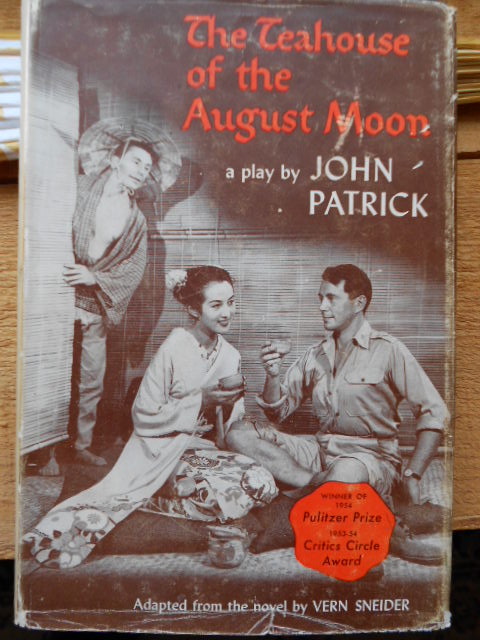 |
Teahouse of the August Moon, The - a play (2 copies in hardback; one is 1st edition) John Patrick. Adapted from the novel by Vern Sneider Copyright 1952. LCCN 54-10486 Publisher Van Rees Press, NY John Patrick's hilarious story of some of the difficulties faced by the American Army in its occupation of Okinawa made a clean sweep of the year's major drama awards and won both the 1954 Pulitzer Prize for Drama and the 1953-54 New York Critics Circle Award for the best American play. | |||||
 |
Teahouse of the August Moon
the play, in Literary Cavalcade, Oct 1964 Read it [HERE] | |||||
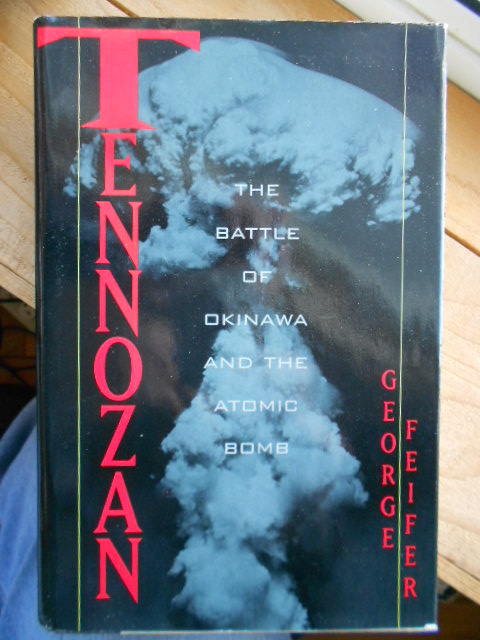 |
Tennozan: the Battle of Okinawa and the Atomic Bomb (3 copies) George Feifer Copyright 1992. ISBN 0-395-59924-5 LoC Catalog-in-Publication data (both copies) Ticknor and Fields, NY, NY Tennozan offers a stunning account of the Battle of Okinawa, the last major campaign of World War II and the largest land-sea-air engagement in history. In examining the disastrous of three disparate cultures - American, Japanese, and Okinawan - the book provides an unforgettable picture of men at war and also the context for understanding one of the most ominous events of (the Twentieth) century: the decision to drop the atom bomb. | |||||
 |
That's the Way It Was Maehara Copyright 2006 Unknown Publisher Beautiful hardbound volume containing a wealth of B&W photos of post-war Okinawa. Amazing scenes that rival those of Blackie the Photographer. | |||||
 |
This is Okinawa Willard J. Holland and "Blackie" Bradford Fourth printing 1959 (1st edition 1954) Publisher - Charles E. Tuttle Co. Paper covered book of 71 pages chock-full of photos from the 1950s taken by "Blackie the Photographer" Bradford with captions by Willard J. Holland. This one's a real treasure. "All rights reserved" precludes me from scanning and sharing with you. | |||||
 |
This Is the Okinawa War - a Photo Record Masahide Ota Revised edition The cover photo is that of a young Okinawan boy who dressed as a girl in the hope that he would be spared the torturous treatment that the locals were led to believe would befall them if they were taken prisoner by the U.S. forces. This is a small hard-bound book full of B&W photos with captions entirely in Japanese. I'm working on translations and will post some of them here. | |||||
 |
This Month on Okinawa July, 1955 It's a 4 1/2" x 6 3/8" little pocket book chock full of information about what's what in the military communities on island. Lots of cool old advertisements too! | |||||
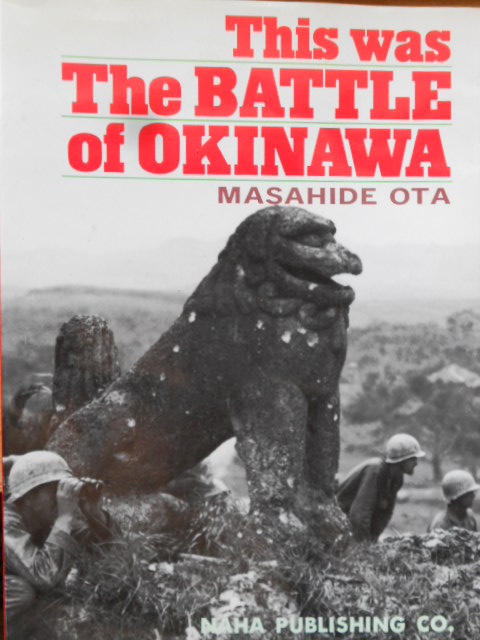 |
This Was the Battle of Okinawa Masahide Ota Copyright 1981 Naha Publishing Co., Naha, Okinawa This is a 97-page work by the man who, at time of publication, was the governor of Okinawa Prefecture. Nifty brief overview of the battle with lots of photos. Three years later though, Mr Ota published a much longer, more in-depth book on the same topic, The Battle of Okinawa: the Typhoon of Steel and Bombs. I am delighted to have both in my Library. | |||||

|
This Week On Okinawa I regret having not had the foresight to keep every issue that I ever bought, but here's what I do have. Click on each date to view the cover. Some day (yeah, Some day) I might get all of them scanned and posted to the Library. Oddly, each subsequent issue began on the sdame date as the ending date of the previous issue. For example, one issue is for June 6-13 and the next issue was for Jun 13-20 (8 days in each span). I never noticed that till I got back to the States and was looking through them. Makes ya stop and say, "Hmmmmm....."
Click [HERE] for the listing of issues and their covers
| |||||
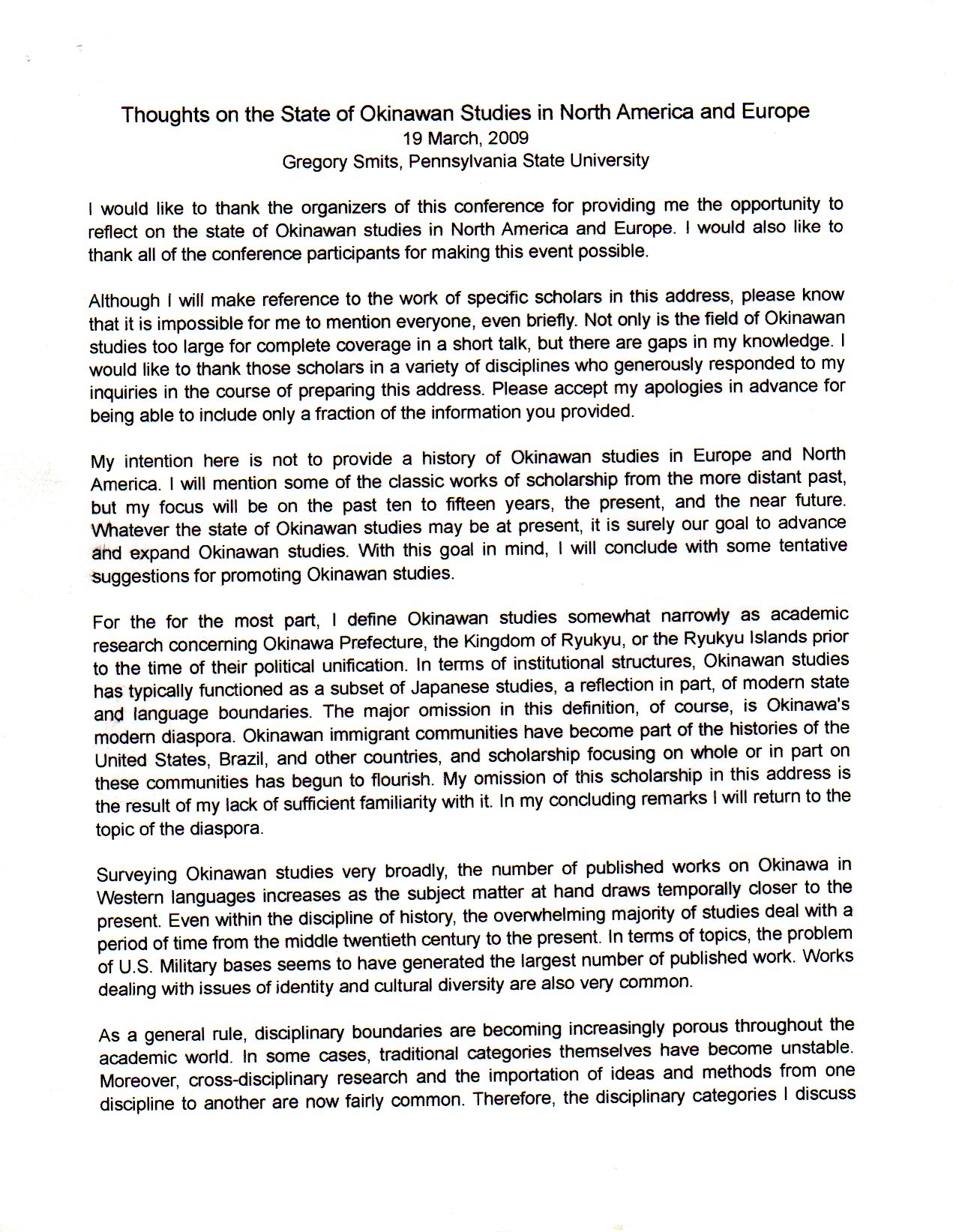
|
Thoughts on the State of Okinawan Studies in North America and Europe March 19, 2009 Gregory Smits, Pennsylvania State University
Click [HERE] to read Smits' paper (.pdf file) | |||||
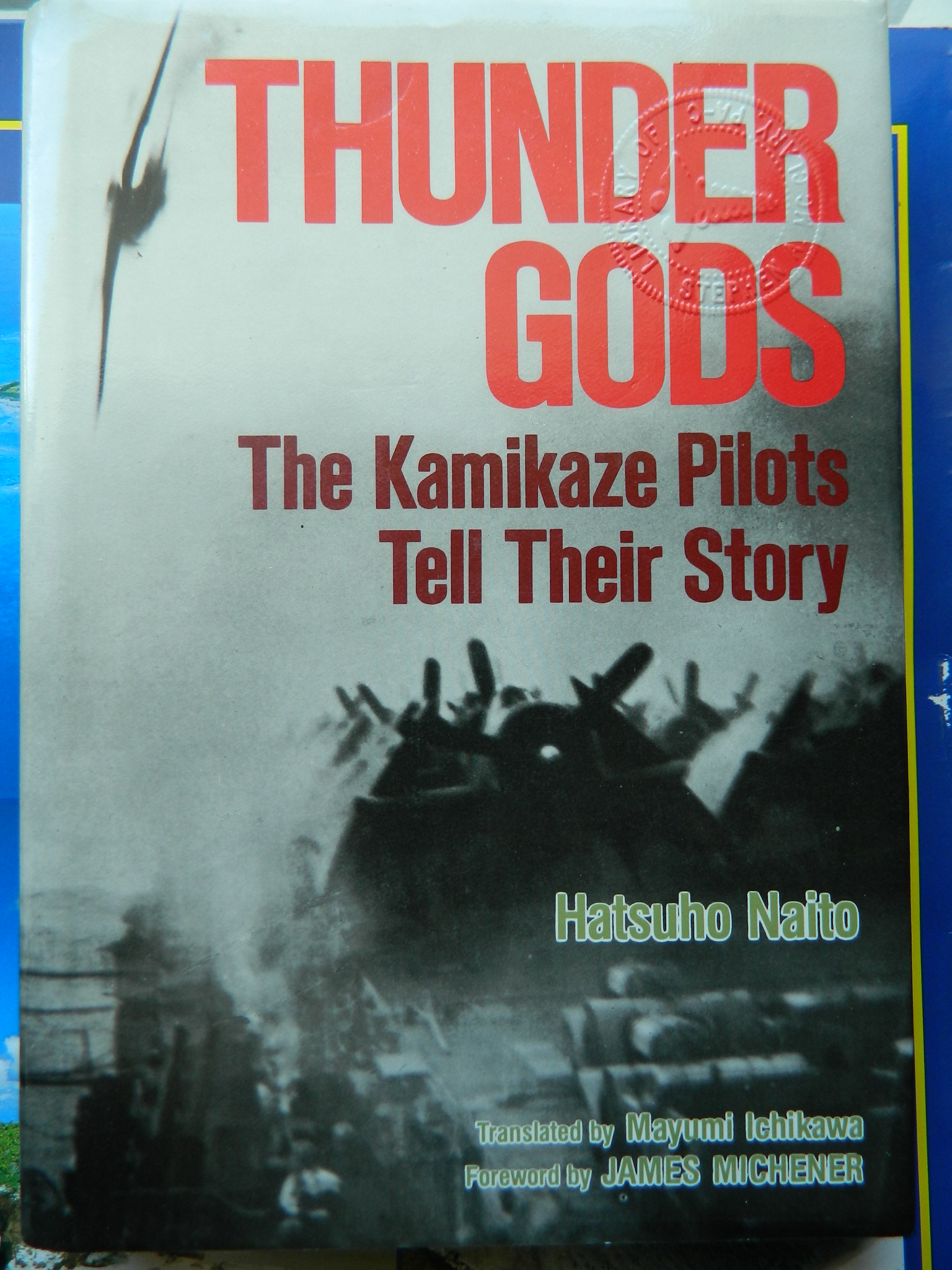 |
Thunder Gods: the Kamikaze Pilots Tell Their Story (1st ed English lang) Author Hatsuho Naito Copyright 1989 - originally published in Japanese language 1982 under the title Ohka hiju no yokko heiki Publisher - Kodansha Int'l (Tokyo) / 1982 Bungei Shunju Very enjoyable and educational read! First hand accounts of those pilots who pledged their lives for his Imperial majesty and the homeland. | |||||
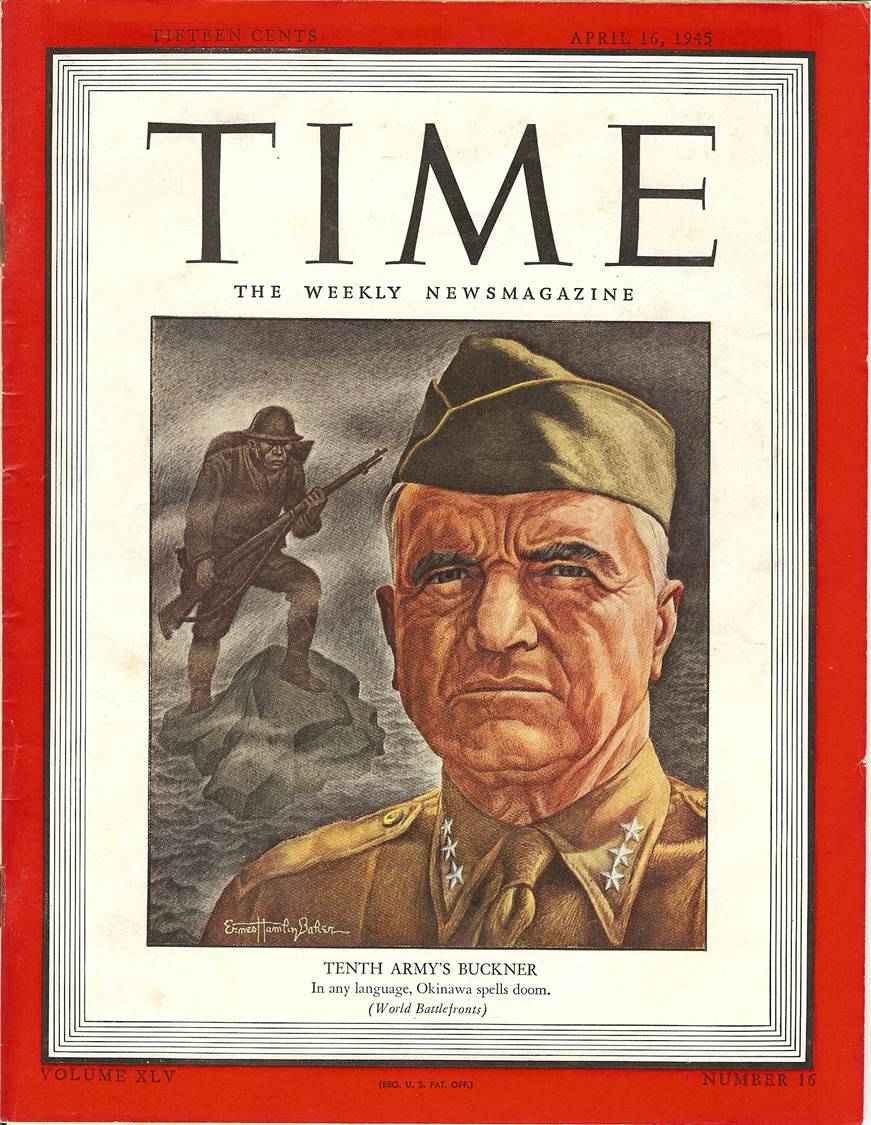 |
TIME Magazine, April 16, 1945 Battle of the Pacific LtGen Simon B. Butler [Read it HERE] | |||||
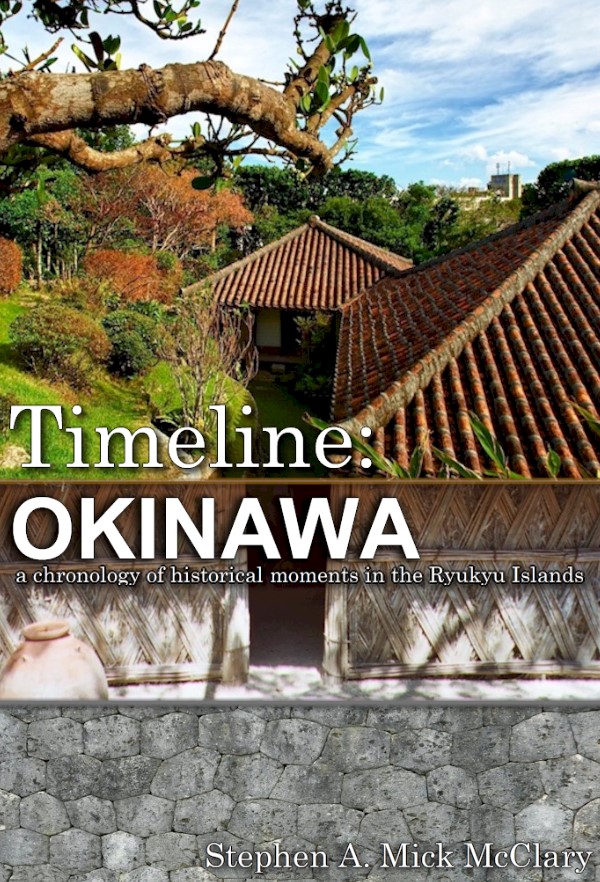 |
Timeline: OKINAWA a chronology of historical moments in the Ryukyu Islands McClary, Stephen A. Mick Copyright 2022 Publisher - AuthorHouse | |||||
 |
Tokyo Record - 1st edition Otto D. Tolischus Copyright 1943 Reynal & Hitchcock, NY This book is a chronological record of events, impressions and personal experiences, based on a reproduction of the author's original data, confiscated by the Japanese police, on his dispatches to the New York Times, and on his memory, on which all of these things have been indelibly engraved by six months of Japanese police inquisition and by his own reflections during solitary confinement. | |||||
 |
Torii Beach Guide Community Recreation Division 10 Area Support Group 1988 18 pages of type-written text and hand-drawn illustrations. It begins with letters of introduction by at-the-time mucky mucks, followed by a bunch of information about services, hours of availability, a map of the beach area and an introductory message in kanji. | |||||
 |
Torment (fiction; signed by Hitchcock) "Bones" Rathbone with J. A. Hitchcock Copyright 1995. Barclay Publishing Co., Okinawa, Japan Review from back cover: The journey begins in a small town in New York State. In 1966, Sam "Slim" Scanlon was a 17-year-old with not a care in the world, hair "as long as Jesus," and on his way to the world of retail after college. He soon discovers that life can change suddenly and for him it's two things: "Thumper" and the draft. He finds himself at Parris Island, South Carolina on yellow footprints painted on the ground -- United States Marine Corps boot camp. After thirteen weeks of rough and tough training, Slim transforms into a lean, mean, fightin' Marine who feels he can do anything! | |||||
 |
Tours of Okinawa - A Souvenir Guide to Places of Interest (1st edition) Compiled by Gasei Higa, Isamu Fuchaku, and Zenkichi Toyama Copyright 1959 by Charles E. Tuttle Co. LCCN 59-14086 Bridgeway Press, Yokyo, JA What began as mimeographed pages of information provided to those who went on Army Service Club Tours evolved into this more permanent publication, a paperback loaded with information relative to the many tours conducted by the club. | |||||
 |
Traveler's Guide to Asian Customs and Manners Elizabeth Devine and Nancy L. Braganti Copyright 1986. 1st Edition. ISBN 0-312-81610-3 (pbk) St. Martin's Press, NY How to converse, dine, tip, drive, bargain, dress, make friends, and conduct business while in Asia. Includes information for Australia, China, Hong Kong, India, Indonesia, Japan, Malaysia and Singapore. New Zealand, Pakistan, the Philippines, South Korea, Sri Lanka, Taiwan, and Thailand. | |||||
 |
Typhoon Guide - circa 1988 Kadena Disaster Preparedness Division 1980s Read it [HERE] | |||||
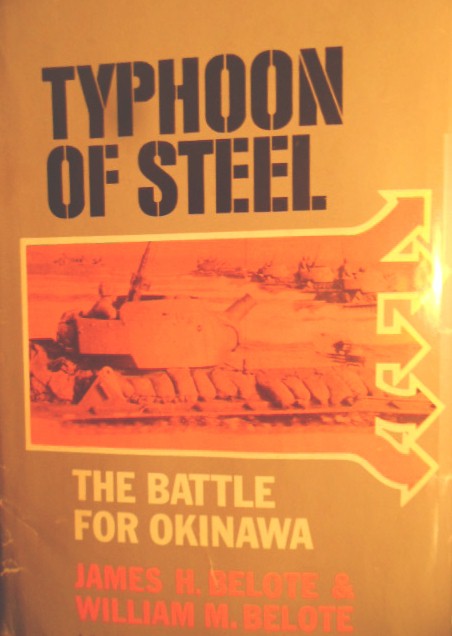 |
Typhoon of Steel - The Battle for Okinawa James H. Belote and William M. Belote Copyright 1970 Harper & Row A competent popularized battle narrative that fails to capture the magnitude of suffering and carnage that took place on Okinawa. A better history encompassing the human dimension is Tennozan: the Battle of Okinawa and the Atomic Bomb. It is a gripping apocolyptic description of this greatest of all Pacific War battles - one that dwarfed Iwo Jima, Tarawa and Peleliu combined. (review at amazon.com, edited) | |||||
|
U |
U
| |||||
 |
The United States Military Occupation of Okinawa: Politicizing and Contesting Okinawa Identity 1945-1955 David John Obermiller May 2006 ProQuest Information & Learning Co. Volume I (453-page .pdf) [READ IT] | |||||
 |
United States -- Peruvian Policy Toward Peruvian-Japanese Persons During World War II Warren Page Rucker 1970 - University of Virginia, Lynchburg, VA Masters Thesis presented to the Graduate Faculty of the University of Virginia in candidacy for the degree of Master of Arts, Corcoran Department of History "Takehara Hisaei was a casualty of World War II. He carries no visible scars, and his injuries were sustained in a campaign which saw no shots fired. Nevertheless, he was one of approximately eighteen-hundred people of Japanese ancestry who were involved in an unfortunate and little-known experience of the war. | |||||
|
V |
V
| |||||
|
VIDEOS  |
Wide variety of newsreel from the National Archives focusing on wartime footage and the post-combat years. | |||||
 |
Visions of Ryukyu - Identity and Ideology in Early-Modern Thought and Politics Gregory Smits Copyright 1999 University of Hawaii Press Between 1609 and 1879, the geographical, political, and ideological status of the Kingdom of Ryukyu (modern Okinawa) was characterized by its ambiguity. It was subordinate to its larger neighbors, China and Japan, yet an integral part of neither. In this innovative and provocative study, Gregory Smits explores early-modern perceptions of Ryukyu and their effect on its political culture and institutions. He describes the major historical circumstances that informed early-modern discourses of Ryukyuan identity and examines the strategies used by leading intellectual and political figures to fashion, promote, and implement their visions of Ryukyu. Visions of Ryukyu advances a new interpretation of Ryukyuan history. Rather than regarding early-modern Ryukyu as an appendage of China or Japan, it places the kingdom at the center, highlighting Ryukyuan subjectivity and agency and giving historical depth to modern and contemporary debates on Okinawan identity. Read excerpts [HERE] | |||||
 |
Venture Magazine Guide to Kadena Force Support Squadron - February 2014 issue February 2014 issue Glossy monthly magazine published for the Air Force folks on island. The magazine is very similar to the Marine Corps' publication Okinawa Living. It contains local cultural events, some Okinawa history, things to do, stuff the GIs need to know about and a lot of advertising. Also have the October, 2005 issue. | |||||
 [Read it HERE] |
The Voyage of the Alceste, 1816-1817 to the Ryukyus and Southeast Asia John M'Leod 1817 - frontispiece (black and white lithograph), 4 hand colored lithograph plates Full title: Narrative of a Voyage, in His Majesty's Late Ship Alceste, to the Yellow Sea, Along the Coast of Corea and Through its Numerous Hitherto Undiscovered Islands, to the Island of Lewchew; with an Account of Her Shipwreck in the Straits of Gaspar. This is the Narrative of the expedition (February 1816 - August 1817) of the British Naval ships the Alceste and the Lyra under the command of Captain Murray Maxwell to transport the Lord Amherst's Embassy to China and explore the relatively little known East China Sea and the Yellow Sea. The book contains extensive sections on visits to China, Korea, Okinawa (Lew Chew) and St Helena. | |||||
|
Voyage to Loo-Choo
, and other places in the eastern seas, in the year 1816. Including an account of Captain Maxwell's attack on the batteries at Canton; and notes of an interview with Buonaparte at St. Helena, in August 1817 - Hall, Basil, 1788-1844
Basil Hall 1826 Digital text in PDF format. | ||||||
|
W |
W
| |||||
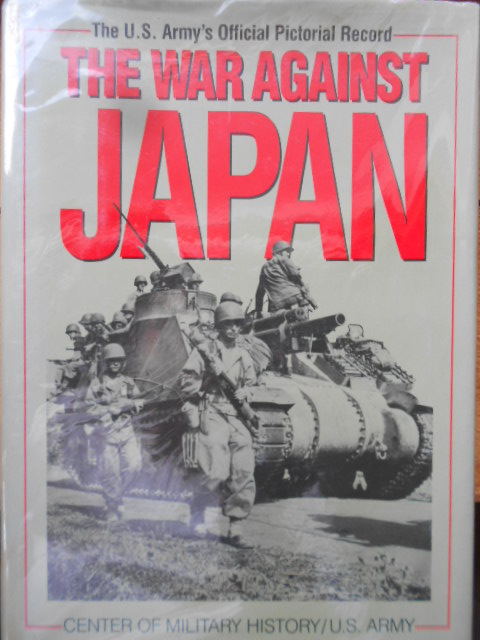 |
The War Against Japan:the U. S. Army's Official Pictorial Record No copyright. Center of Military History / U.S. Army First Brassey's edition 1994 Brassey's, Washington & London The War Against Japan is the U. S. Army's Official Pictorial Record of the Asian and Pacific campaigns of World War II. It contains nearly 600 of the most dramatic photographs featuring all branches of the U.S. armed forces and even contains a number from Japanese archives. Specially selected by Army historians to show important terrain features, types of equipment and weapons, living and weather conditions, military operations, and details of life in the front lines, these photgraphs reveal every aspect of the U.S. serviceman's unforgettable experience. The War Against Japan depicts training in Hawaii, Australia, and New Caledonia; defeat in the Philippines; the assaults of Iwo Jima and Okinawa; and the operation of the supply line to China through India and Burma. It provides, as only such a comprehensive photgraphic volume can, an intimate understanding of the war from the combatant's perspective. | |||||
 |
War Diary, Military Government Detachment B-5 LtCdr E. R. Mosman, Commanding Officer December 1944 thru April 1945 Fetching first-hand memoir - more like a formal military report - of the creation and organization of a joint U.S. Navy and U.S. Army Civil Affairs team in preparation for the military governance of the Islands. It includes information regarding the officers and enlisted men who were selected for the mission, their preparations and education prior to departure from San Francisco (when they left CONUS they didn't know their destination), their arrival on island and the structuring of their outfit in order to get the job done. | |||||
 |
War is a Private Affair Edmund G. Love Copyright 1951, 1959 Harcourt, Brace & Company, NY For the ten men whose true stories are related in this extraordinary inside account of World War II, that war was a private affair. From Hawaii to Okinawa, they fought the enemy - but their campaign against army discipline was even more absorbing. They brought humor, strategy, and stubborn individualism to bear in a continuous engagement against authority. | |||||
 |
Warriors of the Rising Sun - a history of the Japanese military Robert B. Edgerton Copyright 1997. ISBN 0-393-04085-2 W. W. Norton and Company, Inc. NY, NY This is a provocative study, with some insights into how the Chinese and Japanese view each other and their respective views on the west. The broader theme is that "human nature can be shockingly dark." The early chapters describe Japan's military history. Next, came a litany of bad behavior by European and American troops during the "boxer rebellion." He sights this as one of the reasons Japan's military stopped following International law. Thus becoming scornful of both the western barbarians and their Chinese victims. The book is well documented with a fine bibliography. But, there are errors and it is sparse on much of Japan's military history before the boxer rebellion. Nevertheless, it was worth reading for its different slant on the subject. It leaves the reader with this? If Japan was a responsible military power once, why can't it be one again? After reading it I felt he was apologizing for Japan's unspeakable crimes during WW2. | |||||
 |
Weaponless Warriors, The: an informal history of Okinawan Karate Richard Kim Copyright 1974, 20th printing 1998. ISBN 0-897750-041-5 LoC Catalog Card # 74-21218 Ohara Publications, Inc., Santa Clarita, California The text of this book represents (the author's) own approach to the illustrious history of karate. Like so many of the formal history studies that we have had to plod through at one time or another during our lives, this book is not intended to be an encyclopedic and linear presentation. This book is the first to deal exclusively with the lives of the Okinawan greats. Through the stories depicting the lives of these Okinawan masters, we are better equipped to see how that particular society molded the type of martial art which we study with such fascination today. | |||||
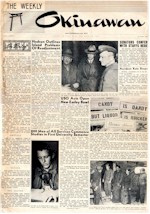 |
Weekly Okinawan, The - Vol. 1 No.8 - 16 Jan 1946
Weekly newspaper put out by the military every Wednesday for U.S. military personnel. | |||||
 |
Welcome Okusan - Discover the Best of Okinawa Published 1975 by Armed Forces Wives Clubs. Printed by Tiger Printing Company. 206 page, comprehensive guide intended for new arrivals. Loaded with advertising. Has the usual DoD disclaimer statement. No copyright information found. | |||||
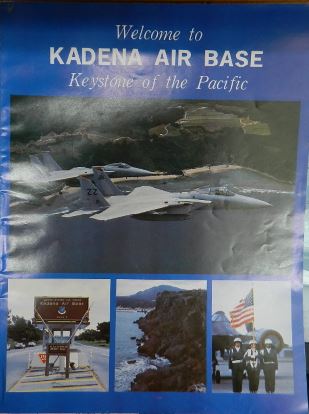 |
Welcome to Kadena Air Base 1986 313th Air Division Typical glossy colorful information magazine produced by the 313th Air Division. Intended for newcomers to Kadena AB as I was on my second assignment there in 1986. Brief treatments of | |||||
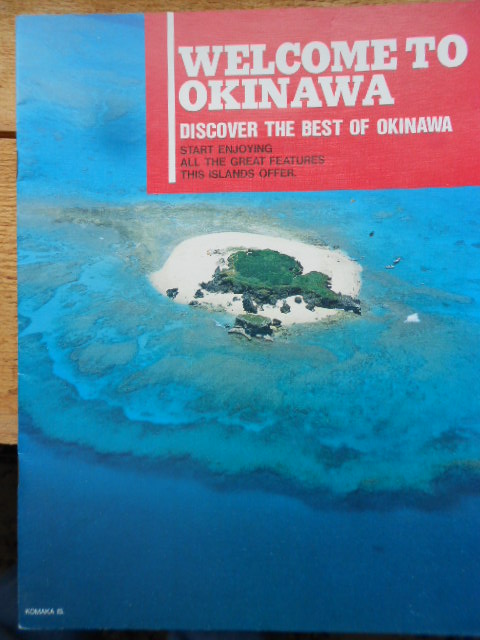 |
Welcome to Okinawa - Discover the Best of Okinawa Published 1985 by Okinawa Prefecture and the Okinawa Tourist Federation. 20-page soft bound magazine quality reference. Content is typical of almost all of the "throw away" mags welcoming folks to a new location. No advertising though. Has a couple of maps; Kadena Air Base and MCAS Futenma. Lots of stock photos. | |||||
 |
What is the Battle of Okinawa Masahide Ota Copyright ?? Publisher ?? Small but moving book chock full of B&W photos of the Battle of Okinawa. Entirely in Japanese but the photos certainly do speak for themselves. All photos are of American forces - no Japanese army or navy depicted. Loaded with commentary but needs translation. | |||||
 |
Why Okinawa? Messages from the People (DVD) RAFilms in conjunction with Kinuye Avery & Silk Dragon Productions Copyright 2006 Why Okinawa? is an investigative documentary that focuses on a U.S. military base located in the heart of Ginowan City, Okinawa, Japan. The base, Futenma Marine Corps Air Station, has been called, "the most dangerous base in the world." | |||||
 |
Why... to Okinawa W. Gordon Ross Copyright 1971. IBSN 1-8158-0268-4. LCCN 72-171074 The Chrtistopher Publishing House, North Quincy, Massachusetts Inspiring story of Christian faith and commitment in a remote part of the globe by Dr. W. Gordon Ross. Here is a powerful little book (137 pages) that is a very quick read and amply rewarding! Doctor Ross focuses on the life and ideology of a single old Okinawan man from the little village of Shimabuku - Mr. Shosei Kina - a teacher, community leader, Karate expert, and Christian. This is no Bible-thumping sermon between the covers - instead it's a poignant treatment of one man's admiration for the goodness of another - an admiration that is cause for the author's return again to Okinawa. Historical references are largely drawn from Kerr (Okinawa: The History of an Island People) and from Nichols & Shaw (Okinawa, Victory in the Pacific). | |||||
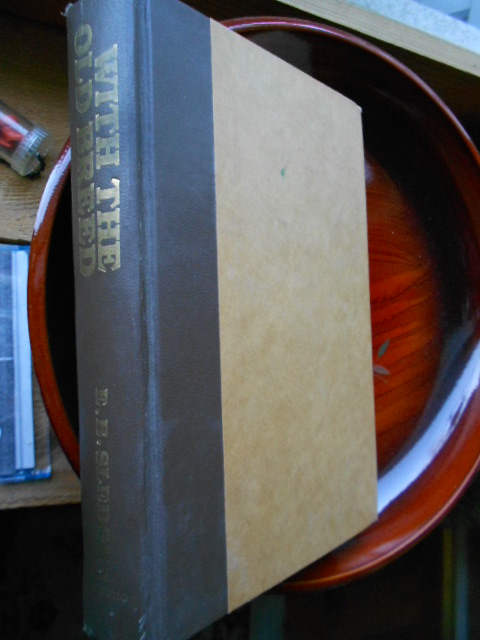 |
With the Old Breed: at Peleliu and Okinawa E. B. Sledge Copyright 1981, 1st Edition Presidio Press. Novato, California Account of (author's) World War II experiences in training and in combat with Company K, 3d Battalion, 5th Marine Regiment, 1st Marine Division during the Peleliu and Okinawa campaigns. I can't do justice to this book by trying to explain it. It's written by E. B. "Sledgehammer" Sledge who was a ground-pounding Marine who lived and fought through the entire Battle for Okinawa. It's not a history, per se, of the Okinawa operation but instead is a mesmerizing narrative about the events as they happened. Once read, there's no way that you'll not respect, appreciate and cry for those guys who went through the hell of the Battle for Okinawa. | |||||
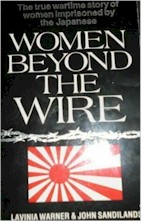 |
Women Beyond the Wire: Story of Prisoners of the Japanese, 1942-45 (not Okinawa-related) Lavinia Warner & John Sandilands Copyright 1982 Publisher - Hamlyn A story of women POWs during World War II Malaya in 1942. Harrowing true story of an astonishing band of women whose real-life wartime ordeal inspired the BBC-TV drama, Tenko. | |||||
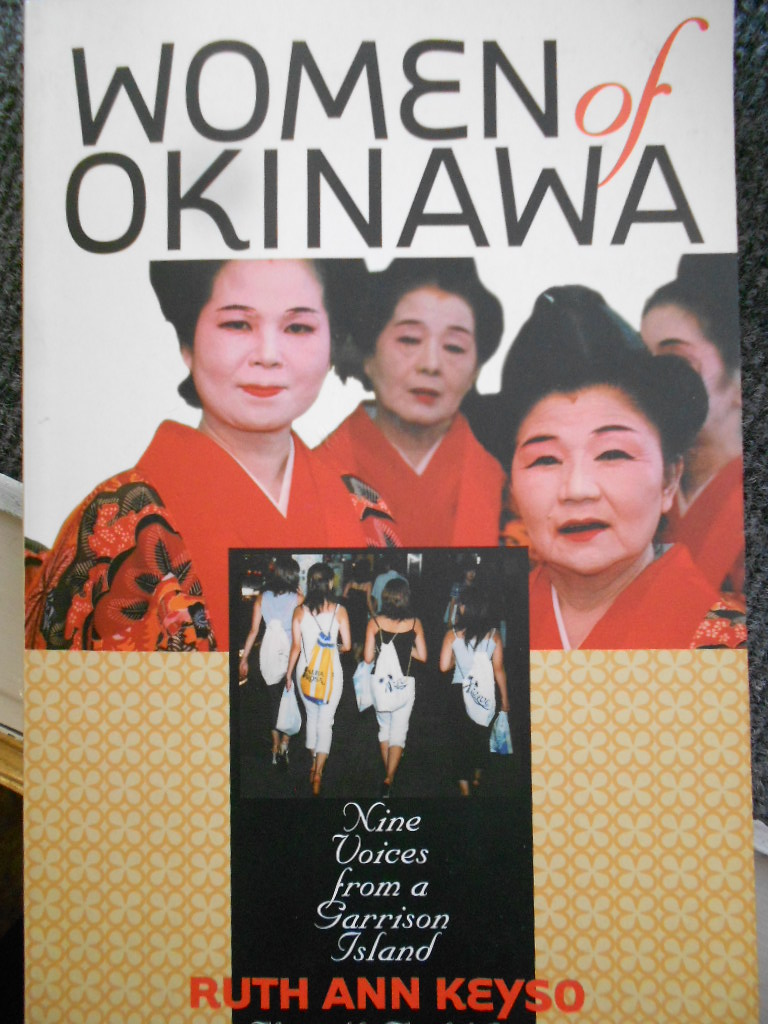 |
Women of Okinawa - Nine Voices from a Garrison Island Ruth Ann Keyso Copyright 2000. ISBN 0-8014-8665-3 Cornell University Press - Ithaca and London Afterword by Masahide Ota (former governor of Okinawa Prefecture) | |||||
 |
Women of the Sacred Groves - Divine Priestesses of Okinawa Susan Sered Copyright PUBLISHER TEXT | |||||
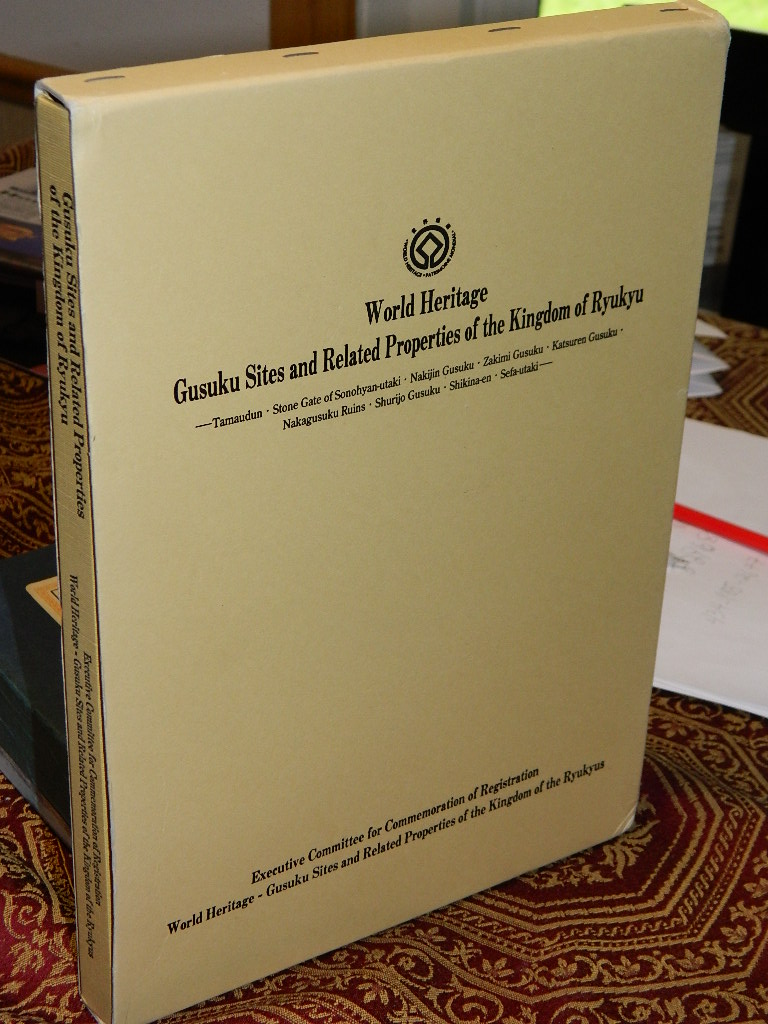 |
World Heritage Gusuku Sites and Related Properties of the Kingdom of Ryukyu Executive Committee for Commemoration of Registration No Copyright - Issue date: Feb 8, 2001 Received as a gift from my friend, Warren Rucker in Ruckersville, Virginia, this is a wonderful hard-bound book with a cardboard sleeve for protection. | |||||
|
X |
X
| |||||
|
Y |
Y
| |||||
 |
Yanbaru 100 Years - Photo Album Naha Publishing House Editorial Department Issued by Masashige Tawada Publisher November 20, Showa 56 (1981) This is a nifty photo book that I'll have to spend some time translating. It's entirely in Japanese. I bought this one in March, 2017 at the michi no eki (road station) along the Kaichu Douro between Katsuren and Henzajima. it contains 180 pages of B&W photographs and thankfully has only a few wartime images. Most of it pertains to the wonderful culture of the northern villages. | |||||
 |
Yank - the GI story of the war - First Edition (ex libris) Selected and edited by Debs Meyers, Jonathan Kilbourn, and Richard Harrity Copyright 1947 Duell, Sloan & Pearce, NY Chronological account of the GI's war, as written, photgraphed, and sketched by GIs for YANK, The Army Weekly. It is not an anthology. For that reason some of the staff members of YANK who did outstanding work are not represented in these pages. | |||||
 |
Yankee Samurai - The secret role of Nisei in America's Pacific Victory Joseph D. Harrington Copyright 1979 Pettigrew Enterprises, Inc., Detroit, Michigan Here's a book about Americans of Japanese ancestry who served secretly in the Pacific, wielding a weapon unique to war - language! | |||||
 |
Yankees in the Land of the Gods: Commodore Perry and the Opening of Japan Peter Booth Wiley Copyright 1990. ISBN 0-670-81507-1. LCCN-in-publication data Viking, a division of Penguin Books USA, Inc. This is a detailed account of the voyage of Commodore Matthew Calbraith Perry's "black ships" to Japan in 1853. Booth locates the voyage in the context of American trade with China; steamships headed for China required a ready supply of coal, which Japan possessed, in order to take advantage of the most direct routes to the Chinese mainland. In addition, he conveys Perry's sense that American interests had to establish a foothold in Asia in order to compete with British imperialism. Booth's handling of this story is uneven, as at times he writes engagingly and at other times seems bogged down by detail. Overall, however, it is worthwhile reading as it fully conveys the complexity of this venture, as well as the personalities of the American and Japanese officials. This is a book for those with a particular interest in this subject. (review by M. Feldman) | |||||
 |
Yokota Officer's Club, The Sarah Bird Copyright 2001. 2nd printing July, 2001. LCCN 2001089763. ISBN 0-375-41214-X Alfred A. Knopf, a division of Random House, Inc., NY, and simultaneously in Canada by Random House of Canada, Ltd., Toronto. Though not a book about Okinawa, anyone who has served anywhere in Japan should appreciate and relate to this fun read. | |||||
 |
Yokota Officer's Club, The (Uncorrected Proof) Sarah Bird Copyright 2001. LCC-in-publication Data. Alfred A. Knopf, a division of Random House, Inc., NY, and simultaneously in Canada by Random House of Canada, Ltd., Toronto. This is a copy of the uncorrected proof of the eventually-published book as described above. | |||||
 |
Yonaha, Chotai, artwork of published by Okinawa-ken: Mugisha 1993 Chotai Yonaha was a self-taught artist from the city of Koza, Okinawa, Japan. He ws born in 1933 and died in 2008. | |||||
|
Z |
Z
| |||||
 |
Zakennayo! The Real Japanese You Were Never Taught in School Philip J. Cunningham (Illustrated by Kim Wilson Brandt) Copyright 1995. ISBN 0-452-27506-7 LCCN in-publication data PLUME - by the Penguin Group, Penguin Books, NY I would not recommend using any of the terms or phrases discussed in this book without first bouncing them off a few native Japanese speakers. I suggest this because you run the risk of sounding like a total fool if you try some of these phrases out on strangers. Problems: First, the author does not point out that many of the phrases used in the book would only be used by women or school girls (if you want to appear effeminate, use these terms recklessly). In addition to this, many of the expressions discussed are terribly outdated. (reviewed at Amazon.com) | |||||
|
Unknown / Misc |
Unknown / Misc
| |||||
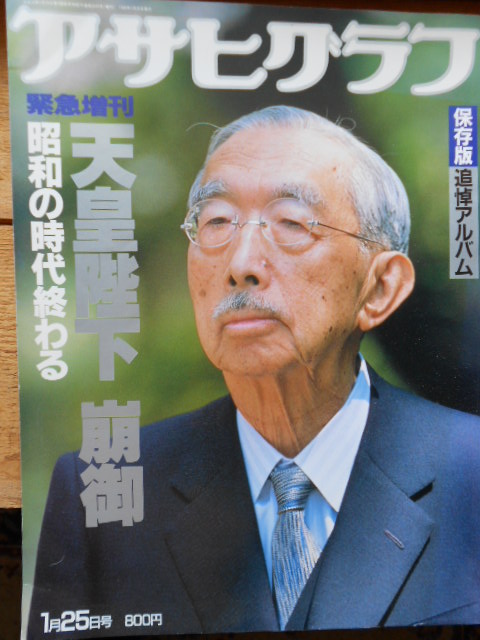 |
Unknown Title #003 Copyright likely 1989 Publisher ? Japanese magazine quality book about Emperor Hirohito that hit the stands within hours of the report of the emperor's demise. A well-spent 800 yen and I'd have gladly paid another 800 if there were any English-language captions or text. But, after all, this is a Japanese magazine. | |||||
 |
Unknown Title #004 Copyright 1990 Publisher ? Japanese magazine that appears to be something of a cross between People and Playboy magazines except this mag demonstrates copious use of black-out censorship of certain anatomical images. | |||||
I'm still adding to this listing, so come around again in a few days and you'll find more. | ||||||
|
Online resources:
|
The Japanese Expedition to Formosa, The Hathi Trust Digital Library Edward Howard House 1875 Tokio Length: 231 pages full text online | |||||
|
|
The American Occupation of Japan and Okinawa: Literature and Memory Volume 1 of Routledge Studies in Asia's transformations Author Michael S. Molasky Publisher Psychology Press, 1999 ISBN 0415191947, 9780415191944 Length 244 pages - a partial book preview | |||||
|
|
Account of a Voyage of Discovery - to the West Coast of Corea, and the Great Loo-Choo Island Captain Basil Hall 1818. Read online here: | |||||
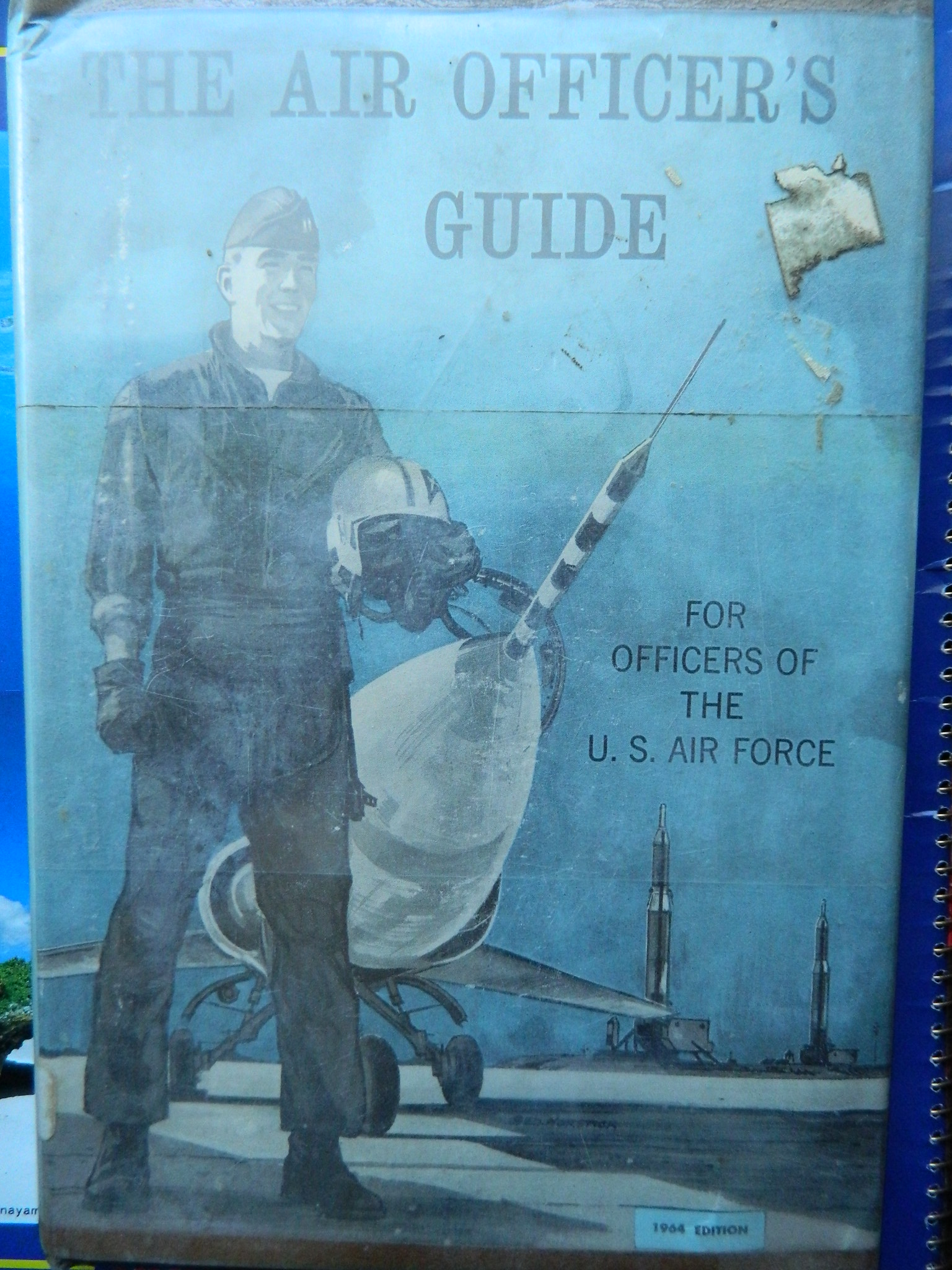




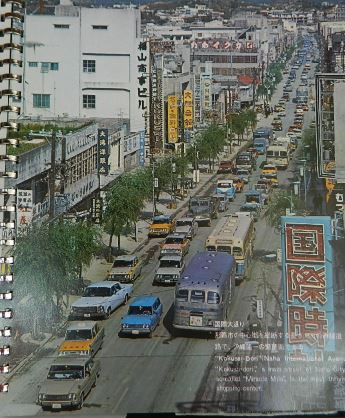



1996-2024 ClickOkinawa.com
Updated: 5-4-2024
S.A. Mick McClary, Great Falls, MT