Judges being too pro-arbitrary power is periodically an issue. This book was reprinted due to the issue before the U.S. Civil War. And the issue is again current, now in the year 2008. |
Lives of Judges Infamous
as Tools of Tyrants
and
Instruments of Oppression
by
Baron John Campbell,
Lord Chief Justice of England,
(London: John Murray, 1849)
and Edited for American Audiences
by
Richard Hildreth
(New York and Auburn:
Orton & Mulligan, 1856)

|
THE text of the following BOOK OF JUDGES has been derived from Lord Campbell's Lives of the Chief Justices, and Lives of the Chancellors, with only a few verbal alterations for the sake of connection, some transpositions, the omission of some details of less interest to the American reader, and the insertion of a few paragraphs, enclosed in brackets, thus [ ]. Most biographers have been errant flatterers. Lord Campbell is a distinguished member of that modern [1856] school, which holds that history is of no dignity nor use, except so far as it is true; and that the truth is to be told at all hazards and without reserve. Hitherto social and political position, obtained no matter by what means, has in general secured not only present but future reputation. It can hardly fail to be a serious check upon those who struggle for distinction to understand, that, however they may cheat or dazzle their contemporaries, tbey must expect to encounter from posterity a Rhadamantine judgment. The object of the present work, prepared as it is in the interest of justice and freedom, and designed to hold up a mirror to magistrates now [1856] sitting on the American bench, in which
will, I hope, induce Lord Campbell to pardon the liberty I have ventured to take with his writings.
HUME observes, in his History of England, that
The same comparison will hold good even in communities far more advanced in civilization than the Anglo-Saxons. It has indeed been well said that the great end [purpose] of the complicated machinery of the existing [1856] British government is to get twelve men into a jury box. It might even be laid down as a general principle that the freedom or servitude of a people will mainly depend upon the sort of administration of justice which they have — especially of criminal justice. The whole course of British history will serve to justify this observation, since it has not been so much by the aid of mercenary soldiers, as by the assistance of lawyers and judges, that tyranny has sought to introduce itself into that country. It is in the [oppressive] history of the English courts, still more than in the history of the English Parliament, that we are to trace the origin and growth of those popular rights and of that idea of public liberty, propagated from England to America, and upon which our Anglo-American free institutions are mainly founded. The origin of British liberty, by an ancient, constant, and affectionate tradition, bas uniformly been traced back to the times of the Anglo-Saxons. It was, however, by judicial, far more than by legislative institutions, that among those progenitors of ours private rights and public liberty were guarantied. The smallest political subdivision among the Anglo-Saxons was the tything, (teothing,) consisting of ten families, the members of which were responsible for the good conduct of each other. The head man of this community, denominated tything-elder, (teothing ealdor,) seems to have acted as a kind of arbitrator in settling disputes about matters of a trifling nature; but whether he had actually a court for administering justice does not appear. Next in order came the hundred, (hundrede,) or, as it was called in the north of England, the wapentake, in its original constitution consisting of ten tythings, or a hundred families, associated together by a similar bond of mutual responsibility. Its head man was called the hundred's elder, (hundredes ealdor,) or simply reeve, (gerefa,) that being the generic term for the officer of any district, or indeed for any officer.*
This gerefa, along with the bishop of the diocese, acted as the presiding officer of the hundred court, which met once at least every month, and had both
civil and criminal jurisdiction, and cognizance also of ecclesiastical causes, which were entitled to precedence over every other business. There was besides a shire or county court (shir-gemot) held twice every year, or oftener if occasion required, convened by the sheriff, (shir-reeve,) or, as he was sometimes also called, the alderman, (ealdor-man,) who presided over it, assisted by the bishop. Here causes [lawsuits] were decided and business was transacted which affected the inhabitants of several of the hundreds. The highest court of all was tbat of the king, the Wittenagemot, (witan-gemot) in which he himself was present, attended by his councillors, or witan. This body, which united the functions of a legislative, judicial, and executive council, had no fixed times or place of meeting, but was held as occasion required, wherever the king happened to be. As to its judicial functions, it was in general only a court of extraordinary resort; it being a rule of the Anglo-Saxon law that none should apply for justice to the king unless he had first sought it in vain in the local courts.* Hence the hundred and county courts occupied by far the most conspicuous position in the Anglo-Saxon judicial polity. The Anglo-Saxon shires, it may be observed, having been originally principalities, nearly, if not altogether, independent, but gradually united into one kingdom, were rather tantamount to our Anglo-American states than to our counties, of which the Saxon hundreds may be taken as the equivalent; the tythings corresponding to our Anglo-American townships; while (to carry out the parallel) the central authority of the
king and the wittenagemot may be considered as represented by our federal system generally. But though the reeve and the bishop presided in the local Anglo-Saxon courts, it was rather in the character of moderators than of judges; tbat latter function being performed by the freeholders of the county, all of whom, not less than the bishop and the reeve, had the right and were bound to give their attendance at thèse courts.
These county courts, tbough traces of them are to be found in all the old Teutonic states of Europe, became ultimately peculiar to England. None of the feudal governments of continental Europe had any thing like them; and Hume, with his usual sagacity, has remarked that perhaps this institution had greater effects on the political system of England than has yet been distinctly pointed out. By means of this institution, all the freeholders were obliged to take a share in the conduct of affairs.
Drawn from that individual and independent state, so distinctive of the feudal System, and so hostile to social order and the authority of law, they [all citizens] were made members of a political combination, and were taught in the
† The decision of this majority would seem to have been principally determined, if the party complained against denied the charge, by the method of compurgation, in which the oath of the defendant was sustained by that of a certain number of his neighbors, who thereby certified their confidence in him; or, if he could not produce compurgators, and dared to venture upon it, by a superstitious appeal to the ordeal. most effectual manner the duty and advantages of civic obedience by being themselves admitted to a share of civic authority. Perhaps, indeed, in this Anglo-Saxon institution of hundred and county courts we are to seek the origin of that system of local administration and self-government still more fully carried out in America than in England, by which English and Anglo-American institutions are so strongly distinguished from those of Europe, and in the judicious combination of which with a central administration, for matters of general concern, British and American liberty, as a practical matter, mainly consists. One of the first procedures of the Norman Conqueror, by way of fixing his yoke upon the shoulders of the English people, was gradnally to break down and belittle this local administration of justice. He [William the Conqureror] did not venture, indeed, to abolish institutions so venerable and so popular, but he artfully effected his purpose [power-motivated law manipulations] by other means. He began by separating the civil and ecclesiastical jurisdictions. The bishops, according to a fashion recently introduced on the continent [in Europe], were authorized to hold special courts of their own. These courts were at first limited to cases in which ecclesiastical questions were involved, or to which clergymen were parties; but by the progress of an artful system of usurpations, familiar to the courts of all ages and nations, they gradually extended their authority to many purely lay matters, under pretence that there was something about them of an ecclesiastical character. It was under this pretence that the English ecclesiastical courts assumed jurisdiction of the important matters of marriage and divorce, of wills, and of the distribution of the personal property of intestates—a jurisdiction which they still retain in England, and which, though we never had any ecclesiastical courts in the United States of America, has left deep traces upon our law and its administration as to these subjects. In establishing these separate ecclesiastical courts, [William] the Conqueror made a serious departure from his leading idea of centralization; and he thereby greatly contributed to build up a distinct theocratic power, which afterwards, while intrenching on the rights of the laity, intrenched also very seriously on the authority of his successors on the throne. But this was a danger which either he did not foresee—since he possessed, though his next successor [William II.] relinquished it, the sole power of appointing bishops—or which he overlooked in his anxiety to diminish the importance of the old Saxon tribunals. Both the civil and criminal authority of the local courts was greatly curtailed. Their jurisdiction in criminal cases was restricted to small matters, and even as to questions of property was limited to cases in which the amount in dispute did not exceed forty shillings; though, considering the superior weight of the shilling at that time, the greater comparative value in those ages of the precious metals, and the poverty of the country, this was still a considérable sum. The general plan for the administration of justice of the Anglo-Norman government was a court baron in each of the baronies into which the kingdom was now parcelled out, to decide such controversies as arose between the several vassals or subjects of the same barony. Hundred courts and county courts still continued from the Saxon times, though with restricted authority, to judge between the subjects of different baronies; and a court composed of the king's great officers to give sentence among the barons themselves. Of this court, which ultimately became known as Curia Regis, (King's Court,) and sometimes as Aula Regis, (King's Hall,) because it was held in the hall of thé king's palace, and of its instrumentality in extending the royal authority, Hume* gives the following account:
____________ * History of England [1770], Appendix, II. † We may observe that even at present [1856], whether in England or America, though the depositaries of the legislative and executive authority (which in those times the king was) sit no longer openly and personally on the bench, it still remains no easy matter, in cases in which they take an interest, to obtain in either country a judicial decision contrary to the inclination of these two authorities. ‡ In the king's absence—and the Anglo-Norman kings were often absent on visits to their continental dominions—this chief justiciary acted in all respects as the king's substitute, no less in military than in civil affairs, those who held it being selected quite as much for warlike prowess as for judicial skill. Such was the case with Ranulphus de Granville, chief justiciary of Henry II., A. D. 1180-1191, whose treatise in Latin, On the Laws and Customs of the Kingdom of England, is the oldest book of the common law. He went with Richard I. on the third crusade, and was killed at the siege of Acre.
* It might rather be said, a scholastic art, in which forms and words became matters of much greater consideration than substantial justice, and in which technical rules were substituted for the exercise of the reasoning faculties.
The innovations of the Conqueror and his successors having reduced the old local Anglo-Saxon tribunals to comparative insignificance, the whole judicial authority, except that which had been seized upon by the ecclesiastical courts,
remained for a hundred and fifty years after the conquest concentrated in the Aula Regis. But as Norman and Saxon became thoroughly intermixed, with the first faint dawn of modern English liberty, the judicial power thus thoroughly centralized became again subdivided and distributed, though in a manner very different from that of the Saxon times. The Anglo-Norman kings of England were perpetually on the move: the only way of disposing of the products of the landed estates which scattered over England afforded the main part of the royal revenue, was to go thither with the royal household and consume it on the spot. Wherever the king went, the Aula Regis followed, occasioning thereby great inconvenience and delay to suitors. This was complained of as a grievance, and the barons who extorted Magna Charta [1215] from their reluctant sovereign [John] insisted, among other things, that Common Pleas, that is, civil suits between man and man, should be held in some certain place. It was in this provision of Magna Charta that originated the English Court of Common Pleas, which became fixed at Westminster Hall, the place of session of the Aula Regis when the king was in the vicinity of London. This Court of Common Pleas, or Common Bench as it was sometimes called, seems to have been at first but a mere committee of the Aula Regis; and the disintegration of that tribunal, thus begun, was, on the accession of Edward I. in 1272, completed by its resolution into three or rather five distinct tribunals. Of these new courts, that which more immediately represented the Aula Regis was the Court of King's Bench, which still continued to follow the king and to be held in his presence. In the language of its process, such is still supposed to be the case; but like the other English courts, it has long since been fixed at Westminster Hall, and admits nobody to participate in its proceedings save its own members—a chief justice, who, though of inferior position in point of precedence, may be considered as in some respects the successor of the chief justiciary, which office was now abolished—and three or four puisne judges, the number having varied at different times. The Court of Common Pleas was now also organized like the King's Bench, with a chief justice and three or four puisne judges. As this court had exclusive jurisdiction of civil suits, (except those relating to marriage, divorce, wills, tithes, and the distribution of the personal property of intestates, which had been usurped by the ecclesiastical courts,) Pleas of the Crown, that is, the criminal jurisprudence of the realm, (except prosecutions for heresy, of which the ecclesiastical courts claimed jurisdiction,) and also the hardly less important duty of superintending the other tribunals, even the Common Pleas itself, and keeping them within their due limits, was assigned to the King's Bench. To a third court, that of Exchequer, of which, besides a chief baron and three or four puisne barons, the treasurer and the chancellor of the exchequer originally formed a part, were assigned all cases touching the king's revenue, and especially the collection of debts due to him, in which light were regarded not only all fines, forfeitures, and feudal dues, but the imposts and aids occasionally granted by Parliament. There was also a Court of Chivalry or "Honor Court," presided over by the constable and marshal, and having jurisdiction of all questions touching rank and precedency; and another, over which the steward of the household presided, to regulate the king's domestic servants; but these courts, which have long since vanished, could never be considered as having stood on a par with the three others, the judges of which esteemed themselves the grand depositaries of the knowledge of the common or unwritten law of England; that is, of such customs and forms as had obtained the force of law previous to the existence of the regular series of statutes beginning with Magna Charta. Indeed, these judges of England, as they were called, were in the habit of meeting together in the Exchequer Chamber, for the purpose of hwaring arguments on law points of importance or difficulty, adjourned thither for their consideration, and which they decided by a majority of their whole number present, thus presenting down to the recent abolition, or rather modification, of the Court of Exchequer Chamber, a shadow, as it were, of the ancient Aula Regis. Already, previous to this fracture of the Aula Regis into the various courts above named, the legal profession, so far as practice in the lay courts was concerned, had begun to separate itself from the clerical; and places for the education and residence of a class of laymen who began to devote themselves to the study of the common law were established in the vicinity of Westminster Hall. Of these, Lincoln's Inn, founded at the commencement of the reign of Edward II., (about A. D. 1307,) under the patronage of William Earl of Lincoln, who gave up his own hostel or town residence for that purpose, was the earliest, and has always remained the principal. On this model were established before long the Inner and Middle Temple, (so called because a residence of the Knights Templars, forfeited by the dissolution of that order, had been devoted to this purpose,) Gray's Inn, Serjeant's Inn, and the Inns of Chancery. Such was the origin of the profession of law as it still exists in England and America; of that body of lawyers whence all our judges are taken, arrogating to itself, after the example of the churchmen, of which it originally consisted, a certain mystical enlightenment and superiority, scouting [ridiculing] the idea that the laity, as the lawyers too affect to distinguish all persons not of their cloth,—in plain English, the people,—should presume to express or to entertain any independent opinion upon matters of law, or that any body not a professional lawyer can possibly be qualified for the comprehension, and much less for the administration, of justice. In the [pre-1066] Anglo-Saxon courts the parties had appeared personally, and pleadings had been oral. The Anglo-Norman practice gave rise to appearance by attorney in all civil cases, and to that system of special written pleadings, prepared by counsel learned in the law [manipulations], of which the operation was to give the victory to ingenuity and learning rather than to right, and which, after undergoing many modifications, has at length [by 1850's] been abolished in many of our Anglo-American states, as an impediment to justice and an intolerable nuisance [though later, in 20th century, much restored]. Even in conservative England itself, though the system of special pleadings, greatly modified by modern changes, still exists, the recent [by 1850's] return, by the examination of the parties, to the old popular System of oral pleading has been attended by the happiest results. The preparation of these written pleadings, by which we are here to understand not arguments, but allegations of facts relied upon by the respective parties, was engrossed by the serjeants at law, whose distinguishing badge was a coif or velvet cap—wigs being a comparatively modem invention. To obtain admittance into this order [serjeant at law], by which the entire practice of the Court of Common Pleas was engrossed, (that is, originally, the entire practice in civil suits,) and from which the judges were exclusively selected, sixteen years' study was required. The degree of barrister, or, as it was called, of apprentice, might be obtained by seven years' study; and it was to these two classes of serjeants and apprentices that the practice in the courts of Westminster Hall was originally confined.* But subsequently there sprang up a third inferior and still more numerous class, called attorneys, a sort of middle-men between the client and his counsel, not permitted to speak in court, for which purpose they must retain a serjeant or barrister, but upon whom was shifted off all the drudgery and responsibility of preparing the case, in which, however, no step of consequence could be taken without the advice of counsel learned in the law, i.e., a serjeant or barrister.† As the law and its practice thus became more and more a mystery, only to be learned by frequenting the courts of Westminster Hall, and by the study of the obscure and ill-prepared reports of their proceedings, which began now to be compiled by official reporters, and published under the name of Year Books, the old local Anglo-Saxon courts fell still more into contempt. Already in the reign of Henry III. the free-holders had been released from their obligation of attendance
† This distinction between attorneys and barristers, though still in full vogue in England and in several of the British colonies, is not recognized in the United States, where, indeed, it never had but a feeble and transient existence. upon them, and another blow was given to these ancient tribunals when, in the reign of Edward II., the appointment of sheriffs, hitherto chosen by the freeholders, was assumed by the crown; and still another when, in the following reign [Edward III], the election of conservators of the peace was also taken from the people and assumed by the king. To the magistrates thus appointed by the king the new name of Justices of the Peace was soon afterwards given, and the criminal jurisdiction conferred upon tbem, whether acting singly as examining and committing magistrates, or met together at the courts of Quarter Sessions, gradually superseded the small remains of criminal authority hitherto left to the old popular tribunals. Two circumstances, however, combined to transfuse a certain portion of the spirit of these old tribunals into the newly established courts, thus standing in the way of the entire monopoly of the administration of justice at which the lawyers aimed, and securing to the body of the people a certain participation in the most important function of the government, to wit, the administration of justice; which participation, derived from the old Anglo-Saxon customs, and transmitted to our times, constitutes to-day the main pillar of both British and American liberty. Contemporaneously with thw new organization above described of the courts of common law, the British Parliament had taken upon itself that organization which it still [1856] retains—an upper house, (House of Lords,) composed of great nobles and bishops,* successor of the Anglo-Saxon Wittenagemote and of the Anglo-Norman Great Council, and a lower house,
(pp 24-31)
While the common law courts, through their preference of technicalities to justice, thus enabled the chancellors to assume a civil jurisdiction by which they themselves were completely overshadowed, driving the Parliament also to the necessity of creating, for both civil and criminal matters, a new Court of Admiralty,* they gave at the same time the support of their acquiescence and silence to other innovations, prompted not by public convenience, but by the very spirit of tyranny. In every reign, at least from the time of Henry VI. [1399] down to that of Charles I. [1628], torture to extort confessions from those charged with state crimes was practised under warrants from the Privy CounciL In the year 1615, by the advice of Lord [Francis] Bacon, then attorney general, the lustre of whose philosophical reputation is so sadly dimmed by the infamy of his professional career, torture of the most ruthless character was employed upon the person of [Mr.] Peacham, a clergyman between sixty and seventy years of age,
Thirteen years afterwards, when it was proposed to torture Fenton, the assassin of [George] Villiers, Duke of Buckingham, to extort from him a confession of his accomplices, the prisoner [Defendant Fenton] suggested that if tortured he might perhaps accuse Archbishop [of Canterbury William] Laud [1573-1645] him-
self. Upon this, some question arose as to the legality of torture; and the judges being called upon for their advice, thus at length driven to speak, delivered a unanimous opinion that the prisoner [Defendant Fenton] ought not to be tortured, because no such punishment was known or allowed by the English law; which English law, it now appeared, had for two hundred years been systematically disregarded under the eye and by the advice of judges and sworn lawyers, members of the Privy Council, and without any protest or interference on the part of the courts!
Another instance of similar acquiescence occurred in regard to the Court of Chivalry, which in the reign of Charles I. undertook to assume jurisdiction in the case of words spoken. Thus a citizen was ruinously fined by that court because, in an altercation with an insolent waterman, who wished to impose upon him, he deridingly called the swan on his badge a "goose." The case was brought within the jurisdiction of the court, by showing that the waterman was an earl's servant, and that the swan was the earl's crest, the heavy fine being grounded on the alleged "dishonoring" by the citizen of this nobleman's crest. A tailor, who had often very submissively asked payment of his bill from a customer of "gentle blood" whose pedigree was duly registered at the herald's college, on a threat of personal violence for his importunity, was provoked into saying that "he was as good a man as his debtor." For this offence, which was alleged to be a levelling attack upon the aristocracy, he was summoned before the earl marshal's court, and mercifully dismissed with a reprimand—on releasing the debt!
No aid could be obtained from the common law courts against this scandalous usurpation, by which, without any (pp 34-35) attempts at the establishment of despotism; and that struggle is precisely the one now going on among us here in America [against unconstitutional slavery], with this sole difference, that over the water, among our British forefathers, it was the despotism of a monarch that was sought to be established; here in America, the [unconstitutional] despotism of some two hundred thousand petty tyrants, more or less, in the shape of so many slaveholders, who, not content with lording it over their several plantations, are now attempting, by combination among themselves, and by the aid of a body of northern tools and mercenaries, such as despots always find, to lord it over the Union, and to establish the policy of slaveholding as that of the nation. In Great Britain, the struggle between despotism and free institutions closed with the revolution of 1688, with which these biographies terminate. Since that time the politics of that country have consisted of hardiy more than of jostlings between the Ins and the Outs, with no very material variance between them in their social ideas. Among us the great struggle between slaveholding despotism and republican equality has but lately come to a head, and yet remains undetermined. It exhibits, especially in the conduct of the courts and the lawyers, many parallels to the similar struggle formerly carried on in Great Britain. That struggle terminated at last with the deposition [ouster] and banishment of the Stuart family, and the reëstablishment in full vigor of the ancient liberties of England, as embodied in the Bill of Rights. And so may ours terminate, in the reduction of those who, not content with being brethren seek to be masters, to the republican level of equal and common citizenship, and in the reëstablishment of emancipation, freedom, and the Rights of Man proclaimed in our Declaration of Independence, as the national and eternal policy of these United States. ATROCIOUS JUDGES. ROGER LE BRABACON.
ROGER LE BRABACON,* from the part he took in settling the disputed claim to the crown of Scotland, is an historical character.
His [Judge Brabacon's] ancestor, celebrated as "the great warrior," Being rewarded with large possessions in the counties of Surrey and Leicester, he founded a family which flourished several centuries in England, and is now represented in the male line by an Irish peer, the tenth Earl of Meath.
* Hume, who designates them "desperate ruffians," says "troops of them were sometimes enlisted in the service of one prince or baron, sometimes in that of another; they often acted in an independent manner, and under leaders of their own. The greatest monarchs were not ashamed, on occasion, to have recourse to their assistance; and as their habits of war and depredation had given them experience, hardness, and courage, they generally composed the most formidable part of those armies which decided the political quarrels of princes." —Vol. i. 438. In America we have no mercenary soldiers, but plenty of mercenary politicians, almost as much to be dreaded. — Ed. The subject [Brabacon] of the present sketch, fifth in descent from "the great warrior," changed the military ardor of his race for a desire to gain distinction as a lawyer. He was regularly trained in all the learning of "Essions" and "Assizes," and he had extensive practice as an advocate under Lord Chief Justice de Hengham. On the sweepiug removal of almost all of the judges in the year 1290,* he [Brabacon] was knighted, and appointed a puisne justice of the King's Bench, with a salary—which one would have thought must have been a very small addition to the profits of his hereditary estates—of 33£. 6s. 8d. a year. He proved a most admirable judge;† and, in addition to his professional knowledge, being well versed in historical lore, he was frequently referred to by the government when negotiations were going on with foreign states.
† That is, in the ordinary discharge of his duties. His attempt to take away the liberties of the Scotch [nation] we shall presently see [p 39].—Ed. Edward I. [1272-1307], arbitrator [c 1291] by mutual consent between the aspirants to the crown of Scotland, resolved to set up a claim for himself as liege lord of that kingdom, and Brabacon was employed, by searching ancient records, to find out any plausible grounds on which the claim could be supported. He [Brabacon] accordingly travelled diligently both through the Saxon and Norman period, and—by [Brabacon] made out a case which gave high delight to the English court. Edward [1272-1307] immediately summoned a Parliament to meet at Norham, on the south bank of the Tweed, marched thither at the head of a considerable military force, and carried Mr. Justice Brabacon along with him as the exponent and defender of his new suzeraineté. It is a little curious that one of these competitors for the Scottish throne had lately been an English judge, and a competitor for the very place to which Brabacon, for his services on this occasion, was presently [thereafter, p 47] promoted. From the time of William the Conqueror [1066-1087] and Malcolm Canmore [1058-1093], until the desolating wars occasioned by the dispute respecting the right of succession to the Scottish crown, England and Scotland were almost perpetually at peace; and there was a most familiar and friendly intercourse between the two kingdoms, insomuch that nobles often held possession in both, and not unfrequently passed from the service of the one government into that of the other. The Norman knights, having conquered England by the sword, in the course of a few generations got possession of a great part of Scotland by marriage. They were far more refined and accomplished than the Caledonian thanes; and, flocking to the court of the Scottish kings, where they made themselves agreeable by their skill in the tournament, and in singing romances, they softened the hearts and won the hands of all the [Scottish] heiresses. Hence the Scottish nobility are [1856] almost all of Norman extraction; and most of the great families in that kingdom are to be traced to the union of a Celtic heiress with a Norman knight. Robert de Brus, or Bruis, (in modem times spelt Bruce,) was one of the companions of [William] the Conqueror; and having particularly distinguished himself in the battle of Hastings, his prowess was rewarded with no fewer than ninety-four lordships, of which Skelton, in Yorkshire, was the principal. Robert, the son of the first Robert de Brus, married early, and had a son, Adam, who continued the line of De Brus of Skelton. But becoming a widower while still a young man, to assuage his grief, he paid a visit to Alexander I., then [1107-1124] King of Scots, who was keeping his court at Stirling. There the beautiful heiress of the immense lordship of Annandale, one of the most considerable fiefs held of the crown, fell in love with him; and in due time he [Adam de Brus] led her to the altar. A Scottish branch of the family of De Brus was thus founded under the designation of Lords of Annandale. The fourth in succession was "Robert the Noble," and he raised the family to much greater consequence by a royal alliance, for he married Isabel, the second daughter of Prince David, Earl of Huntingdon, grandson of David I. [1124-1153], sometimes called St. David. Robert, son of "Robert the Noble" and the Scottish princess, was born at the Castle of Lochmaben, about the year 1224. The Skelton branch ofthe family still flourished, although it became extinct in the next generation. At this time a close intercourse was kept up between "Robert the Noble" and his Yorkshire cousins; and he sent his heir to be educated in the south under their auspices. It is supposed that the youth studied at Oxford; but this does not rest on any certain authority. In 1245, his father died, and he succeeded to the lordship of Annandale. One would have expected that he would now have settled on his feudal principality, exercising the rights of furca et fossa, or "pit and gallows," which he possessed without any limit over his vassals; but by his English education he had become quite an Englishman, and, paying only very rare visits to Annandale, he sought preferment at the court of Henry III. What surprises us still more is, that he took to the gown, not the sword; and instead of being a great warrior, like his forefathers and his descendants, his ambition seems to have been to acquire the reputation of a great lawyer. There can be little doubt that he practised as an advocate in Westminster Hall from 1245 till 1250. In the latter year we certainly know that he took his seat on the bench as a puisne judge, or justiciar; and, from thence till 1263, extant records prove that payments were made for assizes to be taken before him—that he actcd with other justiciars in the levying of fines—and that he went circuits as senior judge of assize. In the 46th year of Henry III., he had a grant of 40£. a year salary, which one would have supposed could not have been a great object to the Lord of Annandale. In the barons' wars, he was always true to the king; and although he had no taste for thc military art, he accompanied his royal master into the field, and was taken prisoner with him at the battle of Lewes. The royal authority being reëstablisbed by the victory at Evesham, he resumed his fonctions as a puisne judge; and for two years more there are entries proving that he continued to act in that capacity. At last, on the 8th of March, 1268, 52 Henry III., he was appointed "capitalis justiciarius ad placita coram rege tenenda," (chief justiciary for holding pleas before thé king); but unless his fees or presents were very high, he must have found the reward of his labors in his judicial dignity, for his salary was very small. Hugh Bigod and Hugh le Despencer had received 1000 marks a year, "ad se sustentandum in officio capitalis justitiarii Anglise," (for sustaining themselves in the office of chief justice of England,) but Chief Justice de Brus was reduced to 100 marks a year; that is, 66£, 13s, 4d. Yet such delight did he take in playing the judge, that he quietly submitted both to loss of power and loss of profit. He remained chief justice till the conclusion [1272] of this reign, a period of four years and a half, during which he alternately went circuits and presided in Westminster Hall. None of his decisions have come down to us, and we are very imperfectly informed respecting the nature of the cases which came before him. The boundaries ofjurisdiction between the Parliament, the Aula Regis, and the rising tribunal afterwards called the Court of King's Bench, seem to have been then very much undefined. On the demise of the crown [Henry III.], Robert de Brus was desirous of being reappointed. He was so much mortified by being passed over, that he resolved to renounce England forever; and he would not even wait to pay his duty to Edward I., now returning from the holy wars. The ex-chief justice [Robert de Brus] posted off for his native country, and established himself in his castle of Lochmaben, where he amused himself by sitting in person in his court baron, and where all that he laid down was, no doubt, heard with reverence, however lightly his law might have been dealt with in Westminster Hall. Occasionally he paid visits to the court of his kinsman, Alexander III. [1249-1286], but he does not appear to have taken any part in Scottish politics till the untimely [horse riding accident] death of that monarch, which, from a state of peace and prosperity, plunged the country [Scotland] into confusion and misery [e.g., war to repel England's conquest attempts]. There was now only the life of an infant female [Margaret (1283-1290)], residing in a distant land [Norway], between him and his plausible claim to the Scottish crown. He [Robert de Brus] was nominated one of the negotiators for settling the marriage between her and the son of Edward I., which, if it had taken place, would have entirely changed the history of the island of Great Britain. From his [de Brus'] intimate knowledge both of Scotland and England, it is probable that the "Articles" were chiefly of his framing, and it must be allowed [admitted] that they are just and equitable. For his own interest, as well as for the independence of his native country, he took care to stipulate that,
The Maid of Norway [Margaret] having died on her [1290] voyage home, the ex-chief justice [de Brus] immediately appeared at Perth with a formidable retinue, and was in hopes of being immediately crowned king at Scone;—and he had nearly accomplished his object, for John Baliol, his most formidable competitor in point of right, always feeble and remiss in action, was absent in England. But, from the vain wish to prevent future dis- putes by a solemn decision of the controversy after all parties should have been heard, the Scotch nobility in an evil hour agreed to refer it, according to the fashion of the age, to the arbitration of a neighboring sovereign, and fixed upon Edward I. of England, their wily neighbor. The Scottish nobles being induced to cross the River Tweed, and to assemble in the presence of Edward, under pretence that he was to act only as arbitrator, Sir Roger de Brabacon by his order addressed them in French, (the language then spoken by the upper classes both in Scotland and England,) disclosing the alarming pretensions about to be set np. A public notary and witnesses were in attendance, and in their presence the assumed vassals were formally called upon to do homage to Edward as their suzerain, of which a record was to be made for a lasting memorial. The Scots saw too late the imprudence of which they had been guilty in choosing such a crafty and powerful arbitrator. For the present they refused the required recognition, saying that
Brabacon, after advising with the king [Edward I.], consented that they should have time until the following day, and no longer. They insisted on further delay, and showed such a determined spirit of resistance, that their request was granted; and the first day of June following was fixed for the ceremony of the recognition. Brabacon allowed them to depart; and a copy of his paper, containing the proofs of the alleged superiority and direct dominion of the English kings over Scotland, was put into their hands. He then returned the south, where his presence was required to assist in the administration of justice, leaving the Chancellor Burnel to complete the transaction. Although the body [majority] of the Scottish nobles, as well as the body of the Scottish people, would resolutely have withstood the demand, the competitors for the throne, in the hopes of gaining Edward's favor, successively acknowledged him as their liege lord, and their example was followed by almost the whole of those who then constituted the Scottish Parliament.* Bruce afterwards pleaded his own cause with great dexterity, and many supposed that he would succeed. Upon the doctrine of representation, which is familiar to us, Balliol seems clearly to have the better claim, as he was descended from the eldest daughter of the Earl of Huntingdon: but Bruce was one degree nearer the common stock; and this doctrine, which was not then firmly established, had never been applied to the descent of the crown. When Edward I. [1272-1306] determined in favor of Balliol, influenced probably less by the arguments in his favor than by the consideration that from the weakness of his character he was likely to be a more submissive vassal, Robert de Brus complained bitterly that he was wronged, and resolutely refused to acknowledge the title of his rival. He retired in disgust to his castle of Lochmaben, where he died in November, 1295. While resident in England, he had married Isabel, daughter of Gilbert de Clare, Earl of Gloucester, by whom he had several sons. Robert, the son of Robert the eldest, became Robert I. [1306-1329] of Scotland, and one of the greatest of heroes. When judgment had been given in favor of Balliol, Brabacon was still employed to assist in the plan which had been
formed to bring Scotland into entire subjection. There being a meeting at Newcastle of the nobles of the two nations, when the feudatory king did homage to his liege lord, complaint was made, by Roger Bartholomew, a burgess of Berwick, that certain English judges had been deputed to exercise jurisdiction on the north bank of the Tweed [river]. Edward referred the matter to Brabacon and other commissioners, commanding them to do justice according to the laws and customs of his kingdom. A petition was then presented to them on behalf of the King of Scotland, setting forth Edward's promise to observe the laws and customs of that kingdom, and that pleas of things done there should not be drawn to examination elsewhere. Brabacon is reported thus to have answered:—
Encouraged by this [corrupt] language, Macduff, the Earl of Fife,
entered an appeal in the English House of Lords against the King of Scotland; and, on the advice of Brabacon and the other judges, it was resolved that the respondent must stand at the bar as a vassal, and that, for his contumacy, three of his principal castles should be seized into the king's hands. Although historians who mention these events designate Brabacon as "grand justiciary," it is quite certain that, as yet, he was merely a puisne judge; but there was a strong desire to reward him for his services, and, at last, an opportune vacancy arising, he was created chief justice of the King's Bench. Of his performances in this capacity we know nothing, except by the general commendation of chroniclers; for the [English] Year Books, giving a regular account of judicial decisions, do not begin till the following reign. On the accession of Edward II. [1307], Brabacon was reappointed chief justice of the King's Bench, and he continued very creditably to fill the office for eight years longer. He was fated to deplore the fruitless result of all his efforts to reduce Scotland to the English yoke—Robert Bruce [1306-] being now the independent sovereign of that kingdom, after humbling the pride of English chivalry in the battle of Bannockburn [24 June 1314].* At last, the infirmities of age unfitting Brabacon for the discharge of judicial duties, he resigned his gown; but, to do him honor, he was sworn a member of the Privy Council, and he continued to be treated with the highest respect till his death, which happened about two years afterwards.
ROBERT TRESILIAN.
WE next come to a chief justice who actually suffered the last [ultimate] penalty of the law—and deservedly—in the regular administration of retributive justice—Sir Robert Tresilian—hanged at Tyburn. I can find nothing respecting his origin or education, except a doubtful statement that he was of a Cornish family, and that he was elected a fellow of Exeter College, Oxford, in 1354. The earliest authentic notice of him is at the commencement of the reign of Richard II. [1377], when he was made a serjeant at law, and appointed a puisne judge of the Court of King's Bench. The probability is, that he had raised himself from obscurity by a mixture of good and evil arts. He showed learning and diligence in the discharge of his judicial duties; but, instead of confining himself to them, he mixed deeply in politics, and showed a determination, by intrigue, to reach power and distinction. He devoted himself to De Vere, the favorite of the young king, who, to the great annoyance of the princes of the blood, and the body of the nobility,
By the influence of this minion, Tresilian, soon after the melancholy end of Sir John Cavendish,* was appointed chief justice of the King's Bench; and
he was sent into Essex to try the rebels. The king accompanied him. It is said that, as they were journeying,
Tresilian now gained the good graces of Michael de la Pole, the lord chanceller, and was one of the principal advisers of the measures of the govemment, being ever ready for any dirty work that might be assigned to him. In the year 1385, it was hoped that he might have got rid, by an illegal sentence, of John of Gaunt [1340-1399, son of Edward III], who had become very obnoxious to the king's [Richard II] favorites. But the [corrupt judicial] plot got wind, and the Duke, flying to Pontefract Castle, fortified himself there till his [Lancaster] retainers came to his rescue. In the following year [1386], when there was a change of ministry, Tresilian was in great danger of being included in the impeachment which proved the ruin of the chancellor; but he ecaped by an intrigue with the victorious party, and he was suspected of having secretly suggested the commission signed by Richard, and confirmed by Parliament, under which the whole power of the state was transferred to a commission of fourteen barons. He remained very quiet for a twelvemonth [year], till he thought that he perceived the new ministers falling into unpopularity, and he then advised that a bold effort should be made to crush them. Meeting with encouragement, he secretly left London, and, being joined by the Duke of (pp 50-59) overcome with grief, that she fell down in a swoon as if she had been dead. Immediately [1388] Tresilian is put upon an hurdle [execution vehicle], and drawn through the streets of the city, with a wonderful concourse [large group] of people following him. At every furlong's end he was suffered [allowed] to stop, that he might rest himself, and to see if he would confess or acknowledge any thing; but what he said to the friar, his confesser, is not known. When he came to the place of execution he would not climb the ladder, until such time as being soundly beaten with bats and staves he was forced to go up; and when be was up, he said,
wherefore the executioner stript him, and found certain images painted like to the signs of the heavens, and the head of a devil painted, and the names of many of the devils wrote in parchment; these being taken away he was hanged up naked, and after he had hanged some time, that the spectators should be sure he was dead, they cut his throat, and because the night approached they let him hang till the next moming, and then his wife, having obtained a licence of the king, took down his body, and carried it to the Gray-Friars, where it was buried." Considering the violence of the times, Tresilian's conviction and execution cannot be regarded as raising a strong presumption against him; but there seems little doubt that he flattered the vices of the unhappy Richard; and historians agree that, in prosecuting his personal aggrandizement, he was utterly regardless of law and liberty. He died unpitied, and, notwithstanding the "historical doubts" by which we are beset, no one has yet appeared to vindicate his memory. THOMAS BILLING.
THE crown of England, transferred on the deposition of Richard II.* in 1399 to the Lancaster family in the person of Henry IV., was worn successively by him and by his son and grandson, Henry V. and Henry VI. After the lapse, however, of sixty-two years [1399-1461], the imbecility of Henry VI. enabled the Legitimist or Yorkist party to triumph by placing Edward IV. on the throne. At this time Sir John Fortescue [1394-1476], an able man and distinguished by his treatise De Laudibus Legum Angliæ, (Praises of the Laws of England,) was chief justice of the King's Bench [1442 - c 1461];
but [Fortescue] ____________ *The persistence of Richard II. in the same arbitrary principles of which the advocacy cost Tresilian his life, caused his deposition a few years afterwards, as to which, Lord Campbell observes,—
posed,
he was by no means the man to suit the new dynasty. He [Chief Justice Fortescue] was removed to make way for Sir John Markham, who had been for nineteen years a puisne judge of the same court, and who, though he had not ventured to publish any thing on the subject, yet in private conversation and in "moots" at the Temple, such as that in which the white and red roses were chosen as the emblems of the opposite opinions, did not hesitate to argue for indefeasible hereditary right, which no length of possession could supersede, and to contend that the true heir of the crown of England was Richard, Duke of York, descended from the second son of Edward III. His sentiments were well known to the Yorkist leaders, and they availed themselves of the legal reasoning and the historical illustrations with wbich he furnished them; but he never sallied forth into the field, even when, after the death of Richard, the gallant youth his eldest son displayed the high qualities which so wonderfully excited the energy of his partisans. However, when Henry VI. was confined as a prisoner in the Tower, and Fortescue and all the Lancastrian leaders had fled, Markham was very naturally and laudably selected for the important office of chief justice of the King's Bench. Although he was such a strong Legitimist, he was known not only to be an excellent lawyer, but a man of honorable and independent principles. The appointment, therefore, gave high satisfaction, and was considered a good omen of the new regime. He held the office above seven years [c 1469- c 1477], with unabated credit. Not only was his hand free from bribes, but so was his mind from every improper bias. It was allowed [admitted] that when sitting on the bench, no one could have discovered whether he was Yorkist or Lancastrian; the adherents of the reigning dynasty complaining (I dare say very unjustly) that, to obtain a character for impartiality, he showed a leaning on the Lancastrian side.* At last, though he cherished his notions of hereditary right with unabating constancy, he forfeited his office because he would not prostitute it to the purpose of the king and the ministers in wreaking their vengeance on the head of a political opponent. Sir Thomas Cooke, who inclined to the Lancastrians, though he had conducted himself with great caution, was accused of treason and committed to the Tower. To try him a special commission was issued, over which Lord Chief Justice Markham presided, and the government was eager for a conviction. But all that could be proved against the prisoner was, that he entered into a treaty to lend, on good security, a sum of 1000 marks for the use of Margaret, the queen of the dethroned Henry VI. The security was not satisfactory, and the money was not advanced. The chief justice ruled that this did not amount to treason, but was at most misprision of treason. Of this last offence the prisoner being found guilty, he was subjected to fine and imprisonment; but he saved his life and his lands. King Edward IV. was in a fury, and swearing that Markham, notwithstanding his high pretensions to loyalty, was himself little better than a traitor, ordered that
(pp 64-75) Chief Justice Billing answered in the affirmative. Therefore a unanimous verdict of guilty was given, and sentence of death was pronounced in the usual form. I dare say Billing would not have hesitated in declaring his opinion that the beheading might be commuted to drowning in a butt of malmsey wine; but this story of Clarence's exit, once so current, is now generally discredited, and the belief is that he was privately executed in the Tower, according to his sentence. Lord Chief Justice Billing enjoyed the felicitous fate accorded to very few persons of any distinction in those times—that In the spring of the year 1482 [during Edward IV's reign], he was struck with apoplexy, and he expired in a few days—fulfilling his vow—for he remained to the last chief justice of the King's Bench, after a tenure of office for seventeen years, in the midst of civil wars and revolutions. He [Thomas Billing] amassed immense wealth, but dying childless, it went to distant relations, for whom he could have felt no tenderness. Notwithstanding his worldly prosperity, few would envy him. He might have been feared and flattered, but he could not have been beloved or respected, by his contemporaries; and his name, contrasted with those of Fortescue and Markham, was long used as an impersonation [a symbol] of the most hollow, deceitful, and selfish qualities which can disgrace mankind. JOHN FITZJAMES..
OF obscure birth, and not brilliant talents, Sir John Fitzjames made his fortune by his great good humor, and by being at college with [Thomas] Cardinal Wolsey [1475-1530]. It is said that Fitzjames, who was a Somersetshire man, kept up an intimacy with Wolsey when the latter had become a village parson in that county; and that he was actually in the brawl at the fair when his reverence, having got drunk, was set in the stocks by Sir Amyas Paulet. While Wolsey tried his luck in the church, with little hope of promotion, Fitzjames was keeping his terms in the inns of court; but he chiefly distinguished himself on gaudy days, by dancing before the judges, playing the part of "Abbot of Misrule," and swearing strange oaths—especially by St. Gillian, his tutelary saint. His agreeable manners made him popular with the "readers" and "benchers;" and through their favor, although very deficient in "moots" and "bolts," he was called to the outer bar. Clients, however, he had none, and he was in deep despair, when his former chum [Wolsey]—having insinuated himself into the good graces of the stern and wary old man, Henry VII., and those of the gay and licentious youth, Henry VIII.—was rapidly advancing to greatness. Wolsey, while almoner, and holding subordinate offices about the [royal] court, took notice of Fitzjames, advised him to stick to the profession, and was able to throw some business in his way in the court of Wards and Liveries—
Fitzjames was devotedly of this second class, and was even suspected to assist his patron in pursuits which drew upon him Queen Catharine's censure:—
For these or other services, the cardinal, not long after he wrested the great seal from Archbishop Wareham, and had all legal patronage conferred upon him, boldly made Fitzjames attorney general, notwithstanding loud complaints from competitors of his inexperience and incapacity. The only state trial which he had to conduct was that of the unfortunate Stafford, Duke of Buckingham, who, having quarrelled with Wolsey, and called him a "butcher's cur," was prosecuted for high treason before the lord high chancellor and Court of Peers, on very frivolous grounds. Fitzjames had little difficulty in procuring a conviction; and although the manner in which he pressed the case seems shocking to us, he probably was not considered to have exceeded the line of his duty: and Shakspeare makes Buckingham, returning from Westminster Hall to the Tower, exclaim—
The result was, at all events, highly satisfactory to Wolsey, who, in the beginning of the following year, created Fitzjames a puisne judge of the Court of King's Bench, with a promise of being raised to be chief justice as soon as there should be a vacancy. Sir John Fineux, turned of eighty, was expected to drop every term, but held on four years longer. As soon as he expired, Fitzjames was appointed his successor. Wolsey still zealously supported him, although thereby incurring considerable obloquy. It was generally thought that the new chief was not only wanting in gravity of moral character, but that he had not sufficient professional knowledge for such a situation. His highest quality was discretion, which generally enabled him to conceal his ignorance, and to disarm opposition. Fortunately for him, the question which then agitated the country respecting the validity of the king's marriage with Catharine of Aragon, was considered to depend entirely on the canon law, and he was not called upon to give any opinion upon it. He [Fitzjames] thus quietly discharged the duties of his office till Wolsey's fall. But he then experienced much perplexity. Was he to desert his patron, or to sacrifice his place? He had an exaggerated notion of the king's [Henry VIII.] vengeful feelings. The cardinal [Wolsey] having been not only deprived of the great seal, but banished to Esher, and robbed of almost the whole of his property under process of prœmunire, while an impeachment for treason was still threatened against him, the chief justice [Fitzjames] concluded that his utter destruction was resolved upon, and that no one could show him any sympathy without sharing his fate. Therefore, instead of going privately to visit him, as some old friends did, he joined in the cry against him, and assisted his enemies to the utmost. Wolsey readily surrendered all his private property, but wished, for the benefit of his successors, to save the palace at Whitehall, which belonged to the see of York, being the gift of a former archbishop. A reference was then made to the judges, "whether it was not forfeited to the crown;" when the chief justice [Fitzjames] suggested the fraudulent expedient of a fictitious recovery in the Court of Common Pleas, whereby it should be adjudged to the king under a superior title. He [Fitzjames] had not the courage to show himself in the presence of the man to whom he owed every thing; and Shelley, a puisne judge, was deputed to make the proposal to him [Wolsey] in the king's name.
This answer was, no doubt, reported by Shelley to his brethren assembled in the Exchequer Chamber, although, probably, not to the king; but it excited no remorse in the breast of Chief Justice FitzJames, who perfected the machinery by which the town residence of the Archbishops of York henceforth was annexed to the crown, and declared his readiness to concur in any proceedings by which the proud ecclesiastic, who had ventured to sneer at the reverend sages of the law [judges], might be brought to condign punishment. Accordingly, when Parliament met, and a select committee of the House of Lords was appointed to draw up articles of impeachment against Wolsey, Chief Justice Fitzjames, although only summoned, like the other judges, as an assessor, was actually made a member of the committee, joined in their deliberations, and signed their report. (pp 80-81)
The prisoner [Bishop Fisher of Rochester] contending that he was not guilty of the capital crime [of treason as] charged for words so spoken, the matter was referred to the judges.
The report says that
A packed jury, being left to their conscience and discretion, found a verdict of guilty; and Henry was able to make good his saying, when he was told that the pope intended to send Bishop Fisher a cardinal's hat—
The conduct of the chief justice at the trial of Sir Thomas More was not less atrocious. After the case for the crown [prosecution] had been closed, the prisoner [More], in an able address to the jury, clearly proved that there was no evidence whatever to support the charge, and that he was entitled to an acquittal, when Rich, the solicitor general, was permitted to present himself in the witness box, and to swear falsely [commit perjury], that
A verdict of guilty was pronounced against the prisoner [St. Thomas More], notwithstanding his solemn denial of ever having spoken these words. He [More] then moved, in arrest of judgment, that the indictment was insufficient, as it did not properly follow the words of the statute which made it high treason to deny the king's supremacy, even supposing that Parliament had power to pass such a statute. The lord chancellor, whose duty it was, as head of the commission, to pass the sentence—
* This would hardly be allowed by some of our American juridical deniers and deriders of the "higher law." [Acts 5:29.] It is hard to distinguish a law (such as the fugitive slave act) which sets the moral sentiment at defiance, from a law that God shall not be God.—Ed.
No one can deny that Lord Chief Justice Fitzjames was an accessory to this atrocious murder.
(Second Wife of Henry VIII)] The next occasion of his [Fitzjames'] attracting the notice of the public was when he presided at the trials of Smeaton and the other supposed gallants of [Queen] Anne Boleyn [1507-1536]. Luckily for him, no particulars of these trials have come down to us, and we remain ignorant of the arts by which a conviction was obtained, and even a confession—although there is every reason to believe that the parties were innocent.
According to the rules of evidence which then prevailed, the convictions and confessions of the gallants [the falsely accused men] were to be given in evidence to establish the guilt of the unhappy queen, for whose death Henry [1491-1509-1547] was now as impatient as he had once been to make her his wife.
When the lord high steward and the peers assembled for her trial, Fitzjames and the other judges attended, merely as assessors, to advise on any point of law which might arise. I do not find that they were consulted till the verdict of guilty had been recorded, and sentence was to be pronounced. Burning was the death which the law appointed for a woman attainted of treason; yet as Anne had been Queen of England, some peers suggested that it might be left to the king to determine whether she should die such a cruel and ignominious death, or be beheaded, a punishment supposed to be attended with less pain and less disgrace. But then a difficulty arose whether, although the king might remit all the atrocities of the sentence on a man for treason, except beheading, which is part of it, he could order a person to be beheaded who was sentenced to be burnt. A solution was proposed, that she should be sentenced by the lord high steward to be "burnt or beheaded at the king's pleasure;" and the opinion of the judges was asked, "whether such a sentence could be lawfully pronounced."
After due deliberation, it was held that an absolute sentence of beheading would be lawful, and it was pronounced accordingly; the court being greatly comforted by recollecting that no writ of error lay, and that their judgment could not be reversed. Fitzjames died in the year 1539, before this judgment served as a precedent for that upon the unfortunate Queen Catharine Howard; and he was much missed when the bloody statute of the Six Articles brought so many, both of the old and of the reformed faith, on capital charges, before the Court of King's Bench. THOMAS FLEMING.
THE greatest pnrt of my readers never before read or heard of the name of Thomas Fleming; yet, starting in the profession of the law with Francis Bacon [1561-1626], he was not only preferred to him by attorneys, but by prime ministers, and he had the highest professional honors showered upon him, while the immortal philosopher, orator, and fine writer continued to languish at the bar without any advanccment, notwithstanding all his merits and all his intrigues. But Fleming had superior good fortune, and enjoyed temporary consequences, because he was a mere lawyer—because he harbored no idea or aspirations beyond the routine of Westminster Hall—because he did not mortify the vanity of the witty, or alarm the jealousy of the ambitious. He was the younger son of a gentleman of small estate in the Ilse of Wright. I do not find any account of his early education, and very little interest can now be felt respecting it; although we catch so eagerly at any trait of the boyhood of his rival, whom he despised. Soon after he was called to the bar, by unwearied drudgery he got into considerable practice; and it was remarked that he always tried how much labor he could bestow upon every case intrusted to him, while his more lively competitors tried with how little labor they could creditably perform their duty. In the end of the year 1594, he was called to the degree of serjeant, along with eight others, and was thought to be the most deeply versed in the law of real actions of the whole batch. It happened that, soon after, there was a vacancy in the office of solicitor general, on the promotion of Sir Edward Coke to be attorney general. Bacon moved heaven and earth that he himself might succeed to it. He wrote to his uncle, Lord Treasurer Burleigh, saying,
He wrote to the Queen Elizabeth, saying,
He accompanied this letter with a valuable jewel, to show off her beauty. He did what he thought would be still more serviceable, and, indeed, conclusive; he prevailed upon the young Earl of Essex, then in the highest favor with the aged queen, earnestly to press his suit. But the appointment was Ieft with the lord treasurer, and he decided immediately against his nephew, who was reported to be no lawyer, from giving up his time to profane learning—who had lately made an indiscreet, although very eloquent, speech in the House of Commons—and who, if promoted, might be a dangerous rival to his cousin, Robert Cecil, then entering public life, and destined by his sire to be prime minister. The cunning old fox then inquired who would be a competent person to do the queen's business in her courts, and would give no uneasiness eisewhere; and he was told by several black-letter judges whom he consulted that
After the office had been kept vacant by these intrigues above a year, Serjeant Fleming was actually appointed. Bacon's anguish was exasperated by comparing himself with the new solicitor; and in writing to Essex, after enumerating his own pretensions, he says,
He resolved at first to shut himself up for the rest of his days in a cloister at Cambridge. A soothing message from the queen induced him to remain at the bar; but he had the mortification to see the man whom he utterly despised much higher in the law than himself, during the remainder of this and a considerable part of the succeeding reign [James I.]. Fleming, immediately upon his promotion, gave up his serjeantship, and practised in the Court of Queen's Bench. He was found very useful in doing the official business, and gave entire satisfaction to his employers. At the calling of a new Parliament, in the autumn of 1601, he was returned to the House of Commons for a Cornish borough; and, according to the usual practice at that time, he ought, as solicitor general, to have been elected speaker; but his manner was too "lawyer-like and ungenteel" for the chair, and Serjeant Croke, who was more presentable, was substituted for him. He opened his mouth in the house only once, and then he broke down. This was in the great debate on the grievance of monopolies. He undertook to defend the system of granting to individnals the exclusive right of dealing in particular commodities; but when he had described the manner in which patents passed through the different offices before the great seal is put to them, he lost his rccollection and resumed his seat. Bacon, now member for Middlesex, to show what a valuable (pp 90-95) more vigorous intellect and deeper learning, added respect for constitutional liberty and resolution at every hazard to maintain judicial independence. From the growing resistance in the nation to the absolute maxims of government professed by the king and sanctioned by almost all his judges, there was a general desire that the only one who stood up for law against prerogative should be placed in a position which might give greater weîght to his efforts on the popular side; but of this there seemed no prospect, for the subservient Fleming was still a young man, and likely to continue many years the tool of the government. In the midst of these gloomy anticipations, on the 15th day of October, 1613 [middle of James I.'s reign], the joyful news was spread of his sudden death. I do not know, and I have taken no pains to ascertain, where he was buried, or whether he left any descendants. In private life he is said to have been virtuous and amiable,* and the discredit of his incompetency in high office ought to be imputed to those who placed him there, instead of allowing him to prose on as a drowsy serjeant at the bar of the Common Pleas, the position for which nature had intended him.
NICHOLAS HYDE.
AFTER the abrupt dissolution of the second Parliament of Charles I. without the grant of a supply [without voting for a tax law], all redress of grievances being refused, the plan was deliberatcly formed of discontinuing entirely the use of popular assemblies in England, and of ruling merely by prerogative [royal/government decree].
He [Charles I] began to exercise both these powers But these [unconstitutional] measures could not be rendered effectual without the aid of the judges; for hitherto in England the validity of any fiscal imposition might be contested in a court of justice; and any man deprived of his liberty might, by suing out a writ of habeas corpus, have a deliberate [reasoned] judgment upon the question "whether he was lawfully detained in custody or not." Sir Thomas Darnel, Sir Edmund Hampden, and other public-spirited men, having peremptorily refused to pay the sums assessed upon them, had been cast into prison, and were about to seek legal redress for their wrongs. In the coming legal contest, almost every thing would depend upon the chief justice of the King's Bench. According to a well-known fashion which prevailed in those times, the attor- ney general, by order of the government, sounded [privately asked] Sir Randolph Crewe, then holding that office, to which he had been appointed hardly two years before, respecting his opinions on the agitated points, and was shocked to bear a positive declaration from him
This [belief] being reported to the cabinet, Sir Randolph Crewe was immediately dismissed from his office; and, in a few weeks after, Sir Nicholas Hyde was made chief justice in his stead. He was the uncle of the great Lord [Edward Hyde] Clarendon [1609-1674]. They were sprung from the ancient family of "Hyde of that ilk" in the county palatine of Chester; their branch of it having migrated, in the sixteenth century, into the west of England. The chief justice was the fourth son of Lawrence Hyde, of Gussage St. Michael, in the county of Dorset. Before being selected as a fit tool of an arbitrary government, be had held no office whatever; but he had gained the reputation of a sound lawyer, and he was a man of unexceptionable character in private life. He was known to be always a stanch stickler for prerogative [kingly/governmental power to do as he/it pleased unrestrained by law]; but this was supposed to arise rather from the sincere opinion he had formed of what the English constitution was, or ought to be, than from a desire to recommend himself for promotion. He is thus good naturedly introduced by [legal history writer] Rushworth:—
Whether he was actuated by mistaken principle or by profligate ambition, he fully justified the confidence reposed in him by his employers. Detention Without Charges] Soon after he [Judge Nicholas Hyde] took his seat in the Court of King's Bench, Sir Thomas Darnel and several others, committed under the same circumstances, were brought up before him on a writ of habeas corpus; and the question arose whether the King of England, by lettre de cachet [fiat], had the power of perpetual imprisonment without assigning any cause. The return [respopnse] of the jailer, being read, was found to set out, as the only reason for Sir Thomas Darnel's detention, a warrant, signed by two privy councillors, in these words:—
Lord Chief Justice Hyde proceeded with great temper and seeming respect for the law, observing,
Selden, Noy,* and the other counsel for the prisoners, encouraged by this intimation, argued boldly that the warrant was bad on the face of it, per speciale mandatum domini regis being too general, without specifying an offence for
(pp 100-106) afterwards reversed, on a writ of error, by the House of Lords. But Lord Chief Justice Hyde escaped the fate of his predecessor, Chief Justice Tresilian, who was hanged [p 60] for promulgating similar doctrines, for he was carried off by disease when he had disgraced his office four years and nine months. He died at his house in Hampshire, on the 25th of August, 1631. In justice to the memory of Sir Nicholas Hyde, I ought to mention that he was much respected and lauded by true courtiers. Sir George Croke describes him as "a grave, religious, discreet man, and of great learning and piety." Oldmixon pronouncea him to have been "a very worthy magistrate," and highly applauds his judgment in favor of the power of the crown [King Charles I.] to imprison and prosecute Parliament men for what they have done in the House of Commons. JOHN BRAMPSTON.
ON the vacancy in the office of chief justice of the King's Bench, created by the death of Sir Thomas Richardson, A.D. 1635, the king [Charles I.and his ministers [cabinet] were exceedingly anxious to select a lawyer fitted to be his succcssor. Resolved to [unconstitutionally] raise taxes without the authority of Parliament, they had launched their grand scheme of ship money [an unconstitutional tax], and they knew that its validity would speedily be questioned. To lead the opinions of the judges, and to make a favorable impression on the public, they required a chief [justice] on whose servility they could rely, and who, at the same time, should have a great reputation as a lawyer, and should be possessed of a tolerable character for honesty. Such a man was Mr. Serjeant Brampston. He was born at Maldon, in Essex, of a family founded there in the reign of Richard II. by a citizen of London, who had made a fortune in trade and had served the office of sheriff. When very young, he [John Brampston] was sent to the university of Cambridge; and there he gained high renown by his skill in disputation, which induced his father to breed him to the bar. Accordingly, he was transferred to the Middle Temple, and studied law there for seven years with unwearied assiduity. At the end of this period, he was called to the bar, having then amassed a store of law sufficient to qualify him at once to step upon the bench. Different public bodies strove to have the benefit of his advice; and very soon he was standing counsel for his own university, and likewise for the city of London, with an annual fee pro concilio impenso et impendendo, (for counsel given and to be given.) Having been some years an "apprentice," he took the degree of serjeant at law. According to a practice very common in our profession, he had, in the language of Mr. Gurney, the famous stenographer, "started in the sedition line," that is, defending persons prosecuted for political offences by the government. He was counsel for almost all the patriots who, in the end of the reign of James I. and the beginning of the reign of Charles I., were imprisoned for their refractory conduct in the House of Commons; and one of the finest arguments to be found in our books is one delivered by him in Sir Thomas Darnel's case, to prove that a warrant of commitment by order of the king, without specifying the offence, is illegal. He refused a seat in the House of Commons, as it suited him better to plead for those who were in the Tower than to be sent thither himself. By and by, the desire of obtaining the honors of the profession waxed strong within him, and he conveyed an intimation, by a friend, to the lord keeper that it would be much more agreeable to him to be retained for the government than to be always against it. The offer was accepted; he was taken into the counsels of Noy, the attorney general, and he gave his assistance in defending all stretches of prerogative [royal government desire to do anything it pleases, without regard for constitutional law]. Promotions were now showered down upon him; he was made chief justice of Ely, attorney general to the queen, king's serjeant, and a knight. Although very zealous for the crown, and really unscrupulous, he was anxious to observe decency of deportment, and to appear never to to trangress the line of professional duty. Noy* would have been the man to be appointed chief justice of the King's Bench to carry through his tax by a judicial decision in its favor, but he had suddenly died soon after the ship money writs were issued; and, after him, Sir John Brampston was deemed the fittest person to place at the head of the common law judges. On the 18th of April, 1635, his installation took place, which was, no doubt, very splendid; but we have no account of it except the following by Sir George Croke:—
In quiet times, Lord Chief Justice Brampston would have
† Cro. Car. 403. These forms are no longer used. The chief justice is now sworn in privately before the chancellor; and without any speechifying he enters the court and takes his place on the bench with the other judges. But in Scotland they still subject the new judge to trials of his sufficiency; while these are going on he is called lord probationer; and he might undoubtedly be plucked if the court should think fit. (pp 110-117) Brampston to appear at head quarters in Yorkshire. The Lords were asked to give him leave of absence, to obey the king's [Charles I.] summons, but they commanded him to attend them day by day at his peril. He therefore sent his two sons to make his excuse to the king. His majesty was highly incensed by his asking leave of the [House of] Lords, and—considering another apology that he made, about the infirmity of his health and the difficulty of travelling in the disturbed state of the country, a mere pretence—by a supersedeas under the great seal dismissed him from his office, and immediately appointed Sir Robert Heath to be chief justice of England in his stead. Brampston must now have given in his full adhesion to the parliamentary party, for in such favor was he with them, that, when the treaty of Uxbridge was proceeding, they made it one of their conditions that he should be reappointed lord chief justice of the Court of King's Bench. Having withdrawn entirely from public life, he spent the remainder of his days at his country house in Essex. There he expired, on the 2d of September, 1654, in the 78th year of his age. If courage and principle had been added to his very considerable talents and acquirements, he might have gained a great name in the national struggle which he witnessed; but, from his vacillation, he fell into contempt with both parties; and, although free from the imputation of serious crimes, there is no respect entertained for his memory. ROBERT HEATH.
WE must now attend to Sir Robert Heath, who was the last chief justice of Charles I., and was appointed by him to pass judgment, not on the living, but on the dead. If we cannot defend all his proceedings, we must allow him the merit—which successful members of our profession can so seldom claim—of perfect consistency; for he started as a high prerogative [pro-government] lawyer, and a high prerogative [pro-government] lawyer he continued to the day of his death. He was of a respectable family of small fortune, in Kent, and was born at Etonbridge in that county. He received his early education at Tonbridge School, and was sent from thence to St. John's College, Cambridge. His course of study there is not known; but when he was transferred to the Inner Temple we are told that he read law and history with the preconceived conviction that the King of England was an absolute sovereign; and so enthusiastic was he that he converted all he met with into arguments to support his theory. One most convenient doctrine solved many difficulties which would otherwise have perplexed him: he maintained that Parliament had no power to curtail the essential prerogatives of the crown, and that all acts of Parliament for such a purpose were ultra vires and void. There is no [inherent] absurdity in this doctrine, for a legislative assembly may have only a limited power, like the Congress of the United States of America; and it was by no means so startling then as now, when the omnipotence of Parliament has passed into a maxim. He had no respect whatever for the House of Gommons or any of its privileges, being of opinion that it had been called into existence by the crown only to assist in raising the revenue, and that, if it refused necessary supplies, the king, as Pater Patriae, must provide for the defence of the realm in the same manner as before it [Parliament] had existence. He himself several times refused a seat in that assembly, which he said was "only fit for a pitiful Puritan or a pretending patriot;" and he expressed a resolution to get on in his profession without beginning, as many of his brethren did, by herding with the seditious, and trying to undermine the powers which for the public good the crown had immemorially exercised and inalienably possessed. To enable him to defend these with proper skill and effect, he was constantly perusing the old records; and, from the Conquest downwards, they were as familiar to him as the cases in the last number [most recent issue] of the periodical reports [modern precedents] are to a modern practitioner. Upon all questions of prerogative law which could arise he was complete master of all the authorities to be cited for the crown, and of the answers to be given to all that could be cited against him. As he would neither go into Parliament nor make a splash in Westminster Hall in the "sedition line," his friends were apprehensive that his great acquirements as a lawyer never would be known, but it happened that, in the year 1619, he was appointed "reader" for the Inner Temple, and he delivered a series of lectures, explaining his views on constitutional subjects, which forever established his reputation. On the first vacancy which afterwards occurred in the office of solicitor general, he was appointed to fill it; and Sir Thomas Coventry, the attorney general, expressed high satisfaction at having him fur a colleague. Very important proceedings soon after followed, upon the impeachment of Lord Bacon and the punishment of the monopolists; but, as these were all in Parliament, he made no conspicuous figure during the remainder of the reign of James I. Soon after the [1625] commencement of the reign of Charles I., he was promoted to the office of attorney general; and then, upon various important occasions, he delivered arguments in support of the unlimited power of the crown to imprison and to impose taxes, which cannot now be read without admiration of the learning and ingenuity which they display [though horror at his contempt for human rights and due process of law]. The first of these was when Sir Thomas Darnel and his patriotic associates were brought by habeas corpus before the Court of King's Bench, having been committed in reality for refusing to contribute to the forced loan, but upon a warrant by the king and council which did not specify any offense. I have already mentioned the speeches of their counsel.*
* See life of Hyde, ante, p. 97. (pp 122-127) not be utterly ruined, but might be permitted to practise at the bar. To this the king, by advice of the Privy Council, consented, on condition that he should be put at the bottom of the list of serjeants, and should not plead against the crown in the Star Chamber. Accordingly, he took his place at the bar of the Court of Common Pleas, as junior, where he had presided as chief, and speedily got into considerable business. He very soon again insinuated himself into the favor of the govemment, and assisted Sir John Banks, the attorney general, in state prosecutions. He first addressed the jury [as prosecutor] for the crown in the famous case of Thomas Harrison, indicted for insulting Mr. Justice Hutton in open court; leaving the attorney general to sum up the evidence. Not having been on the bench when the judges gave the extrajudicial opinion in favor of ship money [an unconstitutional tax by Charles I.], nor when Hampden's trial came on, he escaped impeachment at the meeting of the Long Parliament; and on the removal of those who were impeached, he was made a puisne judge of the Court of King's Bench. When hostilities [English Civil War] were about to commence, he happened to be judge of assize at York, where the king lay. He always protested that he was innocent of any plot to make himself chief justice of the King's Bench; yet, knowing that, from bodily infirmity and lukewarmness in the royal cause, Brampston would not come to York when summoned by the king, there is strong reason to suspect that he suggested the propriety of this summons, on the pretence that the chief justice of England might, as chief coroner, declare an attainder of rebels slain in battle, which would subject their lands and goods to forfeiture. Brampston was ordered to come to York, and not making his appearance, he was removed from his office; and Sir Robert Heath was created chief justice of England, that he might attaint [convict] the slaughtered rebels. Sir John Brampston, the autobiographer, son of the judge whom Heath superseded, says,
But in the autumn of the year 1643, the royalists having gained an ascendency in the west of England, a scheme was formed to outlaw, for high treason, the leaders on the Parliament side—as well those who were directing military operations in the field, as the non-combatants who were conducting the government at Westminster. A commission passed the great seal, at Oxford, directed to Lord Chief Justice Heath and three other judges who had taken the king's side, to hold a court of oyer and terminer at Salisbury. Accordingly, they took their seats on the bench, and swore in a grand jury, whom Heath addressed,
Bills of indictment were then preferred [filed] against the Earls of Northumberland, Pembroke, and Salisbury, and divers members of the House of Commons. The grand jury, however,—probably without having read [Hugo] Grotius [1583-1645] and the writers on public law, who say that when there is a civil war in a country the opposite parties must treat each other as if they were belligerents belonging to two independent nations, but actuated by a sense of the injustice and impolicy of treating as common malefactors [criminals] those who, seeking to reform abuses and vindicate the liberties of their fellow-citizens, were commanding armies and enacting laws,—returned all the bills [indictments, p 128] ignoramus [rejected] and there could neither be any trial nor process of outlawry.
This rash attempt only served to produce irritation, and to render the parliamentarians more suspicious and revengeful when negotiations were afterwards opened which might have led to a satisfactory accommodation. In the summer of the following year, Chief Justice Heath held assizes at Exeter, and there actually obtained the conviction of Captain Turpine, a parliamentary officer, who had been taken in arms against the king, and was produced as a prisoner at the bar. The sheriff appears to have refused to carry the sentence into execution; but the unfortunate gentleman was hanged by Sir John Berkeley, Governor of Exeter. The Parliament, having heard of their partisan [employee] being thus put to death in cold blood, ordered that the judges who condemned him might be impeached of high treason; but they were afterwards satisfied with passing an ordinance to remove Heath, and his brethren who had sat with him on this occasion, from their judicial offices, and to disable them from acting as judges in all time to come. Sir Robert Heath never ventured to take his seat as chief justice of the Court of King's Bench at Westminster; but, after travelling about for some time with the king, fixed himself at Oxford, where be was made a doctor of the civil law, and attended as a judge when Charles's Parliament was held there. When Oxford was at last obliged to surrender, and the royalists could no longer make head in any part of England, Heath found it necessary to fly for safety to the continent [Europe]. The parliamentary leaders said that they would not have molested [prosecuted] him if he had confined himself to the discharge of his judicial duties; or even if, like Lord Keeper Littleton and other lawyers, he had carried arms for the king: but as, contrary to the law of nations, he had proceeded against several of those who bore a commission which the Parliament had granted to them in the king's name, they were determined to make an example of him. Therefore, when an ordinance was passed, granting an indemnity to the royalists wbo submitted, he was excepted from it by name. After suffering great privations, he died at Caen, in Normandy, in the month of August, 1649. He had, from his professional gains, purchased a large landed estate, which was sequestrated by the Parliament, but afterwards was restored by Charles II. to his son. He had never tried to make his peace with the dominant party by any concession, and he declared that
With the exception of his bribery, which was never properly inquired into, and does not seem to have injured him much in the opinion of his contemporaries, no grievous stain is attached to his memory; and we must feel respect for the constancy with which he adhered to his political principles, although we cannot defend them. ROBERT FOSTER.
Immense difficulty was found in replacing them. [New Lord Chancellor Edward Hyde] Clarendon [1609-1674] was sincerely desirous to select the fittest men that could be found, but from his long exile he was himself entirely unacquainted with the state of the legal profession, and, upon making inquiries, hardly any could be pointed out, whose political principles, juridical acquirements, past conduct, and present position entitled them to high preferment. The most eminent barristers on the royalist side had retired from practice when the civil war began, and the new generation which had sprung up had taken an oath to be faithful to the commonwealth. One individual was discovered—Sir Orlando Bridgman—eminent both for law and for loyalty. Early distinguished as a rising advocate, he had sacrificed his profits that he might assist the royal cause by carrying arms; and, refusing to profess allegiance to those whom he considered rebels, he had spent years in seclusion,—still devoting himself to professional studies, in which he
took the highest delight. At first, however, it was thought that he could not properly be placed in a higher judicial office than tbat of chief baron of the Exchequer; and the chief-ships of the King's Bench and Common Pleas were allowed to remain vacant some months, puisnies being appointed in each court to carry on the routine business. At last a chief justice of England was announced—Sir Robert Foster; and his obscurity testified the perplexity into which the government had been thrown in making a decent choice. He was one of the very few survivors of the old school of lawyers, which had flourished before the troubles began; he had been called to the degree of serjeant at law so long ago as the 30th of May, 1636, at a time when Charles I., with Strafford for his minister,
This system was condemned and opposed by the most eminent men at the English bar, but was applauded and supported by some who conscientiousiy thought that all popular institutions were mischievous, and by more who thought that court favor gave them the best chance of rising in the world. Foster is supposed to have defended as well from a sincere love of despotism as from a desire to recommend himself to those in power.* At the time when tyranny had reached its culminating poînt, he was appointed a puisne judge of the Court of
(pp 134-139) of London, then to march directly to Whitehall, in order to kill the king and [his general] Monk, with a resolution to give no quarter; and after that to declare for a commonwealth." The case was proved by the evidence of supposed accomplices, which was held to be sufficient without any corroboration. The chief justice [Robert Foster] seems to have been very infirm and exhausted; for thus he summed up,—
The prisoners being all found guilty, the chief justice thus passed sentence upon them,—
They were all executed, protesting their innocence. The chief justice [Robert Forster] went a circuit after this trial, in the hope that country air would revive him. However, he became weaker and weaker, and, although much assisted by his brother judge, he with great difficulty got to the last assize town. From thence he travelled by slow stages to his house in London, where, after languishing for a few weeks, he expired, full of days, and little blamed for any part of his conduct as a judge, however reprehensible it may appear to us, trying it by a [pro-freedom, pro-democaracy; anti-monarchy] standard which he would have thought only fit to be proposed by rebels. ROBERT HYDE.
ON the death of Sir Robert Foster, Lord [Edward Hyde] Clarendon [1609-1674] thought that he might fairly do a job for an aged kinsman, of respectable, if not brilliant reputation; and he appointed Sir Robert Hyde chief justice of the King's Beach. They were cousins-german, being grandsons of Lawrence Hyde, of West Hatch, in the county of Wilts, and nephews of Sir Nicholas Hyde, chief justice of the King's Bench in the commencement [1625] of the reign of Charles I. The Hydes were the most distinguished race of the robe in the 17th century. Robert's father was likewise a lawyer of renown, being attorney general to Anne of Denmark, queen of James I., and he had twelve sons, most of whom followed their father's profession. Robert seems to have been a very quiet man, and to have got on by family interest and by plodding. Although Edward, the future chanceller, played such a distinguished part during the troubles,—first as a moderate patriot, and then as a liberal conservative,—Robert, the future chief justice, was not in the House of Commons, nor did he enlist under the banner of either party in the field. Just before the civil war broke out, he was called to the degree of serjeant at law, and he continued obscurely to caury on his profession during all the vicissitudes of the twenty eventful years between 1640 and 1660. At the Restoration, he was made a puisne judge of the Common Pleas, and, acting under Chief Justice Bridgman, he acquitted himself creditably. When he was installed chief justice of the King's Bench, Lord Chanceller [Edward Hyde] Clarendon [1609-1674] himself attended in court, and thus addressed him:—
Hyde, C. J.—
* So Bacon, better at precept than at practice, in his advice to Sir George Villars, requires in judges these three attributes—they must be men of courage, fearing God, and hating covetousness: an ignorant man cannot, a coward dare not be a good judge. On the American bench we have too many cowards.—Ed.
This chief justice was much celebrated in his day for checking the licentiousness of the press. A printer named John Twyn, having printed a book containing passages which were said to reflect upon the king, was arraigned before him at the Old Bailey [courthouse] on an indictment for high treason. The prisoner being asked how he would be tried, said,
It was proved clearly enough that he had printed the book, and some passages of it might have been considered libellous; but there was no other evidence against him, and he averred that he had unconsciously printed the book in the way [course] of his trade.
The jury having found a verdict of guilty,* the usual sentence was pronounced by Lord Chief Justice Hyde, and the printer was drawn, hanged, and quartered accordingly. The next trials before his lordship, although the charge was not made capital, (as he said it might have been,) were equally discreditable to him. Several booksellers were indicted for publishing a book which contained a simple and true account of the trial of the regicides [Puritans who had voted to execute Charles I.], with their speeches and prayers.
____________ * The following dialogue occurred after the verdict:— Prisoner.—I most humbly beseech your lordship to remember my condition, (he had before stated himself to be the father of nine small children,) and intercede for me. Lord Hyde.—I would not intercede for my own father in this case, if he were alive.
The defendants, being found guilty [of publishing the history book], were sentenced [by this vile judge] In October, 1664, Chief Justice Hyde caused John Keach to be indicted for libel, which indictment he proceeded forthwith to try, in a manner denounced by Mr. Dunning, in one of his speeches in the House of Commons (Dec. 6, 1770,) as "cruel, brutal, and illegal." Keach had written a little book called The Child's Instructor; or a new and easy Primer, in which were contained several things contrary to the doctrine and ceremonies of the Church of England. Keach taught He [Keach] had no sooner received a few copies from London, where the book was printed, than a justice of the peace, who had heard of it, entered his house with a constable, seized several of the books, and bound Keach over to answer for it at the next assizes [court session] at Aylsbury. Chief Justice Hyde presiding, Keach was called to the bar, when the following dialogue ensued:—
* This practice of putting questions to the [accused] prisoner intended to intimidate him, to involve him in contradictions, or to elicit from him some indiscreet admission, had ceased during the [Cromwell era] Commonwealth, but was revived by the [Charles II.] new royal judges. [Ed. Note: This practice is banned by the U.S. Fifth Amendment.]
Thé chief justice having denounced several things contained in the book as contrary to the liturgy of the church of England, and so a breach of the test of uniformity [the law banning freedom of religion]—
He [Judge Hyde] then directed an indictment to be drawn up, and thus addressed the grand jury:—
A long indictment having been found, in which divers passages from the book were set forth as damnable, seditions, wicked, and contrary to the statute in that case made and provided, Keach was called upon to plead to it. He [Defendant Keach] asked for a copy, and liberty to confer with counsel [have a lawyer], and to put in his exceptions before pleading. But Chief Justice Hyde compelled him to plead before he would give him a copy, and then would allow him only an hour's time to consider it, which, as not long enough to be of any benefit, Keach declined to accept. The evidence was, that thirty copies of the book had been seized at Keach's house by the justice and constable, and that Keach on his examination before the justice had confessed himself the author, and that he had received from London about forty copies, of which he had dispersed about twelve. Hyde then caused the passages contained in the indictment to be read, remarking on each to show that it was contrary to the [Church of England] Book of Common Prayer. This done, the prisoner [Defendant Keach] began to speak in his [own pro se ] defence.
* This was the same doctrine afterwards attempted to be maintained by Lord Mansfield, but overruled by a declaratory act of Parliament.
After some altercation between the judge and the prisoner [Defendant Keach] as to the facts and the evidence, Hyde summed up and charged the jury; but after an absence of several hours one of the officers came in with a message that they could not agree.
The officer then called one [juror], and he was set upon the clerk's table, and the judge and he whispered together a great while. It was observed that the judge, having his hands upon his shoulders, would frequently shake him as he spoke to him. Upon this person's returning, the whole jury soon came in, and by their foreman delivered a verdict of guilty in part.
* An American specimen of this style of judicial decision may be found in Judge Grier's way of speaking on the bench about Abolitionists.—Ed.
We shall find an explanation of this last threat (which soon produced a verdict in accordance with the wishes of the chief justice) in Hale's Pleas of the Crown,† where it is stated that while Hyde was acting as a judge of nisi prius, he introduced the illegal practice of fining juries for not rendering verdicts satisfactory to him.
* 6 State Trials, 701-709. † 2 Hale, P. C. 158.
In the fervor of [1660 Royalist] loyalty which still prevailed, such doctrines were by no means unpopular; and while Chief Justice Hyde was cried up as an eminent judge by thec triumphant Cavaliers [Royalists], the dejected Roundheads [anti-dictatorship believers] hardly ventured to whisper a complaint against him. To the great grief of the one party, and, no doubt, to the secret joy of the other, who interpreted his fate as a judgment, his career was suddenly cut short. On the 1st of May, 1665, as he was placing himself on the bench to try a dissenter who had published a book recommending the "comprehension," that had been promised by the King's Declaration from Breda [but the king had lied and reneged], while apparently in the enjoyment of perfect health, he [Judge Hyde] dropped down dead.
JOHN KELYNGE.
AFTER the sudden death of Sir Robert Hyde, Lord Chancellor [Edward Hyde] Clarendon [1609-1674] was again thrown into distress by the difficulty of filling up the office of chief justice of the King's Bench, and he allowed it to remain vacant seven months. Only five years had elapsed since the Restoration [1660], and no loyal lawyer of eminence had sprung up. At last the Chancellor thought he could not do better than promote Sir John Kelynge) then a puisne, to be the head of the court. The appointment was considered a very bad one;
I believe that judicial patronage had not yet been drawn into the vortex of venality [e.g., bribery], and that Clarendon, left to the freedom of his own will, preferred him whom he considered the least ineligible candidate. But we
† This has been from great antiquity the decoration of the English chief justice. Dugdale says it is derived from the name of St. Simplicius, a Christian judge, who suffered martyrdom, under the Emperor Diocletian.—Ed. cannot wonder at the suspicions which were generally entertained, for Sir John Kelynge's friends could only say in his favor that he was a "violent Cavalier," and his enemies observed that "however [military] fit he might have been to charge [attack] the Roundheads [anti-monarchy Puritans] under Prince Rupert, he was very unfit to charge a jury in Westminster Hall." I can find nothing of his origin, or of his career, prior to the Restoration [1660]; and I am unable to say whether, like some loyal lawyers, he actually had carried arms for the king, or, like others, had continued obscurely to practise his profession in London. The first notice I find of him is by himself, in the account which he has left us of the conferences of the judges at Serjeants' Inn, preparatory to the trial of the regicides [Puritans who had executed King Charles I.], when he says he attended that service as junior counsel for the crown. He might have been employed from a notion that he would be useful in solving the knotty points likely to arise,* or, (what is quite as likely,) without any professional reputation, he might have got a brief by favor, in a case which was to draw the eyes of the whole world upon all engaged in it. When the trials came on, he was very busy and bustling, and eagerly improved every opportunity of bringing himself forward. Before they [the trials] were over, he took upon himself the degree of serjeant at law, and, to his unspeakable delight, he was actually intrusted with the task of conducting the
(pp 154-161)
The matter assuming this serions aspect, he petitioned to be heard at the bar of the House in his own defence. Lord Chief Baron Atkyns, who was then present, says,
His demeanor seems now to have been as abject as it had before been insolent, and he escaped punishment only by the generous intercession of lawyers whom he had been in the habit of browbeating in the King's Bench. He was abundantly tame for the rest of his days; but he fell into utter contempt, and the business of the court was done by Twisden, a very learned judge, and much respected, although very passionate. Kelynge's collar of S. S. ceased to have any charms for him; he drooped and languished for some terms, and on the 9th of May, 1671, he expired, to the great relief of all who had any regard for the due administration of justice. No interest can be felt respecting the place of his interment, his marriages, or his descendants. I ought to mention, among his other vanities, that he had the ambition to be an author; and he compiled a folio volume of decisions in criminal cases, which are of no value whatever except to make us laugh at some of the silly egotisms with which they abound.*
WILLIAM SCROGGS. IT was positively asserted in his lifetime, and it has been often repeated since, that Scroggs was the son of a butcher, and that he was so cruel as a judge because he had been himself accustomed to kill calves and lambs when he was a boy.
Yet it is quite certain that this solution of Scroggs's taste for blood is a pure fiction, for he was born and bred a gentleman. His father was a squire, of respectable family and good estate, in Oxfordshire.
Young Scroggs was several years at a grannnar school, and he took a degree with some credit in the University of Oxford, having studied first at Oriel, and then at Pembroke College.
He was intended for the church, and, in quiet times, might have died respected as a painstaking curate, or as Archbishop of Canterbury. But, the civil war breaking out while he was still under age, he enlisted in the king's cause, and afterwards commanded a troop of horse, which did good service in several severe skirmishes.
Unfortunately, his morals did not escape the taint which distinguished both men and officers on the Cavalier [pro-monarchy] side. The dissolute habits he had contracted unfitted him entirely for the ecclesiastical profession, and he was advised to try his luck in the law.
He had a quick conception, a bold manner, and an enterprising mind; and prophecies were uttered of his great success if he should exchange the cuirass for the long robe.
He was entered as a student at Gray's Inn [equivalent to Law School], and he showce that he was capable, by short fits, of
(pp 164-183) fact that the published reports of the State Trials at which he presided were all revised and retouched by himself; and his speeches, which fill us with amazement and horror, he expected would be regarded as proofs of his spirit and his genius. He had excellent natural abilities, and might have made a great figure in his profession; but was profligate in his habits, brutal in his manners, with only one rule to guide him—a regard to what he considered his own interest—without a touch of humanity, wholly impenetrable to remorse. FRANCIS NORTH. WE now come to one of the most contemptible of men—Francis North, known by the title of Lord Keeper Guilford. He had not courage to commit great crimes; but—selfish, cunning, snaking, and unprincipled—his only restraint was a regard to his own personal safety, and throughout his whole life he sought and obtained advancement by the meanest arts. Our hero, though he himself ascribed his success to his poverty, was of noble birth. The founder of his family was Edward North, a serjeant at law, chancellor of the Augmentations, and created a baron by writ in the reign of Henry VIII. Dudley, the third baron,
retired and spent the rest of his days at his seat in Cambridgeshire. When the civil war broke out, he sided with the Parliament, and on rare occasions coming to London, he is said to have sat on the trial of [Archbishop Dr. William] Laud [1573-1645], and to have voted for his death. Having reached extreme old age, he died in the year 1666. Dudley, his heir, who, at the age of sixty-three, stood on the steps of the throne in the House of Lords as "the eldest son of a peer," was a great traveller in his youth, and served with distinction in the Low Countries under Sir Francis Vere. Yet he never would put on his hat, nor sit down in the presence of his father, unless by the old peer's express commands. (pp 186-247)
EDMUND SAUNDERS. THERE never was a more flagrant abuse of tbe prerogative of the crown than the appointment of a chief justice of the King's Bench for the undisguised purpose of giving judgment for the destruction of the charters of the city of London, as a step to the establishment of despotism over the land. Sir Edmund Saunders accomplished this task effectually, and would, without scruple or remorse, have given any other illegal judgment required of him by a corrupt government. Yet I feel inclined to treat his failings with lenience, and those who become acquainted with his character are apt to have a lurking kindness for him. From the disadvantages of his birth and breeding, he had little moral discipline; and he not only showed wonderful talents, but very amiable social qualities. His rise was most extraordinary, and he may be considered as our legal Whittington.
There can be no doubt that, when a boy, he was discovered wandering about the streets of London in the most destitute condition—penniless, friendiess, without having learned any trade, without having received any education. But although his parentage was unknown to the contemporaries with whom he lived when he had advanced himself in the worid, recent inquiries [1840's] have ascertained that he was born in the parish of Barnwood, close by the city of Gloucester; and his father, who was above the west rank of life, died when he was an infant, and that his mother took for her second husband a man of the name of Gregory, to whom she bore several chiidren. We know nothing more respecting him, with certainty, till he presented himself in the metropolis; and we are left to imagine that he might have been driven to roam abroad for subsistcnce, by reason of his mother's cottage being levelled to the ground during the siege of Gloucester; or that, being hardly [harshly] used by his step-father, he had run away, and had accompanicd the broad-wheeled wagon to London, where he had heard that riches and plenty abounded. The little fugitive found shelter in Clement's Inn, where
He began as an errand boy, and his remarkable diligence and obliging disposition created a generai interest in his favor. Expressing an eager ambition to learn to write, one of the attorneys of the Inn got a board knocked up at a window on thé top of a staircase. This was his desk, and, sitting here, he not oniy learned the running hand of the time, but court hand, black letter, and engrossing, and made himself "an expert entering clerk." In winter, while at work, he covered his shoulders with a blanket, tied hay bands round his legs, and made the blood circulate through his fingers by rubbing them when they grew stiff. His next step was to copy deeds and law papers, at so much a folio or page, by which he was enabled to procure for himself wholesome food and decent clothes. Meanwhile he not only picked up a knowledge of Norman French and law Latin, but, by borrowing books, acquired a deep insight into the principles of conveyancing and special pleading. By and by the friends (pp 250-265)
His Reports are entertaining as well as instructive.* Notwithstanding his carelessness about money, he left considerable property behind him.
GEORGE JEFFREYS.*.
GEORGE JEFFREYS was a younger son of John Jeffreys, Esq., of Acton, near Wrexham, in Denbighshire, a gentleman of a respectable Welsh family, and of small fortune. His mother was a daughter of Sir Thomas Ireland, Knight, of the County Palatine of Lancaster. Never was child so unlike parents; for they were both quiet, sedate, thrifty, unambitious persons, who aspired not higher than to be well reputed in the parish in which they lived, and decently to rear their numerous offspring. Some imputed to the father a niggardly and covetous disposition; but he appears only to have exercised a becoming economy and to have lived at home with his consort in peace and happiness till he was made more anxious than pleased by the irregular advancement of his boy George. It is said that he had an early presentiment that this son would come to a violent end; and was particularly desirous that he should be brought up to some steady trade, in which he might be secured from temptation and peril. He was born in his father's lowly dwelling at Acton in the year 1648. He showed, from early infancy, the lively parts, the active temperament, the outward good humor, and the
(pp 268-363)
ROBERT WRIGHT. I NOW come to the last of the profligate chief justices of England; for since the [1688] Revolution they have all been men of decent character, and most of them have adorned the seat of justice by their talents and acquirements, as well as by their virtues. Sir Robert Wright, if excelled by some of his predecessors in bold crimes, yields to none in ignorance of his profession, and beats them all in the fraudulent and sordid vices. He was the son of a respectable gentleman who lived near Thetford, in Suffolk, and was the representative of an ancient family, long seated at Kelverstone, in Norfolk; he enjoyed the opportunity of receiving a good education at Thetford Free Grammar School, and at the University of Cambridge; and he had the advantage of a very handsome person and agreeable manner. But he was by nature volatile, obtuse, intensely selfish, with hardly a particle of shame, and quite destitute of the faculty of distinguishing what was base from what was honorable. Without any maternal spoiling, or the contamination of bad company, he showed the worst faults of childhood, and these ripened, while he was still in early youth, into habits of gaming, drinking, and every sort of debauchery. There was a hope of his reformation when, being still under age, he captivated the affections of one of the daughters of Dr. Wren, Bishop of Ely, and was married to her. But he continued his licentious course of life, and, having wasted her fortune, he treated her with cruelty. He was supposed to study the law at an Inn of Court, but when he was called to the bar he had not imbibed even the first rudiments of his profession. Nevertheless, taking to the Norfolk Circuit, the extensive influence of his father-in-law, which was exercised unscrupulously in his favor, got him briefs, and for several years he had more business than North, (afterwards Lord Keeper Guilford,) a very industrious lawyer, who joined the circuit at the same time.
At last the attorneys found him out so completely that they entirely deserted him, and he was obliged to give up practice.
By family interest [influence] he obtained the lucrative sinecure of "treasurer to the chest at Chatham," but by his voluptuous and reckless course of life he got deeper and deeper in debt, and he mortgaged his estate to Mr. North for fifteen hundred pounds, the full amount of its value. From some inadvertence, the title deeds were allowed to remain in Wright's hands, and being immediately again in want, he applied to Sir Walter Plummer to lend him five hundred pounds on mortgage, offering the mortgaged estate as a security, and asserting that this would be the first charge upon it. The wary Sir (pp 366-387)
of justice—-the chief object, it has been said, for which man renounces his natural rights, and submits to the restraints of magisterial rule.*
Not only does there seem reason to dread that we may soon be under legislators and an executive [James Buchanan] who, believing in the divine right of those in authority, will not only applaud but act upon the principles of arbitrary government, we lately have been and still are, so far as the federal executive and the féderal Senate are concerned, under precisely such ministers and legislators; and having lately had some such experience of the practical results of such principles in the administration of justice, what more natural than to compare our sufferings with those of our British forefathers, and to seek to learn from their experience the natural cure for auch evils?—Ed. No. I. The case of Passmore Williamson, as stated by himself in his petition for a habeas corpus, to the Supreme Court of Pennsylvania.
To the Honorable the Judges of the Supreme Court of Pennsylvania: The petition of Passmore Williamson respectfully sheweth: That your petitioner is a citizen of Pennsylvania, and a resident of Philadelphia; that he is a membcr of "The Pennsylvania Society for promoting the abolition of Slavery, and for the relief of free negroes unlawfully held in bondage, and for improving the condition of the African race," incorporated by act of Assembly passed the 8th day of December, A. D. 1789, of which Dr. Benjamin Franklin was the first president, and that he is secretary of the acting committee of said society. That on Wednesday, the 18th day of July last past, your petitioner was informed that certain negroes, held as slaves, were then at Bloodgood's hotel, in the city of Philadelphia, having been brought by their master into the state of Pennsylvania, with the intention of passing through to other parts.
Believing that the persons thus held as slaves were entitled to their freedom by reason of their having been so brought by their master voluntarily into the state of Pennsylvania, the petitioner, in the fulfilment of the official duty imposed upon him by the practice and regulations of the said society, upon which she expressed her desire to have her freedom, and finally, with her children, left the boat of her own free will and accord, and without any coercion or compulsion of any kind; and having seen her in possession of her liberty, with her (pp 390-431) could be easily overcome by amending the answer, and at the suggestion of the court it was amended in the following manner:
This answer was then accepted by the court and ordered filed. Mr. Van Dyke then submitted another interrogatory, the substance of which was, whether or not Mr. Williamson had been guilty of mental reservations in his reply to the first interrogatory? The court overruled this interrogatory as superfluous and improper. Mr. Van Dyke withdrew this interrogatory and offered another, which was also overruled by the court, on the ground that it led to such replies as had already been objected to by the district attorney. Mr. Van Dyke also withdrew this question. Judge Kane then remarked that the district attorney had been invited to aid the court in this case, but that he would bear in mind that his relation to Mr. Wheeler was now suspended. This was only an inquiry as to what injury had been done the process of the court. Mr. Van Dyke said he was aware of the position he occupied. Judge Kane then said:
Mr. Van Dyke then arose and addressed the court. After Mr. Van Dyke had concluded, Mr. Meredith inquired:
Judge Kane replied,
The court then adjourned. Mr. Williamson was congratulated by his friends on his restoration to liberty.*
|
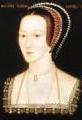
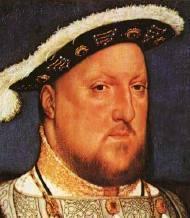 Ed. Note: Due to "the obvious falsity of so much of the evidence; it announced too loudly and too clearly that the
  For this purpose it was indispensibly necessary that the king [
 AT the restoration of