| During the pre-Civil War slavery era, a number of abolitionists in the 1840's - 1850's wrote books on slavery unconstitutionality.
Examples include William Mansfield (1772), John Adams (pre-1776), Samuel May (1836), Salmon P. Chase (1837), Alvan Stewart (1845), Lysander Spooner (1845), Benjamin Shaw (1846), Horace Mann (1849), Joel Tiffany (1849), William Goodell (1852), Abraham Lincoln (1854), Edward C. Rogers (1855), William E. Whiting, LL.D., et al. (1855), Rep. Amos P. Granger (1856), and Frederick Douglass (1860). They showed that pursuant to common law, precedents, and constitutional and legal principles, slavery was unconstitutional and illegal. Preparatory to reading this site, a familiarity with that overview material may be helpful to you. This site is one in a series of reprints of historic abolitionist writings. This site reprints the 1841 book by George W. F. Mellen, one of the early writers on slavery as unconstitutional under the original Constitution. To go to the "Table of Contents" immediately, click here. |
UNCONSTITUTIONALITY OF SLAVERY EMBRACING AN ABSTRACT OF THE PROCEEDINGS OF THE NATIONAL AND STATE CONVENTIONS ON THIS SUBJECT by George W. F. Mellen (Boston: Saxton & Pierce, 1841) Shall I hold another in slavery, IN presenting the public with the present volume, we are aware it involves some presumption, as we are not connected with the learned profession of the law; but none, either abler or otherwise, having undertaken the task, we have ventured to raise our sail, and, with what skill and favorable winds we could command, have endeavored to steer our bark into the desired haven. We are aware that Mr. Alvan Stewart, of New York, with his great mind, has preceded us [in 1837-1838] in the discussion of the constitutional question of the rights of slaveholders; but he did not touch the point which we thought lay at the foundation of this most interesting question; we have therefore considered it in a somewhat different aspect. While he supposed, because the States had not by their laws established slavery, therefore it did not exist, we, on the contrary, would affirm, that, according to our Constitution, it is impossible either for congress or the States to establish it; that no man now is rightfully or legally held in bondage in this country; that the whole system is unconstitutional; and that it is in violation of its spirit and letter, and ought not to be upheld. But, knowing such weighty authorities are at present opposed to us, we have had to be rather labored, and to extend our remarks and proofs to a greater length than might be desirable; but, as we have endeavored to give a connected history of the proceedings of various public bodies in relation to the question at issue, and have done it with all the impartiality of which we are capable, we hope our exertions wilt not prove unavailing to throw light upon a subject which now seems to be involved in much darkness and uncertainty, if we can judge from the contrariety of opinions we have heard both publicly and privately expressed. We are aware, also, we take a different stand from many distinguished abolitionists on this question, and that a good deal of sensitiveness has been manifested towards us on account of it; but, as the facts and arguments adduced in this work have fully satisfied ourself on this subject, it is hoped they may not fail to convince others, and that it will be finally admitted that not only the States, but the United States, and the various courts of the land, all have authority over the subject, when the question arises in their several jurisdictions. We have considered the distinctive character of our government arises from the fact a man cannot be subjected to arbitrary authority in this country; and from this alone it deserves the appellation "free." We take it for granted, it.cannot be supposed that individuals under a government have a greater authority over other individuals under the same government than the government itself. But, while we have, as we think, most clearly demonstrated these as truths, and that every individual person, is by the Constitution allowed his inalienable rights, and the free exercise of them, we should also hold, even if the Southern States were foreign nations, and we had no connection or interest with tftiem, it would be our duty, and the duty of every other man, to lift up his voice against the oppression that is there exercised, on the same grounds that we should enter a stranger's house from which proceeded the cry of help and murder. Is there one of us, in the Northern States, who should see one man beating another in the street, would not endeavor to know the cause of the assault, and, if in our power, prevent its continuance; or, if we should see one flying from an infuriated man, should we not endeavor to render succor and assistance to him who is fleeing? And when we see and know that thousands and tens of thousands of our colored brethren have already fled, and are continually fleeing, for succor and for aid to shield them from the iron yoke imposed upon them in the Southern States of this Union, and when we know their cry is constantly ascending for assistance, can we, ought we, to fold our arms in indifference? Let him who has never wanted, and never expects to want, the sympathies and aid of his fellow-men answer in the affirmative, and act accordingly. Knowing, however, our own weakness and our own wants, we must act in a different manner. But we affirm, according to our present arrangement, the Southern States can in no light be considered as foreign nations to us: our destiny is bound up with theirs, and we cannot hope to escape unless we dissolve our present connection. Are we liable every moment to be called upon to shoulder our muskets, to defend the South from any danger that may arise either from external foes, or internal insurrections, without having any interest to prevent, if possible, our being thus called upon? Had a foreign nation the same right to call upon us for such a purpose? We cannot suppose any one will answer in the affirmative; neither could we have believed, had it not been done by so many individuals, that a single person could have been found, that would have admitted it possible any one could, in this country, be driven about hither and thither, whether as soldiers or as slaves, without being able to ask the reason why, or without having the right, in any way or in any manner, of preventing such being the case. We think our fathers have not left us such a legacy; on the contrary, they not only took better care of their own rights, but took better care of the rights of their posterity; and it is the purpose of the following pages to show how and in what manner they have done it. If we are successful in convincing this nation, or rendering any help to convince it, that there is and can be no legal slavery in this country under our present Constitution, as we ourself are convinced there can be none, we shall thank God and take courage. We therefore humbly dedicate this book to the people of the United States; and, although it has been written in hours snatched from business and relaxation, and its literary merits may be objectionable, we hope the ideas will be pondered and considered, and that we shall not rush blindfolded into slavery to our own destruction, and to the destruction of the hopes of the great and good who have desired the liberty and happiness of mankind. We would however observe, that in any thing we may say in the following pages, we hope no one will suppose that we would not be as careful of State rights as the most jealous person, whether in or out of the abolition ranks; but we have no sympathy with those who are so sensitive with regard to them on some points, and yet pay no sort of regard to them when certain other points are under consideration. We will take this opportunity to thank Mr. Coffin, and Mr. Snelling, of the State Library, for their politeness in allowing us the examination of such books under their charge as we wished.
-10-
-11-
-12- THE UNCONSTITUTIONALITY OF SLAVERY. A GENERAL STATEMENT OF THE QUESTION. THE idea having been advanced in some of our most prominent political and religious journals, and also in various addresses made to the public by members belonging to both political parties,1 that no person out of the slave States had any thing to do with slavery;2 that its abolition belongs solely to the States in which it exists; that we have nothing more to do with it than if these States were foreign nations, and that we violate the law of nations by meddling with it;3 and that, if these States were not of our own household, the proceedings of the abolitionists would be a cause of war; and, further, (the doctrine is advanced by some,) that slavery was by the Constitution guaranteed to the South,4—it is our purpose to con-
2 Boston Quarterly Review, No. II. p. 242; also No. XII, p. 95. 3 Boston Quarterly Review, No. II, p. 252. 4 Christian Examiner, Third Series, No. XIII, 1837, p. 84, &c. sider these several subjects, and see how far they can be true, and if in truth it be possible we can arrive to any such alarming conclusions. While, we say, we will make the above inquiries, we will also see whether, on the contrary, while this system was found, like other evil practices that sometimes gain a foothold on the affections of a people, our fathers did not do as much as they thought in their power to put an end to the system, and leave it not only in the power of the government to destroy it, but absolutely, and in fact, by the system they adopted, they did not place it in the power of every individual, who should be maltreated or restrained in his liberty, to get redress of his grievances through the instrumentality of the courts; so that, if proper steps had been taken, no man need to have been retained in slavery since the adoption of the Constitution; in truth, that there is no legal or rightful slavery in the United States, nor can there be, by any powers either in the State or United States government; much less is there any constitutional power in the individual, to make a slave of any person whatever; that, unless for crimes committed against the laws of society, and which laws must have an equal bearing upon all, a man cannot be restrained in his life, liberty, or pursuit of happiness; and, consequently, all the laws made by the different States to secure man in slavery are null and void, and, if carried into execution, are in direct violation of the Constitution of our country. To say our fathers guaranteed slavery to the South, is advancing a doctrine so opposed to their professed attachment to liberty, and to the doctrines advanced in the Declaration of Independence, and to the professed reasons which most of them gave for coming to this country, and would involve them in such a labyrinth of hypocrisy, that it seems as if no individual would be willing to make himself obnoxious to the charge, and that he would pause for a long time before he would admit such a doctrine, or would suffer it to gain publicity. To say our fathers — the persons who came over in the Mayflower, that Penn, that the Germans—all left their shores, either openly avowing, or, by their subsequent practice, showing, they came away to avoid the tyranny of their own countries, and came to this continent, to these shores, with the express purpose of here enjoying greater freedom than at home, and of establishing, in this then wilderness, the basis of freer institutions than they were living under in their own country, but, at the same time, beneath this fair exterior they were entertaining doctrines which, if carried out, (and they have been carried out,) would introduce a tyranny as much worse than any existing in the several lands from which they came as can be well conceived; or that our fathers, who took an active part in our revolutionary struggle, should have played the same game,—should, while they were advancing the "self-evident truths," "that all men were created equal," that they "had an inalienable right to life, liberty, and pursuit of happiness," and thereby touching that cord in every noble and generous mind, and which, if properly struck, will be sure to vibrate in union with the master hand, and which did call forth the treasures and assistance of a Lafayette, and caused a Kosciusko to bleed; that these men, who advanced and maintained these principles before the world, did it only that they might gain the world's assistance and its applause, while they had determined, within themselves, to violate every principle they professed, or only that they might be better able to impose on their brother man a tyranny equal in cruelty to any the world had ever witnessed,—is advancing a doctrine so abhorrent, we can scarce believe, had it not been asserted, it could have been entertained a moment. And yet what is it but saying all this, when we allow it to be understood, without any qualification, that our fathers, the moment it was in their power to frame laws to govern the country to which they had resorted, should, in contempt of all their previous professions, place upon a permanent footing, and that with malice prepense, a system of which they at least made a show, on account of its barbarity and the manner it was imposed upon them one cause of war? Such a judgment seems too contrary to all of our preconceived notions of their integrity, to be for a moment admitted; and, if there was any thing in their actions that would at all give countenance to such a construction of their conduct, some excuse ought to be found, some reason, either good or apparently so, which may have appeared, to their minds, to justify them in a course so opposite to what might have been expected. It is not our intention, however, to advance the idea that all the men of that age were perfect. That there were men who would not have been willing to act in such a hypocritical, manner; and that there were many who did use their utmost influence to fasten upon the country this system of abominations, and, on account of their supposed interest involved, were willing to do any thing, provided this should be effected; and that many, after our independence was gained, took no active interest in it, and would have been very glad had no change taken place, but, after it did take place, threw in what weight they could to prevent any alteration in their domestic, concerns,—we have no doubt. And that such persons did effect much, and did, perhaps, prevent a general emancipation from slavery throughout the United States at the time, there can, perhaps, be no doubt; neither can there be any doubt that, through their solicitations, and the honest fears of others, as to the consequence of having in their midst, without more than ordinary restraint, a comparatively ignorant, barbarous, and heathen people, the subject of emancipation was kept in the back-ground, or involved so mysteriously as to be left, by those who would have taken a different course, to future generations, to correct any error they may have committed; and we find that those who took the most active part in that struggle, and by whose influence it was in the main carried on, were thwarted and prevented from doing as they would. Having gone through one struggle, and being, as they themselves say, advanced in years, they left what of the work they had not finished to those who might come after them. But, after all, although they did not proclaim a general emancipation to the colored race, yet we think they left no word by which slavery could be justified or maintained in the Constitution of our country; and that, so far as that instrument is concerned, it cannot be supported. This, we are aware, is an assertion contrary to the expressed opinion of many distinguished men. But, when a guaranty is given, we think there ought to be something more than inuendoes to maintain it; that the subject to be guaranteed should be expressly stated; that nothing should have been left to inference; that, in a case so important, a clear understanding should have been entertained; there should have been left no doubt on the subject; and yet, in all of the public documents that were given to the American people and to the world, the subject of slavery is not mentioned but with reprobation. The nation at large were, no doubt, opposed to slavery. No one, in that age, dared to assert slavery was a blessing; no one seemed to think it was so; but every demonstration that was made in regard to it was of a contrary character. The trade has been termed, at least when conducted on a foreign shore, piracy; and their abhorrence of it has been shown, in a greater or less degree, in the various laws that have been made on the subject. We must admit, however, they suffered, against the consent of the most active men in the revolutionary struggle, this piracy to continue twenty years after our present government was established, and, by so doing, laid the foundation of the troubles we now experience; though the very manner they worded this permission shows they did not feel over-anxious to leave on record any justification, on their part, of its being done; and that the present ideas in regard to it are but of late growth. The idea of its being a blessing, as a permanent institution, does not appear to have entered their heads. It was solely the want of laborers in the more southern States that induced them to consent to have it continued, and not because they had any sympathy for the system. It was urged that the white man could not work on the rice plains of the South; and, unless there could be a colored population there, they would have to remain a wilderness; and that the African would be better off in this country than in his own. These ideas, with the fear they should not be able to maintain their liberties and the best good of the country without a union of the States, induced them to consent to its temporary continuance. Its perpetuation, however, was not thought of, saving, perhaps, in the minds of some, the young giant was discovered while it was but a suckling. But it is asked how it is, then, that that which was considered so great an evil, at the time of which we are speaking, should in so short a time become to be considered of so much utility that it must not be spoken ef but with approbation, and that the statesmen in both of the great political parties of our country so universally uncover their heads in its presence, and bow down to it as to a god from whom they have received their very existence.
Mr. [James G.] Birney, in his [1836] letter to the Hon. Mr. Elmore, of South Carolina, in answer to certain inquiries made of him respecting the intentions and prospects of the abolitionists of the North, states the case in a clear and distinct light. He says,— "The ascendency that slavery has acquired and exercises, in the administration of the government, and the apprehension now prevailing among the sober and intelligent, irrespective of party, that it will soon overmatch the Constitution itself, may be ranked among the events of the last two or three years that effect the cause of the abolitionist. The abolitionists [Ed. Note: Examples: A. Lincoln; B. Shaw; L. Spooner; and J. Tiffany, etc., etc.] regard the Constitution with unabated affection. They hold in no common veneration the memory of those who made it. They would be the last to brand Franklin, and King, and Morris, and Wilton, and Sherman, and Hamilton, with the ineffable infamy of attempting to engraft on the Constitution, and therefore to perpetuate, a system of oppression in absolute antagonism to its high and professed objects, one which their own practice condemned; and this, too, when they had scarcely wiped away the dust and sweat of the Revolution from their brows. continuance of such a system. They can only palliate it, by supposing that they thought slavery was already a waning institution, destined soon to pass away. In their time, (1787,) slaves were comparatively of little value, there being then no great slave staple (as cotton is now) to make them profitable to the slaveholder.1____________ 1The cultivation of cotton was almost unknown in the United States before 1787. It was not till two years afterwards that it began to be raised and exported. (See report of the secretary of the treasury, July 29, 1836.) 2The following is the opinion of the late Chief Justice [John] Jay [1745-1829] as to this part of the constitutional question. It is contained in a letter sion into the Union of any new State, whose form of government was repugnant to the principles of liberty set forth in the Constitution of the United States. The faithful execution by congress of these powers, it was reasonably enough supposed, would, at least, prevent the growth of slavery, if it did not entirely remove it. Congress did, at the same time, execute one of them,—deemed then the most effectual of the whole, but, as it turned out, the least so."____________ from him to the venerable Elias Little, and can be added to what has been said and written on the subject of slavery: "Nov. 17, 1819. I concur in the opinion it ought not to be introduced, nor permitted in any of the new States; and that it ought to be gradually diminished and abolished in them all. "To use the constitutional authority of congress to prohibit the migration and importation of slaves into any of the States does not appear questionable. "The first article of the Constitution, specifies the legislative powers committed to congress. The ninth section of this article has these words: 'The migration or importation of such persons as any of the now existing States shall think proper to admit, shall not be prohibited by the congress prior to the year 1808', but a tax, or duty, may be imposed on such importation not exceeding ten dollars for each person.' "I understand the sense and meaning of this clause to be, that the power of the congress, although competent to prohibit such migration and importation, was not to be exercised with respect to the THEN existing States, and them only till the year 1808, but that congress were at liberty to make such prohibitions as to any new State which might in the mean time be established. And, further, that, from and after that period, they were authorized to make such prohibition as to all the States, whether new or, old. "Slaves were the persons intended. The name slaves was avoided, on account of the existing toleration of slavery, and its existing discordancy with the principles of the Revolution, and from the consciousness of its being repugnant to those propositions in the Declaration of Independence: 'We hold these truths to be self-evident,—that all men are created equal; that they are endowed by their Creator with certain inalienable rights; and that among these are life, liberty, and the pursuit of happiness.' He [James Birney] then goes on to state that the interdiction of the African slave trade did not diminish the trade itself, or mitigate its horrors. It simply transferred from Africa to America "its profits from African princes to American farmers." He doubted if slavery would have extended over so large a space as it now does, if the trade had not been interdicted; for the cheap rate at which slaves could have been imported would have prevented the rearing them on American soil; and, if the internal commerce could be restricted, slavery would soon die of itself. They could not maintain it on account of the competition of free labor. And the not using by congress of the power it possessed, or rather to the unfaithful application of their power to other points, on which it was expected to act for the limitation and extirpation of slavery, that the hopes of our fathers have not been realized. Slavery has advanced to its present audacious [expanded] position by steps at first gradual, and for a long time almost unnoticed; afterwards by intimidation and corruption, up to the time of the "Missouri compromise," by which the nation was defrauded of its honor; and that, up to this time, slavery was looked upon as an evil that was to yield to the expanding and enlightened influences of our Constitution, principles, and regulations. He then proceeds: "It has already been said we have been brought into our present condition by the unfaithfulness of congress, in not exerting the power vested in it, to stop the domestic slave-trade, and in the abuse of the power of admitting new States into the Union. Kentucky made application, in 1792, with a slaveholding Constitution in her hand. With what a mere technicality congress suffered itself to be dragged into torpor! She was part of one of the original States, and therefore entitled to all their privileges." It should have been entitled to all the curses that the system of slavery necessarily imposes upon a community that upholds it. "One precedent established, it was easy to make another. Tennessee was admitted in 1796, without scruple, on the same ground. But no; with the exception of Massachusetts, they hesitated, and were persuaded to acquiesce, because the country was just about entering into a war with England, and the crisis was unpropitious for discussing questions that would create divisions between different sections of the Union. 'We must wait till the country is at peace.' Thus it was that Louisiana was admitted [1812] without a controversy. dreaded. But on the Missouri question there was a fair trial of strength between the friends of slavery and the friends of the Constitution. The former triumphed, and by the prime agency of one1 whose raiment, the remainder of his days, ought to be sackcloth and ashes, because of the disgrace he has continued on the name of his country, and the consequent injury he has inflicted on the cause of freedom throughout the world.____________ 1Henry Clay [1777-1852]. by forbidding the master to emancipate his bondman without the consent of the legislature, and the legislature without the consent of the master. Thus we have given Mr. Birney's views of the manner slavery has advanced in the country, because we think they are plain, explicit, and to the point, and show how slavery has advanced by successive steps from being considered the worst of evils to that of the greatest good; and, by showing this, we shall be able more clearly to perceive why our fathers did not in any manner guarantee, or even countenance, slavery, by any of their public acts; but, on the contrary, as we shall attempt to prove, so far as they did go, their acts went to break up the whole system, or provide for its being so broken up; and, in fact, if advantage had been taken of their words by our colored popula-
tion, slavery would have ceased to have existed at the time of the declaration of our independence; and we think it can now be sufficiently shown the system has never been by law established, but that ways have been provided for its final extirpation. Such being the case, nothing but the supineness of those, both white and colored, who were and are interested, has perpetuated it in our land. In order to substantiate these assertions, it may be thought proper and necessary, since so much has been said and admitted to the contrary, to show on what they are founded, and how such a position can be maintained; and, in order so to do, it may be necessary to go back in our history, to ascertain what were the principles not only of the men who framed the instruments to which reference has been made, but also of their predecessors. Having the biography of so many of the men who first came to this country, belonging to our own race, as well as the history of the time of their first landing to the time spoken of, we can perhaps come to a just conclusion. It would hardly be necessary to assert all of our fathers had a clear conception of the value of, or even desired, universal liberty,—that they were all pure, honest, and true men; consequently we will not, however much we might wish, and we shall not, attempt to maintain such a proposition;
slaves [unpaid workers], and of accumulating property through their agency [efforts, labor, work];
We have seen how that influence has been extended from that time to this, and that by false arguments and false reasonings they have produced the results we now witness.
But that the great body of the people who came to this country, either before the declaration of independence or since, or of those who took a part in the proceedings of the revolution, were men who favored slavery, we think cannot for a moment be admitted. Perhaps it may not be necessary to quote from the principal men of that day, or to go into a long and labored argument to show that they were on the side of freedom, because it would seem like arguing a point that every one admitted, and that it was too plain and palpable on the face of our history to be denied; and perhaps it may be said it is not denied; but yet, when respectable journals, and men in high authority, say our revolutionary fathers guaranteed slavery to the South, or left it in such a manner, that, while each and all of the different States were bound to suppress, or help suppress, an insurrec- tion that might occur among the slaves, they put it out of their power to say or do any thing against its continuance, or left no way by which it could be brought to an end by the courts, we cannot conceive it in any other light than the admission that, while the men of that day made the strongest professions in favor of liberty, they were, at the same time, preparing the country for the vilest system of bondage; in other words, making them the greatest of hypocrites,—a character we do not think they deserve.
It is certainly evident our Pilgrim fathers, with the advice of Robinson, came here to enjoy their civil and religious privileges, and that they did introduce into their government these great principles. Although, in the course of time, many of these principles may have been disregarded, as in the persecution of Roger Williams and the Quakers, and in some of their number holding slaves, yet, after proper discussion, and seeing the bearing to which their actions tended, they gave up the contest; and the apparent result of every trial of this kind fixed deeper, broader, and stronger, in the minds of our fathers the love of liberty; so that no persecution of the same kind has ever taken place a second time. However much individuals might have wished a different order of things, or however much they may have been mistaken in any of their works, no sooner was the result of their actions understood by the general mass, that the great doctrine of general or individual liberty was endangered, than they at once rallied with all their powers of opposition, and caused the obnoxious measures to cease. The refusing of civil privileges, excepting to church members, was one of these laws; but, as soon as it was found to interfere with individual liberty, it was done away. [William] Penn [1644-1718], with his followers, certainly entertained the same notions, and came here for a similar purpose. The German population, also, that settled in New York and Pennsylvania, entertained, in a greater or less degree, the same idea: this we think is evident in the attachment which the German population in the State of Pennsylvania still manifest towards what is called the republican party in the United States. Wherever and whenever they become convinced that one party, rather than the other, embodies the republican principle, there they are sure to side; and, in fact, it is appealing to this principle alone, and convincing them that the persons who would obtain office will maintain their sentiments, that any have the most distant hope of success.1 Mr. Haynes, in a speech made in the senate of the United States, January 21, 1836, said: "The people whom I represent are the descendants of those who brought with them to this country, as the most precious of their possessions, an ardent love of liberty; and, while that shall be preserved, they will____________ 1The result of the past election [1840, which Northerner William Henry Harrsion won], we cannot but think, was in part caused by appealing to this very principle. always be found manfully struggling against the consolidation of this government as the worst of evils." The State of North Carolina was settled for the most part by Quakers, and the people of that State have been, from the beginning, less attached to slavery, if we can judge from the proceedings of their public bodies, than most of the Southern States. At the time of the formation of the Constitution their delegates received no instructions on the subject of slavery, while those from South Carolina and Georgia did. The delegates from this State were left to act according to their own judgment on the subject, and it may be it was through the influence of the Quakers they were so left. Now while it may not be questioned that many came to this country as needy adventurers, and for the simple purpose of making money, let the mode of making it be what it might, yet there can be no question but that a great proportion came here, though they may have wished to have bettered their condition, for the purpose of avoiding the tyranny practised in the old world. It was uncomfortable to them, and they wanted to live in a situation where they should not be under so much restraint; and, considering the smallness of the island of Great Britain, it may be presumed that those who came from thence in a great measure sympathized with one another in this thirsting after a greater civil liberty than they there enjoyed; and though they separated far and wide when they arrived on these shores, yet the same spirit animated them, and the same thoughts filled their breasts. In all their controversies with the mother country, this spirit was ever uppermost: it manifested itself at the time of William and Mary [1689-1702], of Chromwell [1653-1658]; and finally it broke out, in its distinctive character, at the time of the revolution [1776-1783]. At this time it had gained, if we may so speak, a form and substance. The repeated discussions on the subject throughout the colonies, for a series of years, had matured and brought out the idea in prominent relief. The idea this land should be the land of the free; that this great continent should and ought to be governed by impartial laws, and not by that system of favoritism, tyranny, and misrule, that was so general throughout the kingdoms of Europe, was fully developed. They meant to establish a government of peace and good-will to all men, and where every one might "sit under his own vine and fig-tree without any to molest or make afraid." [Micah 4:4] We find them in all of their proceedings, however much they may have been opposed by individuals, or however often they may have been prevented in so doing, laboring to carry out this idea to its fullest extent; and it is evident that one of the obstacles in the way of obtaining this universal liberty was the trade and traffic in slaves. They felt its injurious effects; and Mr. [Thomas] Jefferson [1743-1826] made it one of the grounds of complaint in the draft of the Declaration of Independence—and it was approved by the committee who were appointed to make this draft—that Great Britain should have forced these people upon them in the manner she did, against the remonstrances and wishes of the colonies. But as certain individuals in this country had entered into the traffic, and many had what they considered their property in these people, interest was made to have that clause in the Declaration struck out, and it was done. But the great principles that animated them still remained embodied in the instrument; and, the moment it was adopted by this country, every slave was free; and such undoubtedly must have been the understanding of the men who promulgated it, unless they should be accused of the want of understanding the meaning of the words they had used. Could the men of that age use the language "that all men are created equal, that they are endowed by their Creator with certain inalienable rights, that among these are life, liberty, and the pursuit of happiness,"without being aware, if the negro was a man, he must be included? We think not. No exception was made to him, and his situation was fully understood by the man who wrote these words, and by the people who adopted them as their own; and the only cause why the negro did not receive at that time universal freedom throughout the States was, as we believe, because they had no champion among their own number to assert and make known their rights, and bring their cause before the mind of the public.
Certain it was, the men of that age expressed themselves openly and unequivocally, and we humbly think it was owing to their not being seconded by our colored friends, they did not succeed in their wishes.1 But a supposed interest, joined with a real or pretended claim of others, of the consequence of freeing so many in their midst who had just come from a heathen land, ignorant, as they supposed, or pretended they were, of the ideas of civil liberty, and hearing nothing from this race to the contrary, they were prevailed upon to pass over the subject in silence, though they did not and would not give up the principle which, if carried out, would cause the freedom of every man in our land. As an evidence of this, we find that slavery, in those States where the whites greatly overbalanced the colored people, was immediately or prospectively abolished, and the most prominent men of those days took an active part in having it done. ____________ 1General [Joseph] Warren [1741-1775], in his address on the 6th of March, 1775, only one hundred and nine days before his death on Bunker Hill, delivered in the Old South Church, on the anniversary of the celebrated Boston Massacre, gave utterance to the following sentiments: "That personal freedom is the natural right of every man, and that property, or an exclusive right to dispose of what he has honestly acquired by his own labor, necessarily arises therefrom, are truths that common sense has placed beyond the reach of contradiction. And no man, or body of men, can, without being guilty of flagrant injustice, claim a right to dispose of the persons or acquisitions of any other man, or body of men, unless it can be proved that such a right has arisen from some compact between the parties, in which it has been explicitly and freely granted." CHAPTER II. OBSERVATIONS MADE BY THOSE As an evidence of the fact of the desire our fathers entertained for universal liberty, and that this country should be the land of the free, we shall quote from some of the state papers put forth by congress, and from the observations made by distinguished men of that day. We shall begin by taking an extract from "A Declaration by the Representatives of the United Colonies of North America, setting forth the causes and necessity of their taking up arms. Directed to be published by General [George] Washington [1732-1799], upon his arrival at the camp before Boston, July 6, 1775."Let it be noted that this was in the first document put forth to the American army, through the first general that had been appointed by the congress of the United States; and that it must have been observed, at the time, with a great deal of interest, as marking out, in a manner, the principles which actuated them. It says,— "If it was possible for men who examine their reason to believe that the divine Author of our existence intended a part of the human race to hold an absolute property in, and an unbounded power over, others, marked out, by his infinite goodness and wisdom, as the objects of a legal domination never rightfully resistible, however severe and oppressive, the inhabitants of these colonies might, at least, require from the parliament of Great Britain some evidence that this dreadful authority over them has been granted to that body. But a reverence for our Creator, principles of humanity, and the dictates of common sense, must convince all those who reflect on the subject, that government was instituted to promote the welfare of mankind, and ought to be administered for the attainment of that end." "Your majesty's ministers, persevering in their measures, and proceeding to impose hostilities for enforcing them, have compelled us to arm in our own defence, and have engaged us in a controversy so peculiarly abhorrent to the affection of your still faithful colonies, that, when we consider whom we must oppose in this contest, and, if it continues, what may be the consequences, our own particular misfortunes are accounted by us as part of our distress." "You cannot but remember how reluctantly we were dragged into this arduous contest, and how repeatedly, with the earnestness of humble entreaty, we supplicated a redress of our grievances from him who ought to have been the father of his people. In vain did we implore his protection; in vain did we appeal to the justice, the generosity, of Englishmen—of men who had been the guardians, and asserters, and vindicators of liberty through a succession of ages—men who, with their swords, had established the firm basis of freedom, and cemented it with the blood of heroes. Every effort was vain. For, even while we were prostrate at the foot of the throne, that fatal blow was struck which separated us forever. Thus spurned, contemned, and insulted, thus driven by our enemies into measures which our souls abhorred, we made a solemn appeal to the tribunal of unerring wisdom and justice—to that almighty Ruler of princes, whose kingdom is over all." Extract from the "General Orders issued by General * * * "For happy, thrice happy, shall they be pronounced hereafter, who have contributed any thing, who have performed the meanest office, in erecting this stupendous fabric of freedom and empire on the broad basis of independence, who have assisted in protecting the rights of human nature, and establishing an asylum for the poor and oppressed of all nations and religions. Extract from the answer of General [Thomas] Mifflin [1744-1800],
"Having defended the standard of liberty in this new world, having taught a lesson to those who inflict and to those who feel oppression, you retire from the great field of action with the blessing of your fellow-citizens." Among the foregoing are some of the expressions made by the constituted authorities of the land, and which must have been issued by at least a majority of the different bodies who emanated them. They consequently show the feelings of a large body of the people, and the reasons and object that caused them to resist the proceedings of Great Britain. Whether they were right or wrong in forcible resistance, is another question, we cannot stop here to discuss it, but shall observe, we doubt whether the army, during a good portion of that memorable struggle, could have been kept together, destitute as they frequently were of every comfort and convenience, were it not they were urged on by their love of liberty and of the right, and by such appeals as were made to these inherent principles of our nature. Look at the army at Valley Forge: almost naked in the dead of winter; almost literally without food or raiment, or they had such only as was barely enough to support their animal wants; nay, they had not enough to satisfy their hunger, or to shield them from the severity of the cold. Take the British officer's account, which we shall shortly give, of Marion's situation; and Marion said it was often much worse than when the officer was with him; for they did not always have enough even of potatoes. Imagine to yourself an army of men living in the woods, sustaining themselves upon roasted potatoes, their plates sheets of bark, their tables logs, and their fingers for knives and forks, day after day, month after month, exposed to the hot sun and chilly damps of a southern climate; and all, as is said, for "liberty;" and liberty not so much for themselves as for posterity. If they were wrong, it seems, at least, we should be charitable towards such failings; but yet here is the principle for which we contend,-—that it was for liberty, and liberty alone, that produced our Revolution, and that this was the mainspring and moving power that put in action the men of that day; and without it the Revolution could not have been carried on, nor, so far as human observation can be made, could it have been successfully terminated; and that it was not the liberty of the mass, a disenthraldom of the state from a foreign power, an independency of government, but it was the liberty of the individual that was sought; it was to shield him from oppressive taxes, to protect him from being quartered upon by a brutal soldiery, and their money from going to build up a rich few in the island of Great Britain.1
We do not here quote from the Declaration of Independence, because we shall have occasion so often to refer to its language it is not necessary. Gov. [John] Hancock [1737-1793], in a speech made in 1784, in commemoration of the Boston Massacre, makes use of the following expressions:
Mr. Hancook was chosen president of the convention of Massachusetts, to take into consideration the adoption of the present Constitution, but did not attend till the last week of the session. It was said a majority of the convention would be against the adoption, and that the governor was with the opposers.1 "Certain amendments were proposed to remove the objections of those who thought some of the articles deprived the people
1 Biographical Dictionary, Art. Hancock. of their rights. He introduced those amendments with great propriety, and voted for the adoption of the Constitution. His name and influence doubtless turned many in favor of the federal government." It will be seen in the sequel that some of these amendments, written probably to do away, in part, the known opposition of Samuel Adams [1722-1803] and Mr. Hancock, had, in fact, special reference to the slaves in the Southern States; and it will be found that, with slight amendments, retaining, however, all the principles contended for, they were finally added to the Constitution. It was this man, in conjunction with Samuel Adams, who headed the opposition to the proposed tyrannical measures of the British government who makes objection to the proposed Constitution, not only on account of his jealousy for State rights, but on account of its acknowledging slavery at all, and the fear he entertained what might be the result; and it was the same person who, when General Washington proposed to Congress to bombard the town of Boston, while occupied by the British, and while Mr. H. was president of that body, and because it was known most of his property was invested in real estate there, "the house resolved itself into the committee of the whole, in order to give him an opportunity to give his opinion."1 After he left the chair, he addressed the chairman of the committee of the whole in the following words: "It is true, sir, nearly all the property I have in the____________ 1Biographical Dictionary, Art. Hancock. world is in houses and other real estate in the town of Boston; but if the expulsion of the British army from it, the liberties of our country require their being burnt to ashes, issue the order for that purpose immediately." Samuel Adams, who with Hancock were the only two individuals the English government could not pardon for their rebellion in the first stages of the difficulties, objected to the adoption of the Constitution as proposed, and stated he could not give it his support unless certain amendments were recommended to be adopted. After consultation, amendments were prepared, which were brought before the convention, and referred to a committee, who made some inconsiderable alterations, which being accepted, the Constitution was adopted. Some of these, as we have just remarked, were afterwards agreed to as amendments to the Constitution, and form at present a part of that instrument. We do not think they were altogether such as we at the present day should like, because they are not so distinct as we could wish; yet they secure the person from excessive fines, and secure him, before punishment, a trial by jury, and also freed him from cruel and unusual punishments. He also objected to the article that made the State amenable to the courts of the nation. He thought it would reduce them to mere corporations.1
We do not know whether Gen. [Francis] Marion [1732-1795], of South Carolina, held slaves; yet, as he so forcibly expresses the feelings of the human heart in its longings for freedom, and shows so distinctly the cause that could hold together our ill-clad and bad-provisioned army," and moved them to the contest of so great a struggle, we cannot forbear giving an extract from his words. His expressions occurred on the occasion of the British sending a flag from Georgetown, South Carolina, for the exchange of prisoners. The young officer, after transacting his business, being invited to dine, was seated on the trunk of a fallen pine, and one of the men was requested to hand the dinner; whereupon he drew a quantity of sweet potatoes from the ashes near by, and, after blowing them with his mouth, and wiping them with the sleeve of his shirt, set them between the general and the officer on a large piece of bark. The young man not relishing his food very well, and not able to refrain from laughing at his reception in the American generates camp, and at the bill of fare, observed, after other conversation, he did not believe it would be easy to reconcile his feelings to a soldier's life on Gen. Marion's terms,—
"All fighting no pay, and no provisions but potatoes." "'Why, sir,' answered the general, 'the heart is all; and when that is much interested a man can do any thing. Many a youth would think it hard to indent himself a slave for fourteen years. But let him be over head and ears in love, and with such a beauteous sweetheart as Rachel, and he will think no more of fourteen years servitude than young Jacob did. Well, now, this is exactly my case. I am in love, and my sweetheart is LIBERTY. Be that heavenly nymph my champion, and these woods shall have charms beyond London and Paris in slavery. To have no proud monarch driving over me with his gilt coaches, nor his host of excisemen and tax-gatherers insulting and robbing, but to be my own master, my own prince and sovereign, gloriously preserving my own national dignity and pursuing my true happiness, planting my vineyards, and eating their luscious fruit, sowing my fields, and reaping the golden grain, and seeing millions of brothers all around me equally free and happy as myself, — this, sir, is what I long for.' "The children of different generations may never hear my name, but still it gladdens my heart to think that I am now contending for their freedom, with all its countless blessings.' The young man, whose name was not given in the account, "could not rest till he had thrown up his commission and retired from the service." General [Anthony] Wayne [1745-1796], in his letter to General Washington on the surrender of Stony Point, wrote to this effect: "DEAR GENERAL,—The fort and garrison, with Col. Johnston, are ours. Our officers and men behaved like men determined to be free. General Washington, in his Farewell Address, makes use of this expression: "Interwoven as is the love of liberty with every fibre of your hearts, no recommendation of mine is necessary to fortify or confirm the attachment." "George Bryan,2 of Philadelphia, who was a delegate to congress in 1775, and in the State legislature in 1777, planned and completed an act for the gradual____________ 1Biographical Dictionary, Art. Marion. 2Biographical Dictionary, Art. George Bryan. abolition of slavery, and which will remain an imperishable monument to his memory," General Horatio Gates [1728-1806], who, it is well known, was next in command to Washington, when the Revolution was completed, retired to his plantation in Virginia, and, after residing there seven years, moved to New York, and gave freedom to his slaves. "Instead of turning them to the highest profit, he made provision for the old and infirm, while several of them testified their attachment to him by remaining in his family."3 We cannot but think it was the views held forth
2Biographical Dictionary, Art. William Henry Drayton. 3Biographical Dictionary, Art. Horatio Gates. in some of the preceding quotations, that arrested the attention of Lafayette, and finally the sympathy of the French nation. My honored grandfather—whose name was George Frost, who resided in the State of New Hampshire, and who was a member of the congress in 1778-9, and who was also a judge in one of the State courts, and whose popularity was such, that, in one office to which he was elected, there was but one dissenting vote cast against him,—before the Revolution, held slaves;1 but, as soon as the State government went into operation, he freely gave them their liberty, because, according to its bill of rights and its Constitution, which perhaps, from his standing, he may have had an influence in shaping, they were inconsistent with the system. Slavery, at that time, ceased in that State; it was the same in Massachusetts; and, sooner or later, it ceased in all of the States north of Mason's and Dixon's line. Such, then, being the expressed views of so many of those who took an active part in our
revolutionary struggle, (and these are but few out of many,) can it be possible that these men, when they came to provide for the administration of justice, and the general welfare of the country, which they had rescued from the hands of an oppressor, could have guaranteed to any portion of this country that they would maintain within its borders a system that would be in violation of every principle they had heretofore professed,—that they would guarantee an institution which many among their number had already denounced as one of the evils against which they had struggled, and the means by which that system was perpetuated has been termed by our government piracy? It cannot be! We would renounce the thought. That many of them may have been mistaken in their views, and that they did not fully carry out the principles they had promulgated, or rather they did not enforce the carrying them out, we must admit. But, because we admit this, it is not necessary that we must deny them all desire, on their part, to have fulfilled all their obligations to their country and the world. They had a great work to accomplish; they had much opposition to encounter, both from secret and open foes; and we must be thankful they accomplished as much as they did, and now help carry out their principles of liberty, either upon the foundation they laid, or upon others, which greater light in this later age may have thrown in our path. But, before we lay any other foundation than that that is laid, let us clear away the rubbish that has been thrown upon it, and see if it is not sufficiently broad and well founded for all the purposes we would accomplish; and, if it is so, we may be saved the trouble and expense of laying another. For this purpose, we will go to the Declaration of Independence, the Confederacy, and to the Constitution. What is the distinctive character of each and all of these instruments? Without commenting on the explanation since given of the expressions on the subject of the equality of man, that they are but a "flourish of trumpets," what do they say? CHAPTER III. THE ARGUMENT DERIVED FROM THE DECLARATION OF
THE Declaration of Independence declares, —
free; and, if our colored friends had taken advantage of the declaration here made, and laid in their claim to be included in the family of man, and as a portion of the people of the United States, we do not see, we cannot see, how their claim could have been disallowed by the men of that age.
They made no exception to the African race; but, on the contrary, it is well known the person [Thomas Jefferson] who wrote this declaration made the observation, that he trembled for his country, when he reflected that God was just, and that he could not take sides with us in such a contest as might take place between, the oppressor and the oppressed. We have seen what many of the most active men engaged in that Revolution have said; we know what was the action of the States north of the Potomac; and we must come to the conclusion that the people of that time both understood the meaning of the language here used, and meant to have the principles carried out to their fullest extent. In order to show that such must have been their intentions, we will go on and examine the Constitution, and endeavor to see how that harmo- nizes with these sentiments; but, before going to that instrument, we will make a few observations on the articles of the Confederation. The Confederation was formed at the commencement of the revolutionary war. It was a league among sovereign States for the purpose of repelling a common enemy; and, as it was formed in anticipation of an arduous contest, it is for the most part taken up in defining the powers of congress and the several States, as regards the preparations and carrying on of warlike operations, and in describing the powers of the several States, and that of congress in their action on this subject. They had just made their declaration of sentiments; it was for liberty. They had taken up arms; and it was for liberty. They were to be united; and we perceive this idea of liberty to be the prominent one running through this whole instrument. Without making any other professions than those they had made in the Declaration of Independence, they, in the first place, simply style the confederacy "The United States of America." Then each State was to have its own sovereignty, freedom, and independence, and all powers which were not expressly delegated to congress. It was a "league of friendship with each other, for their common defence, the security of their liberties, and their mutual and general welfare," &c. And, "the better to secure and perpetuate mutual friendship and intercourse among the people of the different States in the Union, the FREE inhabitants of each of these States (paupers, vagabonds, and fugitives from justice excepted) shall be entitled to all the privileges and immunities of free citizens of the several States; and the people of each State shall have free ingress and egress to and from every other State," &c. This sentence is the only one to which allusion is in any way made to slaves in this country. A stranger could not determine that there were any, but by the word free as applied to persons; and this word is not uniformly used before the term people, even in this very sentence.
It was a word, undoubtedly even in its connection, forced in, much to the discomfiture of many; for it will be perceived that the expression, "the people of each State shall have ingress and egress to and from every other State," does not have the word free before it; so that, under the Confederation, if this sentence should be construed in its enlarged sense, every slave, if he belonged to the family of man, would have the power of going from one State to another as he listed. He might be deprived of the privileges of a free citizen in every thing but locomotion. This, according to the strict construction of the language, was not denied him. In article 15th we have this expression: "Every State shall abide by the determination of the United States in congress assembled, in all questions which by this Confederation are submitted to them." Now we should construe this, that any question arising, in which the "common defence," the "security of liberty," the "mutual and general welfare, and the perpetuation of mutual friendship and intercourse," was involved, was a fit subject for the action of this Confederation; and, if they at the time thought slavery was to interrupt these relations, they would probably have acted definitely on the subject; but, as it was, they took an indirect course, and left it for the colored man to ascertain what his rights were from the principles they had established. But the Confederation, as it is well known, for its want [lack] of vitality in other respects, did not, as was urged by some, though denied by others, fulfil the intentions of the people of the country, and the Constitution was adopted. The question now arises, what were the intentions of the men who went to Philadelphia to form this Constitution, and the intentions of the men who sent them there? Where shall we look to ascertain this? Here was a large and extensive country. They had, by the course of Providence, been put in possession of it, and it belonged to them to make rules and regulations, or, in other words, laws, by which the inhabitants should be governed: they had separated from the mother country for the ostensible purpose of freeing it from the tyranny she was endeavoring to practise towards it, and this great continent, from Maine to Georgia, and from the Atlantic ocean to the Mississippi, was to be under the guidance and direction of the men who should compose the convention then about to sit. Had the principles that had actuated our revolutionary fathers changed? had their love of the right, their love of liberty,  (pp 56-89)
TO SUSTAIN THE ARGUMENTS MADE IN THE PREVIOUS
HAVING now gone through with our criticisms on the Constitution, and our remarks upon what we consider the principles upon which it was founded, we now, for a further illustration, and to show our ideas are not wholly unsupported, propose to quote from the language of some of the men who discussed this document before its ratification by the people, to ascertain if they did not and must not have known how fully the subject of slavery was under the power of congress, or that of the courts. We will, however, in the first place, adduce some testimony from the early history of the country, to throw light upon, and to exemplify, if possible, in a clearer manner the position we have taken; and, although some of the quotations apparently may not have a bearing upon the subject, yet they will all, we trust, serve to keep distinctly in mind the great principles of liberty, its value, and the steps taken by our fathers to secure it to the inhabitants of this country; and as we shall find they never, from the first moment, lost sight of it previous to the adoption of the Constitution, so they did not do it at that time. Mr. [George] Bancroft [1800-1891], in his late History of the United States, observes,— "Zemenes, (1537,) the gifted coadjutor of Ferdinand and Isabella, the stern grand inquisitor, the austere but ambitious Franciscan, saw in advance the danger which required centuries to reveal, and refused to sanction the introduction of negroes into Hispaniola, believing that the favorable climate would increase their numbers, and infallibly lead them to a successful revolt. A severe retribution has manifested his sagacity. Hayti, the first spot in America that received African slaves, was the first to set the example of African liberty."1 But "the rich returns made by Sir John Hawkins [1532-1595], of sugar, ginger, and pearls, for a cargo of Africans imported into Hispaniola, attracted the notice of queen Elizabeth,"2 and "she became, in conjunction with her subjects," "at once a smuggler and a slave merchant;"3 so that, while Sir John "bears the odious distinction of having first interested England in the slave-trade, and, by his success, induced his queen to continue the traffic, it may be some consolation to the people of England to reflect they are among the first to restore____________ 1 Bancroft's History of the United Stales, vol. i. p. 172. 2 Bancroft's History, vol. i. p. 173. 3 Is not queen Victoria [1819-1901], in conjunction with her ministers [e.g., Lord Palmerston], a smuggler, and, conducting like queen Elizabeth [1533-1603], if not a slave merchant, something equally as bad, yea, worse,—a public poisoner of her fellow-men, in the [violent aggression] attempt [Opium War] which she, in conjunction with them [British government officials], is now [1840's] making to introduce opium into China, against the laws of that country? We cannot but think they are making themselves obnoxious to both charges. [Ed. Note: See 1914 targeting of China for tobacco, the starter, or gateway, drug. And see data on the continuing government role in drug-pushing.] While England has been just, and has found, in her justice, she has not mistaken her true policy, may not Americans be so also? and, as the same author observes, "A ship of one Thomas Keyson and one James Smith, the latter a member of a church in Boston, first brought upon the colonies (1645) the guilt of participating in the traffic in African slaves,"so may not the people of Boston take the lead in bringing about a reform, and help emancipate the descendants of those who were first brought into bondage by her citizens? and would it not seem right and proper that they should take a lively interest in the subject? One would think they should not be behind the people of that age, who denounced those who trafficked in slaves, and who called such "malefactors and murderers," and that they should act "as Richard Saltonstall, a worthy assistant, who felt himself moved, by his duty as a magistrate, to denounce the act of stealing negroes, as expressly contrary to the law of God and the law of the country."These guilty men were committed for the offence, and, after advice with the elders and representatives of the people, who, "bearing witness against the heinous crime of man-stealing," ordered the negroes to be restored, at the public charge, to their native country, with a letter expressing the indignation of the general court of their wrongs. And in 1652, when it was perceived "that the people of Warwick and Providence were disposed to buy" negroes, "to hold them as slaves forever," "it was enacted they should not be so held;1 but, at the end of ten years, they should be set free; and if any one sold them to be held as slaves a longer time, they should forfeit to the colony forty pounds, which was twice the value of the slave at that time." After speaking of the law relating to marriages, he observes, — "The benevolence of the early Puritans appears from other examples. Their thoughts were always fixed on posterity. Domestic discipline was highly valued; but, if the law was severe against the undutiful child, it was also severe against the faithless parent. The slave-trade was forbidden, under the penalty of death."____________ 1 Bancroft's History of the United States, vol. i. p. 173. 2 Bancroft's History, vol. i. p. 466. (pp 94-103)
THE PROCEEDINGS OF THE NATIONAL CONVENTION. WE now turn to the convention that formed the Constitution, and to the proceedings of the several State conventions, and also to some remarks taken from Mr. Wirt's life of Patrick Henry [1736-1799], and from the Federalist all tending to show that, while our fathers came to this country for freedom, they meant to transmit this blessing to posterity; and that they did, for the most part, think they had attained this object, and that what they did not accomplish themselves, they left their children to perform. We will, however, observe, that, in these debates, it will be noticed there was a party who were for a strong government, and another party who were jealous for our State rights, and who feared a consolidated government. Whether those who wished for a strong government thought the people were really unable to take care of themselves, and, consequently, required the strong arm of the law to preserve the peace, &c. or, being conscious they meant, or wanted to produce, such a state of things as would make one portion of the community dependent on the other, and thereby create a jealousy and a distrust in the breast of different portions of society against each other, making a powerful government necessary, we will not decide; perhaps both reasons entered into the breast of some, and determined them in their course of action. But, on the whole, a sincere desire is manifested to do what they thought was for the best good and interest of the country. It appears the members of the convention, from South Carolina and Georgia, were alone instructed on the subject of slavery; and it was through their influence the slave-trade was not immediately abolished, and, if we can judge, that any equivocal expressions on the subject of slavery were introduced into the Constitution. The Virginia delegates, in the first place, received instructions to use their exertions to have the trade abolished; but they were, for some reason or other, withdrawn. South Carolina and Georgia, therefore, have the unenviable distinction of having been the cause of the continuance of slavery, or, rather, that there was no direct action of the convention on the subject. Since, then, having gained some points, they have taken advantage of these to effect their whole object, and they would now try to make us believe the whole government was made for them, and that they have a right to do with it as they think proper; and, by combining their action, they have been enabled to effect their purpose; and, while our government has been apparently a free one, it has, for the most part, been ruled by the slaveholder's influence.
majorities less than the number of representatives on the floor of congress, in consequence of slaves being represented; and we have suspected he lost his election [Ed. Note: 1828] because he would not bend to the dictation of Georgia on the subject of her Indian difficulties, and that this was the cause of the expression, that "his administration must be put down, if as pure as the angels of light." It has been often asked, how happens it slave-holders have always carried their point, when there has been a majority of members from the free States? The best solution, besides that the South have always been united on subjects that have affected their interest, while the North has been divided, was once given us by a lady; it was this:— The slaveholders, being an independent community by themselves, freed from the necessity of toil, each and all of them being masters, they could bear the utmost democracy; because, each being a lord, they wanted none higher than themselves. They could afford, so long as slavery existed, to be extremely democratic, because they would not be driven to labor. They had a class below them; they therefore could always appeal to the democratic feeling at the North, and get a true response; while those at the North possessing an aristocratic feeling, knew the principles they advocated were destructive to their interest, they, possessing no bondmen, and depending upon legislative enactments to maintain their dignity, constantly found themselves in opposition to the priv- ileged class at the South: hence there has always been a division. But we trust our people are beginning to open their eyes to the nature of slavery, and, perceiving it has a tendency to reduce all the working classes to the same state, they will put forth their power, and check its pretensions, before it is so fastened on the country that they will be unable to break its chains; and, as far as in us lies, we would now warn them, if they do not lay aside the foolish prejudices they have against the colored race, and come forward, with united resolutions, to put an end to so iniquitous a system while it is now in their power, they must not complain if they themselves, or their children, should be brought under the same system of oppression. They must help free their brother man from the yoke, or else have it placed upon their own necks. We think this is evident, and that there is no alternative.1 But to return to our extracts from the Secret Proceedings of the Convention that formed the Constitution of the United States, including some taken from a speech delivered by the Hon. Luther Martin before the legislature of the State of Maryland, who was called upon, after his return from the convention held in Philadelphia, 1787', by the legislature of that State, to give "an account of those transactions in which" he "had had a share." In this speech, Mr. Martin observes, —
(pp 108-123)
QUOTATIONS FROM THE FEDERALIST. WE have now passed over the Secret Proceedings of the Convention, which recommended the Constitution to congress, and, through it, to the several States. We have seen, in some measure, the anxiety that was felt that a Constitution should be adopted, the objections made, the influence that slavery exerted, and the attempt made to incorporate it into that instrument, and the manner that attempt was frustrated. This, together with the struggle between the large States and small ones, independently of the slavery question, was almost the only point that produced any protracted discussion, and prevented any decision at once of the kind of government to be adopted. On the part of some, a confederation of the States was urged, and these desired the old Confederation should be amended; while those of the larger States wanted to have a weight in the government proportioned to their population: this, after long and laborious discussion, was settled by a compromise. The framing of the language of the Constitution, in those parts that are said to relate to slavery, and have been acted on as such, show what care was used, and what exertions were made, by those who were opposed to the obnoxious practice of holding slaves, to prevent this practice, as a system, being incorporated in the body politic. However great the exertions to the contrary, unless a complete and entire perversion of the meaning of words is made, saving in the instance where the "three fifths of all other persons" was named, (which may have, or may not have, any meaning at all,) no person could make the language apply to slaves; and, being so, we must suppose the friends of freedom gained the day, expecting, though the South might not give up their slaves immediately, they would yet so do in a short time. And, although there was no express provision in the Constitution as reported, that would give the slave his rights, yet, if the purposes for which it was adopted, as expressed in its caption, should he truly carried into effect, slavery would be destroyed by them. We will now make a few quotations from the Federalist. This book, it is well known, was written by Mr. [Alexander] Hamilton [1755-1804], and Mr. [James] Madison [1751-1836], for the purpose of recommending and explaining the Constitution that had been proposed to the people of this country for its adoption. It was published in successive numbers over the signature of Publius, in the newspapers of that day, and afterward they were collected and put into a volume, having the above title prefixed. They were written in concert by the gentlemen named above, who took upon themselves to answer (pp 126-149)
have undermined the foundation of property and credit, have planted mutual distrust in the breast of all classes of citizens, and have occasioned an almost universal prostration of morals." From this it appears the conclusive reasons for adopting the Constitution, and the ones which were to cap the climax, were, the States were incapable of defending the individual's rights; they had not power to repel foreign invasions, or overcome the influences which ambitious men might obtain in a single State, or to check the outbreaks of the populace, or to overcome the jealousies that might arise between different States, and which would have a tendency to increase the military, and thereby endanger the good of society, its peace and happiness. CHAPTER.VII. EXTRACTS, ETC. FROM THE PROCEEDINGS IN THE
WE will now enter upon the discussion had in the several conventions of the States, which were called to take into consideration the subject of adopting the Constitution as promulgated by the convention at Philadelphia, premising, however, the Constitution as adopted was an entirely different thing from what was anticipated by the generality of the people at large; they expected an improvement of the Confederation, not a new system of government, as the Constitution proposed. In the debates on the Constitution in the convention of Massachusetts, Mr. [Rufus] King [1755-1827] said, in the discussion of the third paragraph, 2d section, article 1st,—"three fifths of all other persons": "These persons meant slaves. By this rule is representation and taxation to be apportioned. And it was adopted because it was the language of all America. [That is, that representation and taxation should go together; the greater the representation, the greater the taxation.] According to the Confederation, ratified in 1781, the sums for the general welfare and defence should be apportioned according to the surveyed lands, and improvements thereon in the several States. But it had never been in the power of congress to follow that rule, the returns from the several States being so very imperfect."1 On a question being asked by Mr. Widgery, "if a boy of six years of age was to be considered a freeman,"2 Mr. King answered,— ____________ 1Elliot's Reports, vol. i. p. 56. 2Idem, vol. i. p. 57. 3Idem, vol. i. p. 57. 4Idem, vol. i. p. 58. 5Idem, vol. i. p. 58.
not see that northern men would suffer, but directly the contrary. He thought, however, that the passage ought to be considered in the convention with that other portion of the Constitution, that prohibits the slave-trade in 1808, and that it was left to the option of all the States to totally prohibit the introduction of slaves into any of the States; and he asked, what could the convention do more? The members of the Southern States, like ourselves, had their prejudices. It would not do to abolish slavery by an act of congress in a moment, and so destroy what our southern brethren considered as property. But we may say, that although slavery is not smitten by an apoplexy, yet it has received a mortal wound, and will die of consumption."1 Messrs. King, Gore, and Parsons spoke of the advantage to the Northern States the apportionment of taxes gave them; as also the Hon. Judge Dana, who, in concluding his remarks, observed, —"I would rather be annihilated than to give my voice for, or sign my name to, a Constitution which, in the least, would betray the liberties or interest of my country."2 It may, perhaps, be well to remark here, though we have before entered pretty largely on this question, how completely the southern people have thrown off the advantage which our northern statesmen thought they had gained over the south by this system of taxation. Finding, as undoubtedly they must have done, how onerous it would be to pay a direct tax on each of their slaves, they immediately took advantage of the disposi-
†Idem, vol. i. p. 63.
(pp 154-159)
The following is an abstract of the amendments introduced by the president, Mr. Hancock, in order to induce the different members of the convention to give their sanction to the instrument: 1st. It is explicitly declared that all powers, not expressly delegated to congress, are reserved to the several States, to be by them exercised. This was considered by Mr. Adams as a summary of a bill of rights. The 3d amendment proposed was to quiet the apprehension of those who thought congress held too much power over elections. 4th. Congress cannot lay direct taxes, except when the money arising from imposts and excises shall be insufficient for the public exigencies, &c. The 6th was to introduce the indictment by the grand jury, before any person should be tried for crime, before he should incur any infamous punishment, or loss of life. The 8th recommends a trial by jury in civil actions between citizens of different States.1 There were nine amendments finally adopted.
"These amendments met the concurrence of Mr. Adams, and he thought they would be generally
It had become well known, before the meeting of the convention, that Mr. Hancock and Samuel Adams were opposed to it. The merchants and those in favor of it in the city of Boston, calculating upon the humanity of these gentlemen, and that they might be operated upon by causes which would be likely to influence them, got up a large meeting of the mechanics of the town, who held their meeting at the tavern called the Green Dragon. The house was filled to overflowing; and the street, and all the avenues about the house, were crowded witli people. He, as secretary of the meeting, read a series of resolutions, that had been prepared by Mr. Christopher Gore, amended, as he said, by the committee who were appointed by the meeting to bring in resolutions, in order to make them appear more mechanical; as they were rather too refined, as they supposed, for such a meeting to adopt. They were read to the meeting inside of the house, and they adopted them by acclamation: they were then read, to the people outside, and they also received them with enthusiasm. When Mr. Samuel Adams heard of the meeting the next day, and what they had done, he was much surprised, and could hardly believe there were many of the mechanics in attendance, until he was assured of the fact by Mr. Revere, the chairman of the meeting, who was a mechanic and a great friend of Mr. Adams. (Our Boston folk have not yet forgotten how to carry a point, when they have determined upon it!) After it had been ascertained that there was a majority in the convention who would vote in favor of the Constitution, the citizens waited upon Mr. Hancock, who had been confined during the sittings of the convention by sickness, took him in a carriage, and, as it was said, about five hundred persons drew him to the hall of the convention; and he had the honor of coming forward as a conciliator, and presenting to the meeting the amendments that had been prepared. It will be perceived they were written with a great deal of care, but ostensibly, and as asserted in the convention, to secure the rights and liberties of all. With, then, the countenance of Mr. Hancock, and the assent of Mr. Adams, with the acceptable, and meet the objections that had been made."1 "Mr. Strong thought the amendments proposed would meet the several objections made."2 "Mr. Thompson observed, he could not say amen to the amendments; he thought they might be voted for by some Indians.3 "Mr. Widgery did not see the probability these amendments would be made, if we had the authority to propose them. He considered the convention did not meet for the purpose of recommending amendments, but to adopt or reject the Constitution. He concluded by asking whether it was probable that those States that had already adopted the Constitution would be likely to submit to amendments."4 "Judge Dana advocated the amendments. He said they were not of a local nature, but extended to every part of the Union; and he thought two thirds of congress, or two thirds of the conventions of the States, would adopt them."'5 "Gen. Thompson said, we have no right to make amendments; it was not the business for which we were sent. He was glad that gentlemen were convinced it was not a perfect system, and that it wanted amendments: this, he said, was different from the language
1Elliot's Reports, vol. i. p.131. 2Idem, vol. i. p. 145. 3Idem, vol. i. p. 145. 4Idem, vol. i. p. 146. 5Idem, vol. i. p. 143. they had formerly held. However, as to the amendments, he could not say amen to them; but they may be voted for by some men — he did not say Indians." "Major Lash, turning from the amendments, entered largely into the consideration of the 9th section, and, in the most pathetic and feeling manner, described the misery of the poor natives of Africa who are kidnapped and sold for slaves. With the brightest colors he painted their happiness and ease on their native shores, and contrasted them with their wretched, miserable, and unhappy coridition in the state of slavery."1 "Rev. Mr. Backus spoke in favor of the Constitution, because he thought by its adoption it would be a means of destroying slavery."2 "Dr. Jarvis repels the charge, that these amendments have been artfully introduced to lead to a decision that would not otherwise be had. Without stopping to remark upon the total want of candor in which such an idea has arisen, let us inquire whether there is even an appearance of a reason to support this insinuation. The propositions are annexed, it is true, to the ratification, but the assent is complete and absolute without them. It is not possible it can be otherwise understood by a single member of this honorable body. Gentlemen, therefore, when they make such an unfair observation, do no honor to the sagacity of others. The propositions are general, not local; they are not calculated for the peculiar interest of this State, but, with indiscriminate justice, comprehend the circumstances of the INDIVIDUAL on the banks of the Savannah, as well as the hardy and industrious husbandman on the margin of the Kennebec. Why, then, they should not be adopted, I confess I cannot conceive. He thought other States would adopt
2Idem, vol i. p. 152.
(pp 164-171) supposed than that they have placed themselves under all the liabilities which that instrument with its amendments, impose. It cannot be supposed these States were not aware of the nature of these amendments, nor how far they would extend. The debates of Massachusetts were known to them; they knew the ground she took, and we see no reason why they should not abide the consequences, when we know these consequences cannot but redound to the glory of all concerned. Massachusetts, at that day, as well as at the present, was considered one of the first States of the Union. She had contributed more men and money to carry on the war than any other State, and her people thought, and thought justly, that her voice should be heard. Was it not so heard? and were not the principles of liberty more fully incorporated into the Constitution through her influence, and that of some of the other States, if possible, than was at first embodied in the instrument itself? Although we are aware there has been, and there probably was at the time, as without doubt there are some at this very time, who would be glad to take away the rights of any body, provided they themselves could or can ride into power or preferment by so doing, yet the yeomanry and the great body of the people held, and we trust do hold, a different language, and that liberty and the right will yet be maintained, whatever may be the exertions to prevent them from being upheld. CHAPTER VIII. EXTRACTS FROM THE DEBATES IN THE CONVENTION
THE observations made by most of the members of the convention, for adopting the Constitution, held in the State of New York, were, for the most part, directed to the subjects how best to secure the liberties of the State, and individuals of the State, without having any regard to the different races in the country. The situation of the colored man appeared to be, for the most part, passed over in silence,—not because they had any desire to sanction the proceedings of the national convention on the subject, but because it seemed to the different members, who alluded to it at all, as out of their power to remedy. Take, however, this convention as a body, if we may judge by the report given of their proceedings, and we think they did not take a very extended view of the principles embodied in the instrument upon which they were discussing. Most of their time was taken up in details, and in determining whether the ratio of representation was correct, and whether the liberty of the individual in their own State would be properly secured. But they left the colored man where they found him; they left, him, for the most part, to take care of himself, whilst they looked out for themselves. We have, therefore, but little to say of their proceedings. The following is nearly all we could glean, which was thought had reference to the subject under consideration; but what little we have collected, shows the negro was not forgotten; that he had here the sympathy of some. But, in general, the convention seemed to think the absolute necessity of the case, if they wanted the Union, required them to acquiesce in the proceedings of the national convention; but if they had been differently circumstanced, they would not have given sanction to its proceedings with respect to the slave. While Mr. Hamilton took so decided a stand in favor of what had been done, the others gave way, without an attempt to remonstrate, saving a Mr. Treadwell, who, being absent, sent a communication on the subject, which was published at the end of their discussions. We should, however, judge there was not any very great talent displayed in this convention. A Mr. Smith attempted to make some general opposition; but one word from Mr. Hamilton silenced him, and he at once surrendered at discretion. The consequence was, all the cannon were spiked, and nothing but small arm were afterwards used; though these, we must admit, if properly directed, and made to bear on the right subject, may do as much execution as larger ones. But, without further comment, we will introduce Mr. Robert R. Livingston. In speaking of the powers conferred on congress, in distinction to those conferred on the Confederation, "He showed, in a strong point of view, the danger of applying these, and deduced from all his observations that the old Confederation was defective in its principles, and impeachable in its execution, as it operated upon States in their political capacity, and not upon individuals; and that it carried with it the seeds of domestic violence, and tended ultimately to its own dissolution."1 These observations, if true, should be particularly marked. The Confederation had nothing to do with the individual in the several States, while, by the Constitution, the congress of the United States has. For it will be perceived, if this is so, it is bound to see that the individual, wherever situated, whether upon the banks of the Savannah, or upon the margin of the Kennebec, if he be unlawfully seized in his person or effects, or receives any punishment without due process of law, should be protected and preserved from such outrages. "Mr. Smith objected to clause 3d, section 2d, article 1st. He could not see any rule by which slaves were to be included in the ratio of representation. The principle of a representation being that every free agent should be concerned in governing himself, it was absurd to give that power to a man who could not exercise it: slaves have no will of their own: the very operation of it was to give certain privileges to those people who were so wicked as to keep slaves. He knew it would be admitted that this rule was founded on unjust principles, but that it____________ 1Elliot's (pp 176-183) all ages, distinguished themselves as the lovers of their species. For, let us consider, if slavery should be abolished in this country, it undoubtedly would soon be in all parts of the world. Let but America use the same determination to put a stop to slavery that England is now doing, and the traffic in slaves and the using of slave labor would soon cease in every land. CHAPTER IX. EXTRACTS FROM THE PROCEEDINGS IN THE
THE proceedings in this State, as well as those in Massachusetts, are highly interesting. The members who composed these two conventions were among the most distinguished men of the land. It undoubtedly was through the influence of these men that the Constitution was brought forward, and finally adopted. They appear to have taken extensive and enlarged views on the science of government, and to have weighed, with as much exactness as appeared in their power, the various evils and advantages to be feared and to be derived from the adoption of that instrument. History was ransacked for examples and for similitudes; objections to former governments were pointed out, and, if possible, were to be avoided. The powers given to the present government were scanned with eagle eyes, no point escaped their observation. The bearing of its different provisions was looked into, its implied powers were commented on with a great deal of ability, and no stone appeared to be left unturned that seemed, in any manner, to conceal a grant that would invest too (pp 186-261)
EXTRACTS FROM THE PROCEEDINGS IN THE
THE convention in this State spent much time in the discussion of the power of impeachments. They appeared to think it was a matter of considerable importance; and the report of their discussion is very full. But, as this subject contains nothing that immediately applies to the subject under consideration, it may be proper only to allude to it, as a matter of information to those who may wish to know the fact. It may also be well to say there were a number in this convention who wanted to act on the proposed Constitution as a whole; and, as far as we could judge from the debates, it was among those who wanted to reject it because it did not favor their views on the subject of slavery; though the reasons why they opposed are not clearly stated. But their counsels did not prevail, and the advantages and disadvantages of the proposed form of government were generally discussed. The following quotations comprise nearly all that was reported to have been said on the several subjects under discussion, together with such other observations as were thought to throw light on the several points at issue. Mr. Davie, in answer to Mr. Goudy, who said he did "not wish to be represented with negroes," especially if it increased his burdens, said,— "The gentleman does not wish to be represented with negroes. This, sir, is an unhappy species of population; but we cannot at present alter their situation. The Eastern States had great jealousies on this subject. They insisted that their cows and horses were equally entitled to representation; that the one was property as well as the other. It became our duty, on the other hand, to acquire as much weight as possible in the legislature of the Union; and, as the Northern States were more populous in whites, this only could be done by insisting that a certain proportion of our slaves should make a part of the computed population; but, on consideration, it was found impracticable to determine the comparative value of lands and other property, in so extensive a territory, with any degree of accuracy; and population alone was adopted as the only practicable rule or criterion of representation. It was urged by the deputies of the Eastern States, that a representation of two fifths would be of little utility, and that their entire representation would be unequal and burdensome; that, in a time of war, slaves rendered a country more vulnerable, whilst its defence devolved upon its free inhabitants. On the other hand, we insisted that, in a time of peace, they contributed, by their labor, to the general wealth, as well as other members of the community; that, as rational beings, they have a right to representation, and, in some instances, might be highly useful in war. On these principles, the Eastern States gave the matter up, and consented to the regulation as it has been read. I hope these reasons will appear satisfactory. It is the same rule or principle which was proposed some years ago by congress, and (pp 264-293)
EXTRACTS FROM THE OBSERVATIONS MADE
IT would appear, from Mr. Elliot's Reports, that, with the single exception of a few observations made by Mr. McKean; no one is reported to have said any thing, saving Mr. James Wilson, of Philadelphia, a gentleman who had attended the national convention, and who, it appears, undertook to explain the reasons which induced that body to adopt the Constitution, as recommended; and, after answering the various questions and objections which, by his answers, are supposed must have been made, this convention adopted the Constitution without any amendments being proposed for after consideration. Mr. Wilson began by saying, — "As I am the only member of that body who has the honor to be also a member of this, it may be expected of me that I should prepare the way for the deliberations of this assembly, by unfolding the difficulties which the late convention were obliged to encounter, by pointing out the end which they propose to accomplish, and by tracing the general principles which they have adopted for the accomplishment of that end. city or State, however limited as to territory, or inconsiderable as to numbers, has been thought to require the strongest efforts of human genius. With what conscious diffidence, then, must the members of the convention have revolved within their minds the immense undertaking which was before them! Their views could not be confined to a small or single community, but were expanded to a great number of States, several of which contain an extent of territory, and resources of population, equal to those of some of the most respectable kingdoms on the other side of the Atlantic. Nor were even these to be the only objects to be comprehended within their deliberations. Numerous States yet unformed, myriads of the human race who will inhabit regions yet uncultivated, were to be effected by the result of their proceedings. It was necessary, therefore, to form their calculations on a scale commensurate to a large portion of the globe. Taking this enlarged view of the subject, and preparing the minds of his audience to learn that the foundations of the government, with all due consideration, were to be laid, not only for the generation then on the stage of action, but "mil-
(pp 296-319)
EXTRACTS FROM MR. WIRT'S LIFE OF PATRICK HENRY. IN making these, and perhaps in some of our other extracts, we have not strictly followed the precise language, though we have, in all cases, we believe, kept strictly to the idea. We have advanced no thought that was not in the mind of the writer or speaker. We should have had to copy so much from this work, had we used in all cases the language of Mr. Wirt or Mr. Henry,—though the language of both is extremely interesting, and is well worth perusing by every one,—it would have swelled our own volume beyond what might be desirable. As we have, however, made our references when the language is the most closely followed, we hope those who are sensitive on this point will excuse us for any departure we have allowed ourselves in this particular. In making the following extracts, we are aware it may involve us in some repetition; but, as they help to elucidate our subject, and to show the thoughts and feelings of one of the most distinguished men of the age in which he lived, the anxiety he felt for the liberties of the country, and the jealousy with which he received the adoption of the present Constitution of the United States, in the bearing it might have on those liberties, we have concluded to make them. As we are now entering upon an era either for good or for ill, as the question of slavery may be decided in this country, and upon that decision the happiness of millions, perhaps for many generations, may be involved, all the light that can be thrown upon this discussion, and the thoughts of those who have taken an interest in this subject, and particularly of those who have taken an active part in bringing about a state of society such as that in which we are at present living, should be fairly laid before the community, that they may be able to decide and to judge how far that light should be followed, and wherein the judgment of our predecessors was governed by truth and right reason. There can be no doubt we should at times follow an ignis fatuus, if we should attempt blindly to follow any one individual in all his imaginings; but yet perhaps we may be able to learn something even from the incoherent wanderings of a dreamer. There is beauty in the flower, though we sometimes crush it beneath our feet; and we, perhaps, should be surprised at the delicacy of its tints and outlines, were we to take more particular notice of its parts, the order and perfection of its arrangements. Nothing is to be looked upon with indifference. A single thought has produced revolutions, and may yet produce many more. The United States may be considered as advancing to a state of manhood. In their child- (pp 322-343)
EXTRACTS FROM PROCEEDINGS OF CONGRESS
THE following extracts were taken from the Massachusetts Centinel, published in 1789 and 1790. They comprise some observations made by Washington on his accession to the presidency, the views of the Constitution held by some of the courts, and the proceedings of congress on the subject of the amendments. It will be perceived the judges of the courts of New York and Pennsylvania referred directly to the preamble of the Constitution [Details] as the basis on which the government was to be founded, and they refer to it as with jealous care; and one of them reminds the distinguished man who was to take charge of the government that such was the view they should take of the purpose for which the new Constitution was formed. Washington acknowledges the principle, and says "he should feel himself singularly happy in contributing to realize the glorious work." And yet how has that "glorious work" been realized? Has justice, the general welfare, the liberty of themselves, or their posterity, been realized? or is there not at this present time as many, if not more, absolute slaves in the country than there were freemen then? Instead of slavery being considered a curse, as it should be, the attempt has been made to make us believe it was a blessing,1 — a god, to which all must bow down, or else be crushed beneath the wheels of the avenging deity. Can any man expect or dare hope for an office, of either trust or emolument, under our government, without first acknowledging the supremacy of this inexorable god? Must they not cringe and kiss his toe before they can be taken into favor? and then, forsooth, when this is done, they may be very devils, and they are changed into angels of light, deserving the highest consideration and the rewards of the highest honesty and intellect, or, at least, they must openly and publicly denounce all those who call his authority in question, and consider them as outcasts of society, whom to insult and treat with contumely is but giving them their just deserts. Such is the "glorious results" to which our free Constitution has brought us, or it is endeavored to bring us. But, to return to the proceedings of congress on the amendments, it will be perceived Mr. Madison introduced, probably not without consultation, a series of resolutions for their consideration. It will be borne in mind Mr. Madison was a Virginian, and was a member of the convention of Virginia which adopted the Constitution and recom-
(pp 346-421)
THE PROCEEDINGS OF CONGRESS ON THE
THE following observations were made in congress on the proposition to commit the memorial transmitted to the house of representatives, 1790, by the society of Quakers, on the subject of slavery. It is astonishing to find how analogous are the assertions made in those days to those made use of at the present time. While assertions are now made with prodigality, and attempts used to ward off discussion, one cannot but be reminded of the old adage, "The least said the soonest mended," practised by our most intelligent Southerners on this question of slavery; ay, even by those at the North who do not have any great desire to disturb this system. In this discussion, observe the address of Mr. Madison in wishing it given to a committee, not to be reported on, but that it might sleep; and how often has the subject, since that day, taken the same course, and the "tomb of the Capulets" been a safe resting-place for all such memorials till within a short time, when it would seem they had risen from their grave, and, by their resurrection, are enlightening the world! We trust the stone has been rolled away from the door of the sepulchre, never more to close it; and man, disenthralled from the worse than death that has bound him to the car of a lordly master, will be able to walk forth in newness of life, rendering service to him only to whom service may be due. As these proceedings were the first that took place after the adoption of the Constitution, we have concluded to copy them, that it may be seen what were the ideas advanced at that day, and also as they show distinctly that it was avowed and acknowledged by Mr. Madison that congress did have power over the subject of slavery. Whether, as a member of the original convention, he was willing to give congress power over the subject; or whether he was convinced, by the arguments urged by Mr. Henry in the convention of Virginia, that the power, by implication, was certainly given; or whether he found, in the necessary action of congress, it must be so; or, after the adoption of the amendments he could not but perceive such was the fact,—we will not determine. In the language he uses on the subject, in the quotations that follow, it will be perceived he is very decided; and that, in his opinion, congress has undoubted power over the subject, though the delegates from South Carolina and Georgia attempted to advance the idea that congress had not. Not only Mr. Madison, but Mr. Gerry and others, maintained the contrary, and went so far as to tell the Southern members their speeches had no arguments in them. It seemed a self-evident proposi- (pp 368-379)
ARGUMENTS DERIVED FROM THE DECISIONS OF
WE will now turn to some of the legal decisions made in the Supreme Court of the United States, and see if we can glean from them any views that would coincide with the opinion held forth in this work. In doing so, we are aware that, in many cases cited, the subject of slavery, or the relation the slave is said to hold to his master, may not have entered into the mind of the judge, or judges, who have decided in the several cases brought forward. Consequently, we shall assume the colored man has inalienable rights, as well as the white main; and if he is a man, he must be treated as such; and, therefore, whatever is true of one is true of the other, and the immunities granted to one is equally to be considered within the reach of the other. For, unless we admit the law of force—that might makes right—and that the decisions of our courts are founded on this principle, we must put ALL men under the protection of the law; and as no distinction is any where acknowledged as dependent on the color of the skin, and the colored man has not admitted he is subject to any laws that may have been made in violation of his rights, we must suppose the courts will not object, that the doctrines advanced that secure the rights of one class of men are broad enough to secure the rights of all. For we ask the question—and we put it with all seriousness—if A, B, and G can get together and make laws for D, E, and F, when D, E, and F do not acknowledge the supremacy that is sought to be obtained, what right has A, B, and C to make laws for D, E, and F, when the latter can take care of themselves as well as the former; or, even if they cannot so well as might be desired, if they are satisfied with their condition, and do not interfere with the rights of others, from whence does A, B, and C, or any one else, derive their authority to cause D, E, and F, against their will, to bow to their supremacy? Clearly they, nor any others, have the right, unless, when they come into society to enjoy its benefits, they, with the rest, submit to equal and impartial laws. Supposing, then, that the government of the United States was established for the purpose—and as we have attempted in these pages to prove it was established — to give equal and impartial laws to all, whether white or black, bond or free, whether they live at the South, or reside at the North; that all and each come under the same laws, are to be treated alike; and that there is to be no distinction, where no distinction is pointed out. The descendants of Africa are nowhere designated to be treated differently from the descendants of Europe: one fate, one destiny, so far as language expresses (pp 382-421) at the time he delivered this opinion, have been aware of its bearing on the case of a slave? We can hardly conceive it possible it should be otherwise; and yet it may be: we have no proof he had, or that his thoughts were otherwise occupied than with the case before him. But the doctrines are broad and comprehensive, and yet simple. It is but saying a legislature, at least one of the legislatures, of this Union, may legislate for the good and welfare of the individuals of the State; but they cannot pass laws, either of an immoral character, and professedly to the injury of any of its citizens, or make a man a judge in his own cause;—and what is a slaveholder but a judge in his own cause? These, he says, are altogether contrary to the genius of our government. Can we ask any thing more? CHAPTER XVI. CONCLUSION. WE have now ended our quotations to prove the doctrine we have advanced,—that the Constitution does not nor cannot guarantee slavery; and, so far as public documents show—and these are the ones on which alone we should rely to elucidate the subject—we cannot but come to the conclusion they all prove there could have been no compact, there was no general understanding, it should be continued; but, on the contrary, from all the authority we can glean from the history of the times, the whole system was, for the most part, execrated as a foul blot on the history of man; that it was the main design of our fathers, in coming to this country, to establish a community where impartial laws should be administered, where every person should enjoy his individual rights unmolested by others; that, after many hardships and trials, and many attempts made to overcome their love of freedom,, they did succeed in overthrowing a foreign attempt to enslave them, and then established, as they thought and intended, a government in a great measure agreeably to their wishes, when they thought, if every one did not then, they soon would, enjoy that liberty for which they had so long panted, and left upon record an instrument, though defective in some points, yet, if its doctrines should be carried out, would produce the revolution so much desired; that it is only by departing from these instructions we find ourselves embarrassed by such conflicting interest; and that a return to those few fundamental principles of right and good government will alone make us a happy and prosperous people; that it was wicked men, who from the first attempted to establish this system against the remonstrances of the good; and that, by their persevering endeavors, joined, perhaps, with the honest fear of some, they came near preventing a union of the States; and, if not now checked in their mad career, they will make this land a land of darkness and of the shadow of death, a land where no goodness dwells, where crime, bloodshed, and all iniquity may prevail, where the brute takes possession of the man, and a state of society as much worse than that which existed before its present inhabitants took possession of the soil as can be well conceived, and which is fitting and preparing for it an early destruction, instead of making it, as it might be made, a paradise on earth, where the bounties of Providence are so luxuriantly produced, that we have but to sow, and the seed puts forth her fruit. Is it, then, too late to bring back the thoughts from their erratic wanderings? to do away the attempt to make lords and masters, and, per consequence, to degrade a portion of our fellow-men, to the level with the brute, or make him subservient only to pamper our lusts and passions? We trust that it is not so; we trust there is yet virtue enough in the land to save it from a degradation so low and so contrary to the aspirations of those who have preceded us. Is it too late to appeal to the right reason of our southern friends, and urge them to stop, and either let the general government take the matter in hand, and do, as we think we have proved they have the power of doing, whatever they may think best in extirpating the system, it being an evil of so great magnitude, or else let the courts decide, and say that every individual who whips or maltreats another, be that other called either bond or free, is liable to be prosecuted for an assault and battery, and, if any one restrains another against his consent, his freedom may be obtained by a writ of habeas corpus? For we think we have proved the propositions we proposed, to wit: 1. That, whatever may have been the inducement which caused the Constitution of this country to be formed,—whether it was, as Mr. Ames stated in a speech delivered in the congress of 1789, that it had "been often justly remarked, that the Constitution under which we deliberate originated in commercial necessity," or whatever else may have been the cause with some,—the people determined that their individual rights should not be invaded, and that no constitution should be formed that put the liberty of the individual in danger. In fact, they took for granted the principles of the Declaration of Independence; but the necessities of the country were such, both with regard to its internal and external wants, it was thought necessary to form a more perfect union, the better to secure the rights and liberties of each and all. In order to effect these objects, it was found necessary for the States to surrender, in the last resort, the liberty of the individual to the care of the general government, that, when the States could not or would not protect him, then the general government, with its ample abilities and powers, could step in and do it; and that, while this general government was empowered to secure the general welfare, it was prevented, not only in the body of the Constitution, but more particularly in the amendments, from interfering with certain rights; believing, as we suppose they must have believed, it would never be for the general welfare that the particular rights enumerated, with others not so, should be encroached upon; and, whatever compromises there may have been on other subjects, no compromise was made involving the liberty of the individual. 2. That the subject of slavery was fully commented upon, and the Constitution was formed with the full understanding of its nature, and the people of that day did not and would not, in any shape, give their sanction to the system; but, owing to the strong opposition made by South Carolina and Georgia, and by their earnest solicitations, congress consented that, for twenty years, they would not put a stop to the introduction of any one whom the States might think fit to introduce; or, if you will, they would not put a stop to the slave-trade, though they would not pollute the parchment on which it was written by writing on it such a sentence: while all the other provisions of the Constitution might have gone into immediate action, such as liberty of speech, of the press; the peaceably assembling together of the people, to consult on any subject concerning their welfare, without excepting the colored man; the petitioning of congress; the right to be secure in their persons, houses, papers, and effects; nor be held to answer for any capital or other infamous crime, without first presentment of a grand jury; nor be excessively fined, nor have any cruel or unusual punishment inflicted; nor be deprived of life, liberty, or property, without due process of law, &c.: so that, if the colored population, in their individual capacity, had sought redress for their individual grievances, they could have obtained them, if the courts had done their duty from that time to the present. But, if the combination against the rights of any individual or individuals should, at any time, become of such magnitude as to require the interposition of congress, then,— 3. Congress had power conferred on them by the people to restore those rights, not only in the preamble to the Constitution, but in the amendments, where many of our inalienable rights are specially enumerated; the preamble being the only authentic account we have, stating for what purposes the Constitution was formed; and the different articles and sections show how these particular and special purposes are to be carried into effect; and if any individual or any of the States should make use of any thing in these articles or sections to allow practices inconsistent with the object and intent for which the union was said to be expressly designed; or should, in violation of any of them, infringe on these rights, to prevent, if possible, a physical interference by the government, then,— 4. The United States [Supreme] Court was established for the purpose of deciding, in all cases that might be brought before it, when the rights and liberties of the State, or the inalienable rights of the individual of the States, might be called in question. That they were to be the tribunal in the last resort, and their decisions were to be backed by all the civil and military power of the country, if their decisions were not conformed to in a peaceable manner; and the result was, and is, that each and every individual in the country could, and can, look to the general government of the United States for the preservation of his inalienable rights, instead of, as he had done under the Confederation, to the State governments; and that this constitutes the distinctive character between the Union and the Confederacy,—the States, as was alledged, being incompetent, or unwilling, in their confederate capacity, to shield the individual in the different States either from external or internal foes. Shays's rebellion in Massachusetts, the whisky rebellion in Pennsylvania, the non-com- pliance with the requisitions of congress by different States, the dangers, that might arise from insurrections of the slaves, the rapacity of foreign governments, and the ambition that might actuate individuals, were brought forward as evidences. The government would not permit a general insurrection, either of slaves or any other people, when they had provided for securing the rights of every individual by civil processes. But if these civil processes should ever become so corrupt that the people could not obtain their rights, or if they should ever be so perverted as to give unjust judgments, their own practices and their Declaration of Independence acknowledged the right of revolution. Here, then, we think, is the true theory of our government. It was "established and ordained by the people" for good and beneficial purposes, not for evil or ambitious onesi; to defend themselves from the evil designs of foreign governments, from the pretensions of any one or more of the States, or any individual of any of the States, and to quell any popular insurrection the State governments could not quell, or asked assistance to quell; but, in order to effect these purposes, they could not interfere at all with certain rights, and no natural right, but by due course of law; so that every individual of the land has the power to call on the civil government in the first place to protect him in his lawful undertakings, and he may exercise the liberty of speech and of the press to main- tain himself in these rights; and, if the courts of the civil government cannot protect him, then he may, through the courts, call upon all the physical power of the country so to do, whether that individual be white or black, bond or free. And we suspect much of the excitement we have of late heard about State rights arises from the idea whether each individual shall, in the last resort, or ultimately, look to the State in which he resides, or to the general government, for protection, The Southern States, or rather individuals of the Southern States, not wishing that the liberty of every individual should be secured, and wanting to found their governments on rapine, and not for the good or the whole, have been anxious for State rights, that a certain class might act as they pleased, independently of the rights of certain others. That is, they wish to hold slaves by law, and they now know no law can support them in it; for we find neither a Hayne, nor a McDuffie, nor a Preston, nor a Calhoun, nor a Clay, have ever dared to enter on a discussion of the right of the southern people, under the Constitution, to hold slaves, or the constitutionality of the thing. They never have presumed to state wherein any compact lies, or to enter into an argument on the subject; they have left this for clergymen to do; but, when they are pressed, they apply the gag; "hanging without benefit of clergy" are the premises, and the conclusion of all their reasoning, if reasoning they have ever given. Is it not so?
If the purposes of the Constitution, as expressed in the preamble, can be faithfully carried out, we would go for it, as it is. So far as human governments are concerned, we know of none established on better principles. We are not anxious for a change, saving where any doubt exists, as to the intent and meaning of the phraseology of the Constitution: that phraseology might be altered, if it would have any tendency better to secure the rights of the individual. But after all we have said, it may be argued that the Magna Charta of England, although it says "to no man will we [the government] sell, deny, or delay justice and right," "yet it never freed a slave"; and they would argue from this our Constitution would or should not. But it may be asked, did ever a slave, as a slave, ask of the governments, through the courts, to relieve him from his bonds? we suspect not often. Those who have administered the law have been very careful never to let a slave's voice be heard in a court of justice; or if it has been heard, as in Massachusetts, and in the case of Sommersett in England, freedom has been given. The magistrates, in some of our States, who have delivered up runaway slaves, have, we suspect, done it without due regard to the inherent right of him who has been claimed, and without inquiring, as in the words of the Constitution, whether the service or labor was due. But, if a slave should go into a lawyer's office in any of our Southern States, and make the inquiry whether his master, under our Constitution, held any constitutional right over him, would the lawyer venture to give him any legal advice? or would he not rather direct him to the door, and let the poor fellow ascertain his rights as best he could? Without doubt, the latter service would be rendered much oftener than the former.
If, then, our conceptions are right of the nature of our Constitution, we would ask, with all due seriousness, are we going to change it? Are we going to precipitate our country into a worse than a savage state? Is it wanted to bring upon this land the darkness of heathenism to produce a state of society as degraded as that of the most benighted nation on earth; and, as a consequence, prevent the anticipations of the great and good men, who desired to restore man to his long lost rights, from being ever realized? Must the blood and treasure that has been so profusely expended have gone for naught? Is there no way to prevent such a catastrophe? Must it be this continent is to be turned into a great piggery, a great sty, for the purpose of raising man, immortal man, to be sold as the brute, to be yoked and fettered, and driven about like the ox or the swine? and though not yet consumed like them, yet is there any certainty we shall not so find it? If we can already suppose he can take the place of the lower animals in so many ways, may he not in all? There are cannibals in the world; and is there any surety, if we depart from the principle of the immortality of man, and herd him with the brute, we shall consider him any thing more than a brute, and treat him as such? Is it, we say, for such purposes this continent was given to the Anglo-Saxon race, that the wild man of the woods driven out before him, that he might take his place to exercise such a foul dominion? Can it be God designed such a consummation? Can it be he permitted those who worshipped him, though ignorantly, and much superstition and barbarism were mingled with their devotions, but who roamed with freedom throughout this panorama of beauty, and sent forth their orisons in praise of him who created it, to be driven out to give place to a race who would treat his image with contempt, and cause all knowledge of himself and his government to be lost, that man's brutish passions might be pampered, and that distress, and pain, and anguish, and heart burnings, and tears, and blood, should take the place of such devotions? God forbid! it cannot be. No! The system of slavery must be broken up! Our southern friends cannot look upon such a picture, and such a true picture, without quailing; they must shrink back from contemplating the horrid results of their course of action! they cannot continue to support a system which they must see is leading to inevitable destruction, so unworthy of men, so derogatory to right, so opposed to Christianity, to humanity, and the laws of God! Under cover of all their opposition, we cannot but think there lurks a consciousness they are committing a wrong; and, if they have this consciousness, they will, sooner or later, exercise it. They will not be guilty of so outraging the pur- poses of the Deity; they will not change this paradise into a hell, where every foul bird, and that that maketh a lie hovers and deceives! No, we will think better things of our neighbors, and trust, though we have at times had our faith shaken, that, since they have had their attention so thoroughly aroused by the thousand publications on the subject, they will repent, and restore their brother man to that dignity which our Constitution, nature, and God, hath designed him. If, however, this is not to be the end, and our courts decide the descendants of Africa are to be thrown out of all government protection, that they are to be left to the mercy of irresponsible men to treat them as they list, or even to the tender mercies of a State, when that State can use the barbarity towards them that Alabama, Arkansas, and Missouri have done, in commanding all free colored people to leave their several States nnder heavy penalties, or making it impossible for them to be freed; better these United States be broken up at once; we see no object in their union! The purposes for which the union was designed is not the actuating one for which it is to be continued, and it should be so understood. In the original design, the liberty of all persons was to be secured; in the present, only a part; for if the descendants of the African race can now be made slaves without remorse, it cannot be long before the descendants of the Anglo-Saxon will be, if they are not already, under the same disabilities, with as little compunction of conscience, and the fears of Patrick Henry will be more than realized. But, as we have remarked before, we do not believe this will be the case; and we trust we shall yet be able to say these United States will do what Mrs. Hannah More [1745-1833] said England would, during the contest for destroying the legality of the slave-trade:
-435- APPENDIX. A. The following are the resolutions passed at the Green Dragon, alluded to on page 161 of this work:
"Agreeably to an advertisement inserted in the papers of this day, the tradesmen of this town met at Mason's Hall, Green Dragon, at 6 o'clock, P. M. when John Lucas, Esq. was chosen moderator; and, after some discussion, the moderator, Paul Revere, Esq. [1735-1818] and Mr. Benjamin Russell, were chosen to draft certain resolutions expressive of the sense of this body. The committee, after having retired, returned, and reported the following, which, being read, was unanimously accepted, and voted to be printed in the several public papers, namely: and it is the sense of this body, that all those who propagate such reports have no other view than the injury of our reputation, or the attainment of their own wicked purposes, on base and false ground. stituents; and if any of the delegates of this town should oppose the adoption of said frame of government in gross, or under pretence of making amendments, or alterations, of any kind, or of annexing conditions to their acceptance, such delegate, or delegates, will act contrary to the best interests, the strongest feelings, and the warmest wishes, of the tradesmen of the town of Boston." The above resolutions being passed, John Lucas, Esq. Mr. Joseph Clark, Paul Revere, Esq., Mr. Rhodes, Mr. Wm. Boardman, Joshua Witherell, Esq., and Capt. David Spear, were appointed a standing committee, to notify a meeting of the tradesmen of this town in future. After which the meeting was dissolved. On the 9th of January, the convention assembled in Boston to take into consideration the adoption of the Constitution. DECISION OF THE COURT OF ERROR AND APPEAL IN PENNSYLVANIA. Before the Court of Error and Appeals, of Pennsylvania, composed of a judge specially appointed for that court, and the judges of the Supreme Court, and the presidents of the Court of Common Pleas, nine judges, of whom were present on the trial Benjamin Chew, the judge specially appointed, Edward Shippen, chief justice. Slave vs. Gras- berry. Glentworth, the representative for Grasberry; Wm. Lewis, and Wm. Rawle, and Edward Tilman, for the plaintiff; Moses Levy, Joseph B. McKein, and Jasper Moylan, for the defendant. In this trial the ground was taken by the plaintiff at a suit commenced by the Abolition Society of Pennsylvania, slavery did not exist in that State under the Constitution of the United States, and the Constitution of that State. Judge Chew, in giving the opinion of the court, said it was their unanimous opinion that slavery did constitutionally exist in that State. My informer, Mr. Isaac T. Hopper, observed that the judge remarked he would not keep the public one moment in suspense, in letting them know such was the opinion of the court, but they would give the reasons for such a decision at some future time; which reasons, however, were never given. On the contrary, Judge Chew, who owned a plantation with slaves in Maryland, and consequently was at the time a holder of slaves, shortly after manumitted them; and, when asked, did not give any reasons for so doing.
-440- |
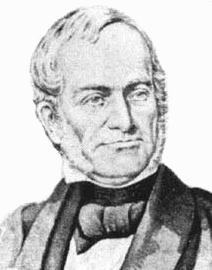
 In fact, we believe the writer [Thomas Jefferson] of these sentiments, seeing how utterly the colored man's rights were denied him, suggested to his mind the expressions here used, and he meant they should be broad enough to cover his case; and, unless we deny to him and the men associated with him the knowledge of the meaning of words, and of their bearing, we cannot get rid of the consequences; they meant every person in our country should be free.
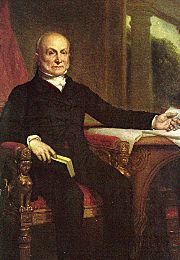 Hon. John Q. Adams [1767-1848] has said every important question has been decided by